
基于咔唑的比色阴离子传感器。
Carbazole-Based Colorimetric Anion Sensors.
机构信息
Biological and Chemical Research Centre, Faculty of Chemistry, University of Warsaw, Żwirki i Wigury 101, 02-089 Warsaw, Poland.
出版信息
Molecules. 2021 May 27;26(11):3205. doi: 10.3390/molecules26113205.
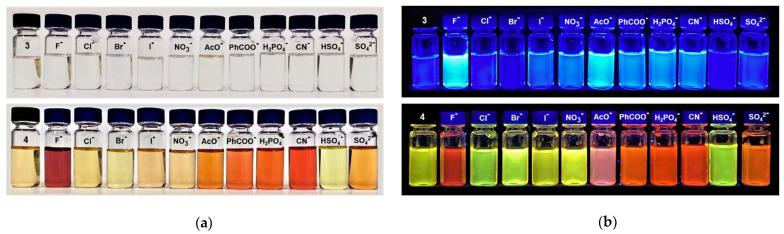
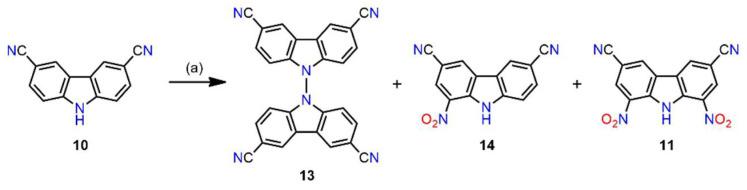
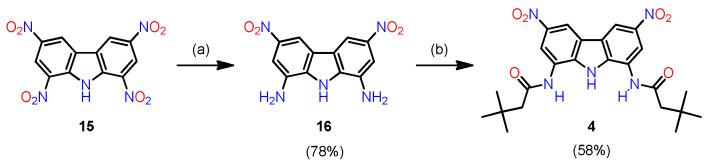
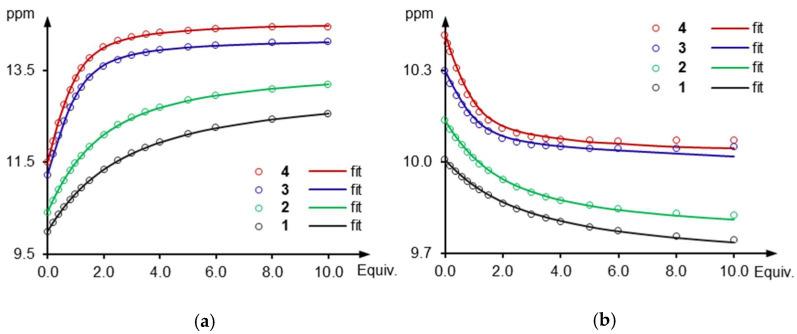
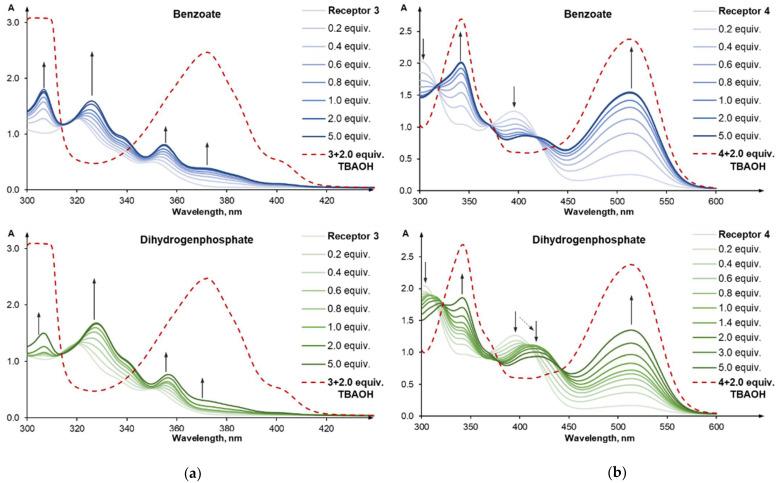
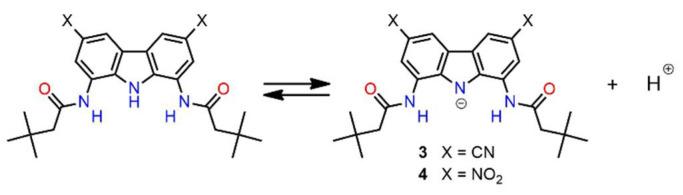
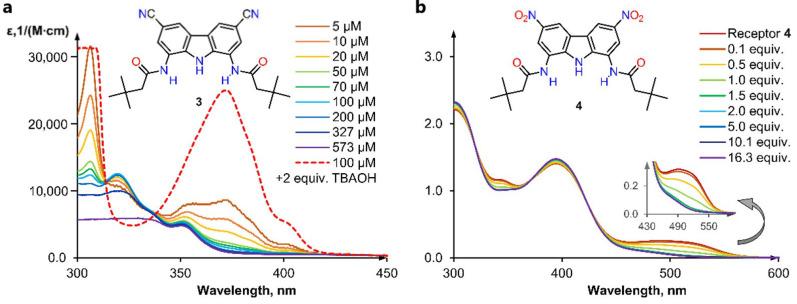
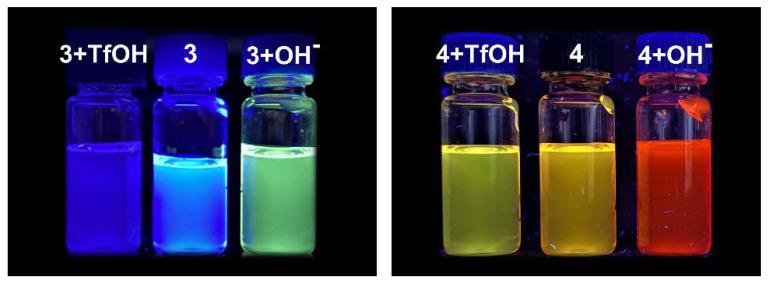
Owing to their strong carbazole chromophore and fluorophore, as well as to their powerful and convergent hydrogen bond donors, 1,8-diaminocarbazoles are amongst the most attractive and synthetically versatile building blocks for the construction of anion receptors, sensors, and transporters. Aiming to develop carbazole-based colorimetric anion sensors, herein we describe the synthesis of 1,8-diaminocarbazoles substituted with strongly electron-withdrawing substituents, i.e., 3,6-dicyano and 3,6-dinitro. Both of these precursors were subsequently converted into model diamide receptors. Anion binding studies revealed that the new receptors exhibited significantly enhanced anion affinities, but also significantly increased acidities. We also found that rear substitution of 1,8-diamidocarbazole with two nitro groups shifted its absorption spectrum into the visible region and converted the receptor into a colorimetric anion sensor. The new sensor displayed vivid color and fluorescence changes upon addition of basic anions in wet dimethyl sulfoxide, but it was poorly selective; because of its enhanced acidity, the dominant receptor-anion interaction for most anions was proton transfer and, accordingly, similar changes in color were observed for all basic anions. The highly acidic and strongly binding receptors developed in this study may be applicable in organocatalysis or in pH-switchable anion transport through lipophilic membranes.
由于其具有强的咔唑发色团和荧光团,以及强而收敛的氢键供体,1,8-二氨基咔唑是构建阴离子受体、传感器和转运体最有吸引力和最具合成多功能性的构建块之一。为了开发基于咔唑的比色阴离子传感器,本文描述了用强吸电子取代基取代的 1,8-二氨基咔唑的合成,即 3,6-二氰基和 3,6-二硝基。这两种前体随后都被转化为模型二酰胺受体。阴离子结合研究表明,新受体表现出显著增强的阴离子亲和力,但也显著增加了酸度。我们还发现,1,8-二氨基咔唑的后取代用两个硝基取代基将其吸收光谱转移到可见光区,并将受体转化为比色阴离子传感器。新传感器在加入碱性阴离子时在湿二甲基亚砜中显示出生动的颜色和荧光变化,但选择性较差;由于其酸度增强,大多数阴离子的主要受体-阴离子相互作用是质子转移,因此观察到所有碱性阴离子的颜色都有相似的变化。本研究中开发的高度酸性和强结合的受体可能适用于有机催化或通过亲脂性膜的 pH 可切换阴离子转运。




 Zotero 插件