
心肌梗死中的冠状动脉微血管损伤:对线粒体质量控制的认识和了解。
Coronary microvascular injury in myocardial infarction: perception and knowledge for mitochondrial quality control.
机构信息
Chinese PLA General Hospital, Medical School of Chinese PLA, Beijing 100853, China.
Guang'anmen Hospital of Chinese Academy of Traditional Chinese Medicine, Beijing, China.
出版信息
Theranostics. 2021 May 3;11(14):6766-6785. doi: 10.7150/thno.60143. eCollection 2021.
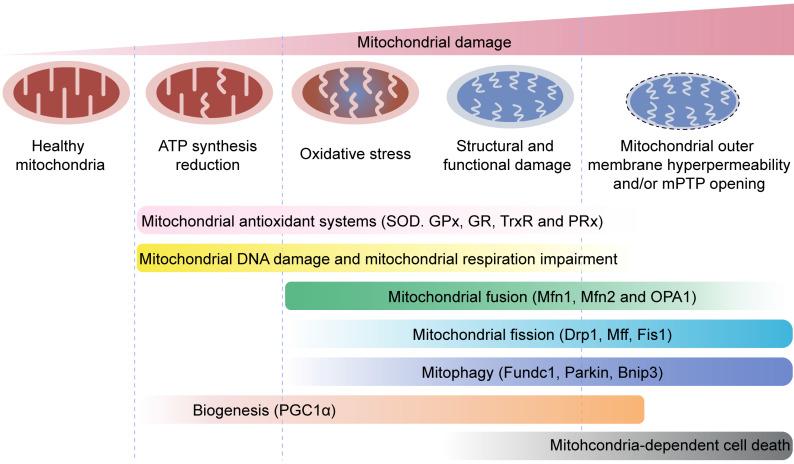
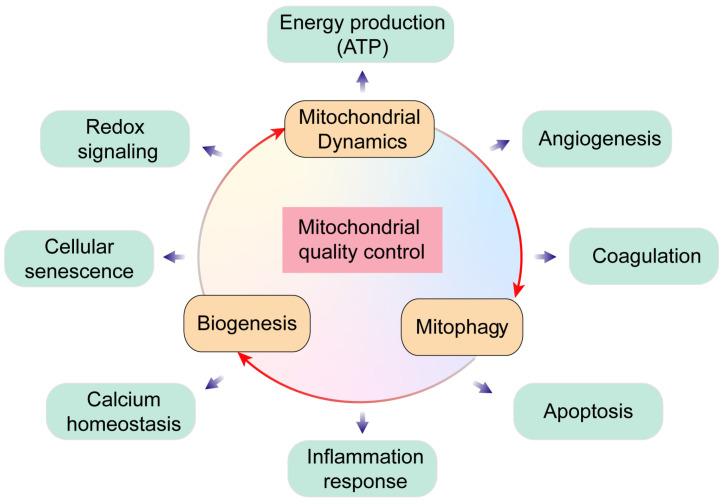
Endothelial cells (ECs) constitute the innermost layer in all blood vessels to maintain the structural integrity and microcirculation function for coronary microvasculature. Impaired endothelial function is demonstrated in various cardiovascular diseases including myocardial infarction (MI), which is featured by reduced myocardial blood flow as a result of epicardial coronary obstruction, thrombogenesis, and inflammation. In this context, understanding the cellular and molecular mechanisms governing the function of coronary ECs is essential for the early diagnosis and optimal treatment of MI. Although ECs contain relatively fewer mitochondria compared with cardiomyocytes, they function as key sensors of environmental and cellular stress, in the regulation of EC viability, structural integrity and function. Mitochondrial quality control (MQC) machineries respond to a broad array of stress stimuli to regulate fission, fusion, mitophagy and biogenesis in mitochondria. Impaired MQC is a cardinal feature of EC injury and dysfunction. Hence, medications modulating MQC mechanisms are considered as promising novel therapeutic options in MI. Here in this review, we provide updated insights into the key role of MQC mechanisms in coronary ECs and microvascular dysfunction in MI. We also discussed the option of MQC as a novel therapeutic target to delay, reverse or repair coronary microvascular damage in MI. Contemporary available MQC-targeted therapies with potential clinical benefits to alleviate coronary microvascular injury during MI are also summarized.
内皮细胞(ECs)构成所有血管的最内层,以维持冠状动脉微血管的结构完整性和微循环功能。各种心血管疾病都表现出内皮功能受损,包括心肌梗死(MI),其特征是由于心外膜冠状动脉阻塞、血栓形成和炎症导致心肌血流减少。在这种情况下,了解调节冠状动脉 EC 功能的细胞和分子机制对于 MI 的早期诊断和最佳治疗至关重要。尽管与心肌细胞相比,EC 中所含的线粒体相对较少,但它们作为环境和细胞应激的关键传感器,在调节 EC 活力、结构完整性和功能方面发挥作用。线粒体质量控制(MQC)机制对广泛的应激刺激做出反应,以调节线粒体中的分裂、融合、自噬和生物发生。MQC 受损是 EC 损伤和功能障碍的主要特征。因此,调节 MQC 机制的药物被认为是 MI 中很有前途的新型治疗选择。在这篇综述中,我们提供了关于 MQC 机制在冠状动脉 ECs 和 MI 中微血管功能障碍中的关键作用的最新见解。我们还讨论了将 MQC 作为一种新的治疗靶点,以延迟、逆转或修复 MI 中的冠状动脉微血管损伤的可能性。还总结了具有潜在临床益处的当代可用的靶向 MQC 治疗方法,以减轻 MI 期间的冠状动脉微血管损伤。



 Zotero 插件