
新冠疫情期间社交距离措施对焦虑和饮食行为的影响——一项纵向研究
Effects of Social Distancing During the COVID-19 Pandemic on Anxiety and Eating Behavior-A Longitudinal Study.
作者信息
Freitas Fernanda da Fonseca, de Medeiros Anna Cecília Queiroz, Lopes Fívia de Araújo
机构信息
Post-Graduate Program in Psychobiology, Department of Physiology and Behavior, Federal University of Rio Grande do Norte, Natal, Brazil.
Health Sciences College of Trairi, Federal University of Rio Grande do Norte, Santa Cruz, Brazil.
出版信息
Front Psychol. 2021 Jun 1;12:645754. doi: 10.3389/fpsyg.2021.645754. eCollection 2021.
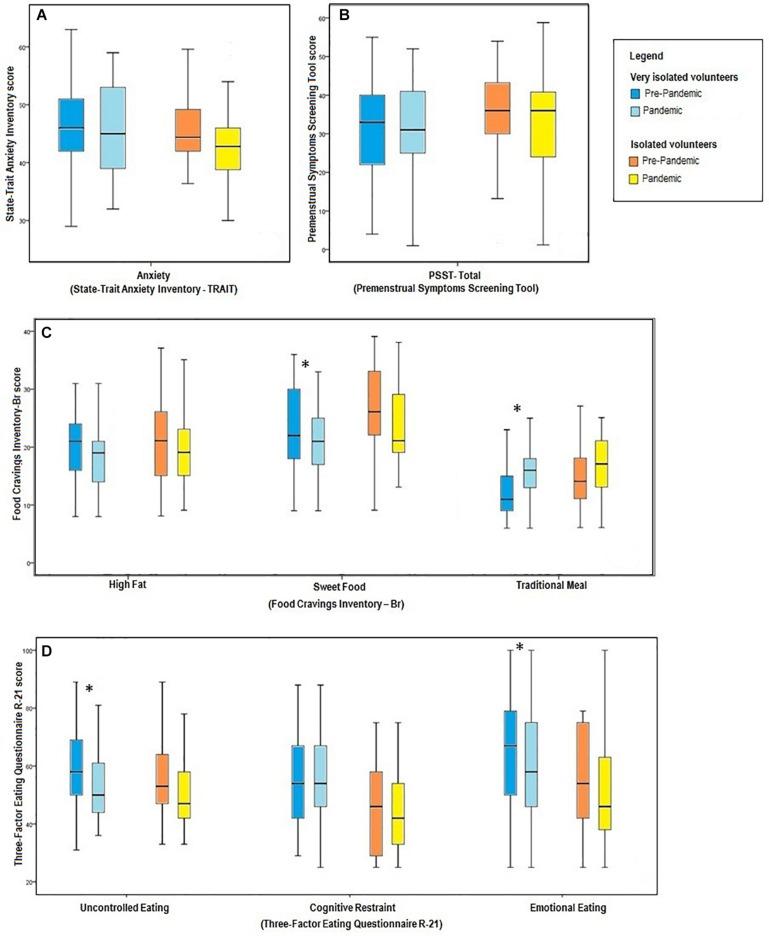
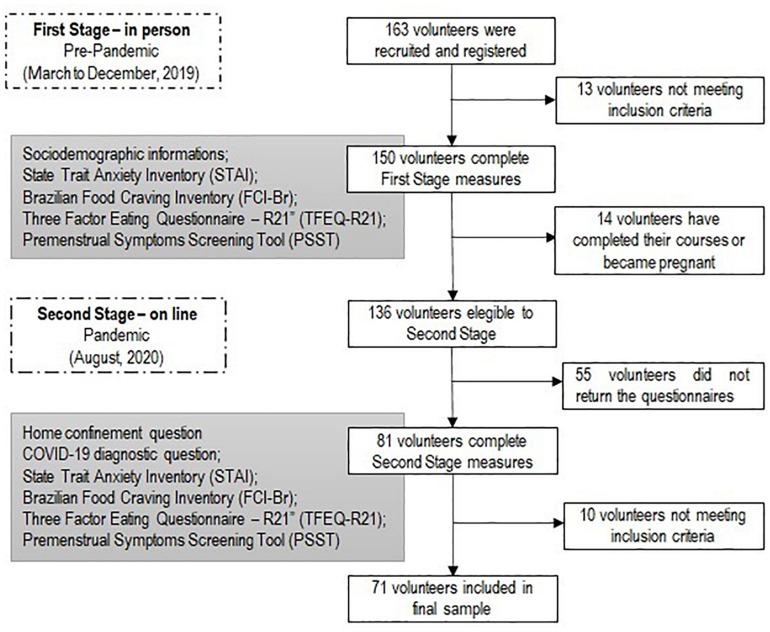
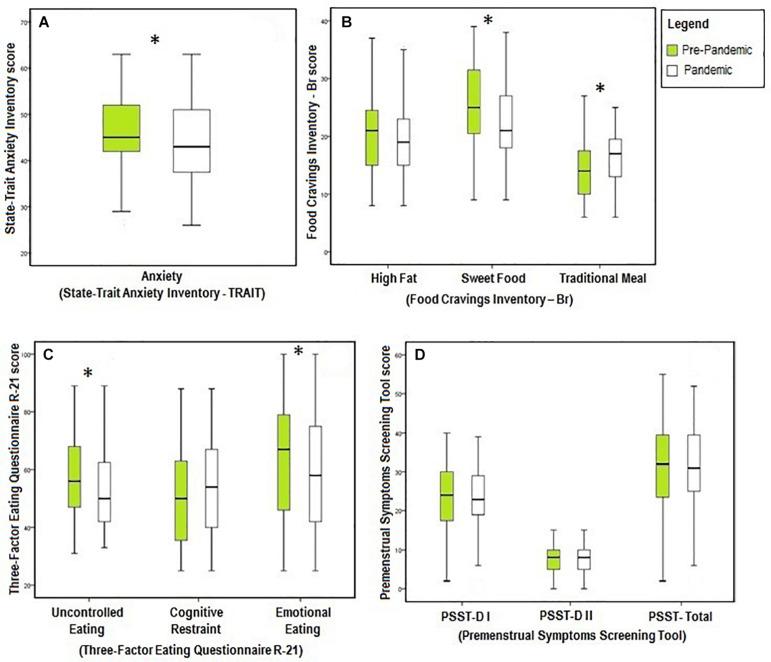
As social animals, humans need to live in groups. This contact with conspecifics is essential for their evolution and survival. Among the recommendations to reduce transmission of the new coronavirus (SARS-CoV-2) responsible for COVID-19 are social distancing and home confinement. These measures may negatively affect the social life and, consequently, the emotional state and eating behavior of individuals. We assessed the impact of the COVID-19 pandemic on the anxiety, premenstrual symptoms, and eating behavior of young women. Data collection was conducted in person (prepandemic-from March to December 2019) and online (during the pandemic-August 2020). A total of 71 participants, average age of 21.26 years (SD = 0.41), took part in the study. Trait anxiety during the pandemic was significantly lower than in the prepandemic period. Investigation of the "anxiety/stress" symptom of the Premenstrual Symptoms Screening Tool (PSST) revealed that this symptom was more severe before the pandemic. There was a decline in the desire for sweet and fatty foods during the pandemic. However, craving for traditional foods rose significantly in the same period. Uncontrolled and emotional eating were significantly lower during the pandemic. The results suggest that the pandemic may have had a positive impact on anxiety and eating behavior of the participants, which may be due to differences between urban and rural populations and the latter living with their families. These findings are important for raising a discussion regarding the effects of the current environment on the regulation of cognitive and dietary adaptations.
作为社会性动物,人类需要群居。这种与同类的接触对其进化和生存至关重要。在减少导致COVID-19的新型冠状病毒(SARS-CoV-2)传播的建议中,包括保持社交距离和居家隔离。这些措施可能会对社交生活产生负面影响,进而影响个人的情绪状态和饮食行为。我们评估了COVID-19大流行对年轻女性焦虑、经前症状和饮食行为的影响。数据收集分别在疫情前(2019年3月至12月)亲自进行,以及在疫情期间(2020年8月)通过线上方式进行。共有71名参与者,平均年龄21.26岁(标准差 = 0.41)参与了这项研究。疫情期间的特质焦虑显著低于疫情前。对经前症状筛查工具(PSST)的“焦虑/压力”症状调查显示,该症状在疫情前更为严重。疫情期间对甜食和高脂肪食物的欲望有所下降。然而,同期对传统食物的渴望显著上升。疫情期间无节制和情绪化饮食显著减少。结果表明,大流行可能对参与者的焦虑和饮食行为产生了积极影响,这可能归因于城乡人口差异以及后者与家人同住。这些发现对于引发关于当前环境对认知和饮食适应调节影响的讨论具有重要意义。
 Zotero 插件