
视网膜色素上皮细胞表达抗菌肽溶菌酶-血视网膜屏障固有免疫防御的新机制。
Retinal Pigment Epithelial Cells Express Antimicrobial Peptide Lysozyme - A Novel Mechanism of Innate Immune Defense of the Blood-Retina Barrier.
机构信息
Aier Institute of Optometry and Vision Science, Changsha, Hunan, China.
Aier School of Ophthalmology, Central South University, Changsha, Hunan, China.
出版信息
Invest Ophthalmol Vis Sci. 2021 Jun 1;62(7):21. doi: 10.1167/iovs.62.7.21.
PURPOSE
For this study we aimed to understand if retinal pigment epithelial (RPE) cells express antimicrobial peptide lysozyme as a mechanism to protect the neuroretina from blood-borne pathogens.
METHODS
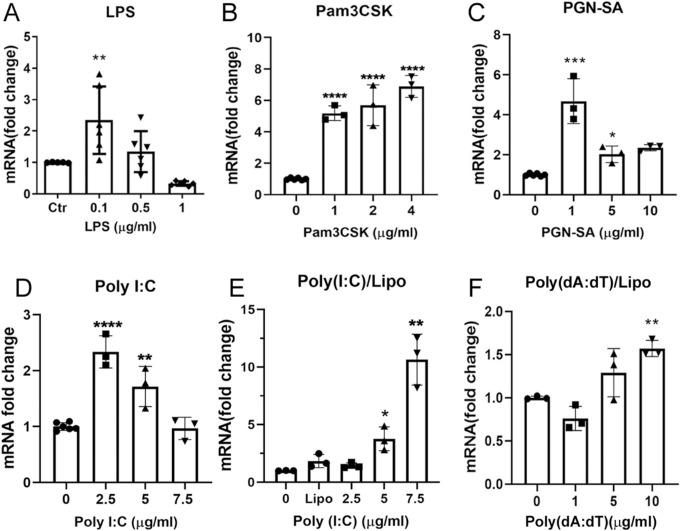
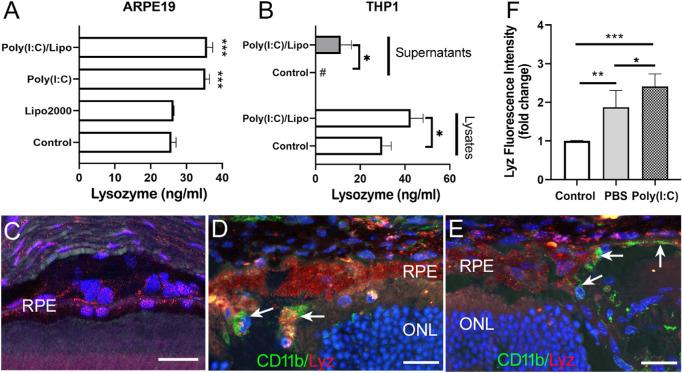
The expression of lysozyme in human and mouse RPE cells was examined by RT-PCR or immune (cyto)histochemistry in cell cultures or retinal sections. RPE cultures were treated with different concentrations of Pam3CSK4, lipopolysaccharides (LPS), staphylococcus aureus-derived peptidoglycan (PGN-SA), Poly(I:C), and Poly(dA:dT). The mRNA expression of lysozyme was examined by qPCR and protein expression by ELISA. Poly(I:C) was injected into the subretinal space of C57BL/6J mice and eyes were collected 24 hours later and processed for the evaluation of lysozyme expression by confocal microscopy. Bactericidal activity was measured in ARPE19 cells following LYZ gene deletion using Crispr/Cas9 technology.
RESULTS
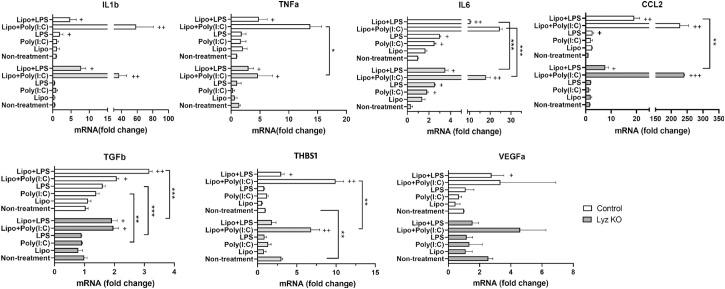
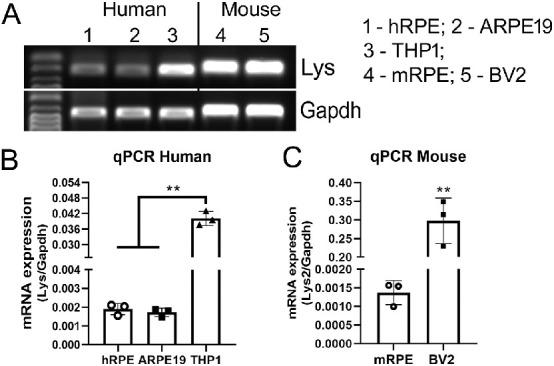
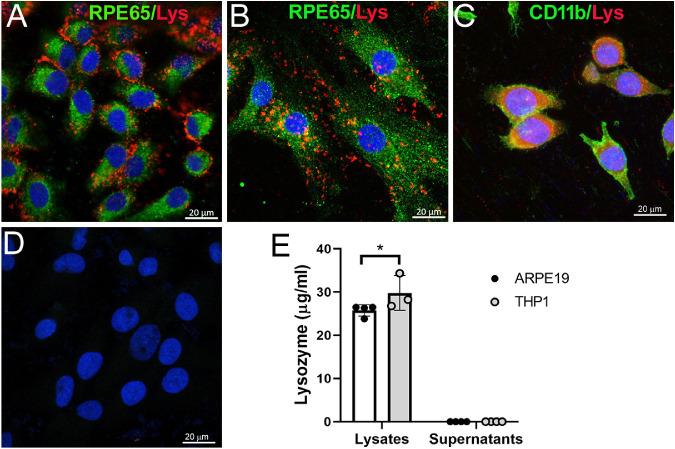
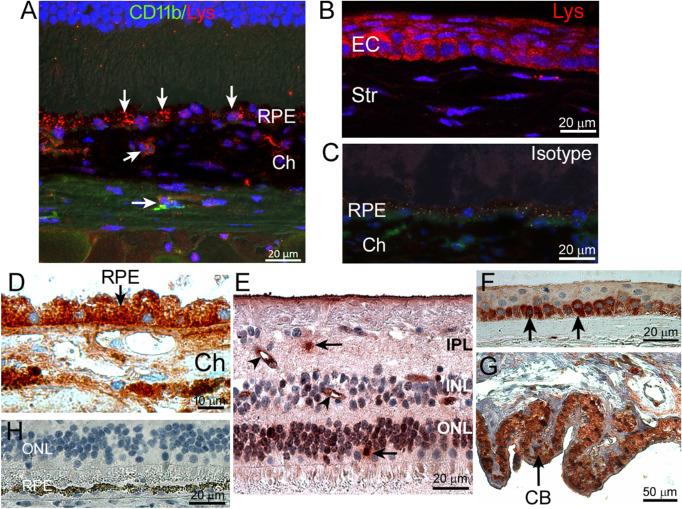
The mRNA and protein of lysozyme were detected in mouse and human RPE cells under normal conditions, although the expression levels were lower than mouse microglia BV2 or human monocytes THP-1 cells, respectively. Immunohistochemistry showed punctate lysozyme expression inside RPE cells. Lysozyme was detected by ELISA in normal RPE lysates, and in live bacteria-treated RPE supernatants. Treatment of RPE cells with Pam3CSK4, LPS, PGN-SA, and Poly(I:C) enhanced lysozyme expression. CRISPR/Cas9 deletion of lysozyme impaired bactericidal activity of ARPE19 cells and reduced their response to LPS and Poly(I:C) stimulation.
CONCLUSIONS
RPE cells constitutively express antimicrobial peptide lysozyme and the expression is modulated by pathogenic challenges. RPE cells may protect the neuroretina from blood-borne pathogens by producing antimicrobial peptides, such as lysozyme.
目的
在这项研究中,我们旨在了解视网膜色素上皮 (RPE) 细胞是否表达抗菌肽溶菌酶作为保护神经视网膜免受血源性病原体侵害的机制。
方法
通过 RT-PCR 或细胞培养物或视网膜切片中的免疫(细胞)组织化学检查,检查人源和鼠源 RPE 细胞中溶菌酶的表达。用不同浓度的 Pam3CSK4、脂多糖 (LPS)、金黄色葡萄球菌衍生的肽聚糖 (PGN-SA)、Poly(I:C) 和 Poly(dA:dT) 处理 RPE 培养物。通过 qPCR 检查溶菌酶的 mRNA 表达,通过 ELISA 检查蛋白表达。将 Poly(I:C) 注射到 C57BL/6J 小鼠的视网膜下腔,24 小时后收集眼睛,并用共聚焦显微镜评估溶菌酶的表达。使用 Crispr/Cas9 技术在 ARPE19 细胞中删除 LYZ 基因后,测量其杀菌活性。
结果
在正常条件下,在鼠源和人源 RPE 细胞中检测到溶菌酶的 mRNA 和蛋白,尽管表达水平分别低于鼠源小胶质细胞 BV2 或人源单核细胞 THP-1 细胞。免疫组织化学显示 RPE 细胞内存在点状溶菌酶表达。ELISA 检测到正常 RPE 裂解物中的溶菌酶,以及经活菌处理的 RPE 上清液中的溶菌酶。用 Pam3CSK4、LPS、PGN-SA 和 Poly(I:C) 处理 RPE 细胞可增强溶菌酶的表达。CRISPR/Cas9 缺失溶菌酶可损害 ARPE19 细胞的杀菌活性,并降低其对 LPS 和 Poly(I:C) 刺激的反应。
结论
RPE 细胞持续表达抗菌肽溶菌酶,其表达受致病挑战的调节。RPE 细胞可能通过产生抗菌肽(如溶菌酶)来保护神经视网膜免受血源性病原体的侵害。

 Zotero 插件