
三阴性化生性乳腺癌:表皮生长因子受体表达与预后参数及临床结局的相关性
Triple-Negative Metaplastic Breast Carcinoma: Association of Epidermal Growth Factor Receptor Expression With Prognostic Parameters and Clinical Outcome.
作者信息
Munawar Shahzeb, Haider Rimsha, Ali Syed Munqaad, Yaqeen Syed Rafay, Islam Sabeeh, Asghar Ishaq Azeem, Afzal Anoshia, Zia Shamail, Irfan Muhammad, Hashmi Atif A
机构信息
Internal Medicine, Liaquat College of Medicine and Dentistry, Karachi, PAK.
Internal Medicine, Liaquat National Hospital and Medical College, Karachi, PAK.
出版信息
Cureus. 2021 May 13;13(5):e15006. doi: 10.7759/cureus.15006.
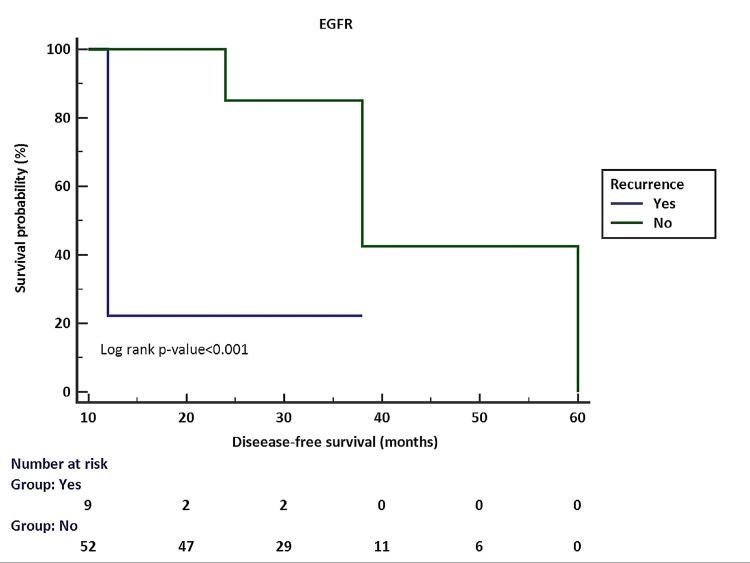
Introduction Metaplastic breast carcinoma (MBC) is one of the rare special subtypes of breast carcinoma associated with poor prognostic features compared with invasive ductal carcinoma. Moreover, therapeutic options are limited in MBC owing to frequent triple-negative profiles of these tumors. Epidermal growth factor receptor (EGFR) is a proto-oncogene that is overexpressed in many human cancers, and is a potential therapeutic target. Therefore, in this study, we evaluated the expression of EGFR in MBC by immunohistochemistry, and its association with clinicopathological and prognostic parameters. Methods We conducted a retrospective observational study in the Department of Histopathology at Liaquat National Hospital and Medical College, Pakistan, over a period of seven years. A total of 61 cases with a histopathological diagnosis of MBC were included in the study. All slides were reviewed by histopathologists for diagnostic confirmation. Histopathological parameters, such as tumor size, grade, and nodal metastasis, were recorded. The representative tissue blocks were also retrieved and immunohistochemical studies were performed for cytokeratin 5/6 (CK5/6), Ki67, and EGFR. Results The mean age of the patients was 44.48 ± 13.01 years. The mean tumor size was 5.72 ± 2.72 cm, with most of the cases belonging to tumor (T)-stage T3. Axillary metastasis was present in 57.4% cases, and the perinodal extension was present in 11.5% cases. Most tumors were grade III (85.2%), with a mean Ki67 index of 39.67% ± 20.38%. Most of the cases were nonbasal (83.6%), owing to the absent CK5/6 expression. Tumor recurrence was noted in 14.8% cases, with a median follow-up of 43 (13-83) months and median disease-free survival of 36 (12-60) months. Positive EGFR expression was noted in 52.5% cases. A significant association of EGFR expression was noted with tumor grade, mean Ki67 index, axillary metastasis, and nodal (N)-stage. Cases with positive EGFR expression were found to have higher grade (grade III), with higher Ki67 index, higher frequency of axillary metastasis, and higher N-stage. Moreover, cases with positive EGFR expression had lower disease-free survival compared to cases with negative EGFR expression. Conclusion We found that a significant proportion of triple-negative MBC expressed EGFR. Moreover, EGFR overexpression was associated with poor pathological parameters and lower disease-free survival. Therefore, EGFR can be considered a potential prognostic biomarker and therapeutic target in triple-negative MBC; however, the correlation between gene amplification and protein overexpression is required to better uncover the role of EGFR as a therapeutic target.
引言
化生性乳腺癌(MBC)是乳腺癌中一种罕见的特殊亚型,与浸润性导管癌相比,其预后特征较差。此外,由于这些肿瘤频繁出现三阴性特征,MBC的治疗选择有限。表皮生长因子受体(EGFR)是一种原癌基因,在许多人类癌症中过度表达,是一个潜在的治疗靶点。因此,在本研究中,我们通过免疫组织化学评估了EGFR在MBC中的表达及其与临床病理和预后参数的关系。
方法
我们在巴基斯坦利亚卡特国家医院和医学院组织病理学系进行了一项为期七年的回顾性观察研究。共有61例经组织病理学诊断为MBC的病例纳入研究。所有切片均由组织病理学家复查以确诊。记录肿瘤大小、分级和淋巴结转移等组织病理学参数。还检索了代表性组织块,并对细胞角蛋白5/6(CK5/6)、Ki67和EGFR进行了免疫组织化学研究。
结果
患者的平均年龄为44.48±13.01岁。平均肿瘤大小为5.72±2.72 cm,大多数病例属于肿瘤(T)分期T3。57.4%的病例存在腋窝转移,11.5%的病例存在淋巴结周围浸润。大多数肿瘤为Ⅲ级(85.2%),平均Ki67指数为39.67%±20.38%。由于CK5/6表达缺失,大多数病例为非基底型(83.6%)。14.8%的病例出现肿瘤复发,中位随访时间为43(13 - 83)个月,无病生存期的中位数为36(12 - 60)个月。52.5%的病例EGFR表达呈阳性。EGFR表达与肿瘤分级、平均Ki67指数、腋窝转移和淋巴结(N)分期之间存在显著关联。EGFR表达阳性的病例被发现具有更高的分级(Ⅲ级)、更高的Ki67指数、更高的腋窝转移频率和更高的N分期。此外,与EGFR表达阴性的病例相比,EGFR表达阳性的病例无病生存期更低。
结论
我们发现相当一部分三阴性MBC表达EGFR。此外,EGFR过表达与不良的病理参数和较低的无病生存期相关。因此,EGFR可被视为三阴性MBC的潜在预后生物标志物和治疗靶点;然而,需要基因扩增与蛋白过表达之间的相关性来更好地揭示EGFR作为治疗靶点的作用。

 Zotero 插件