
秋水仙碱治疗 2019 冠状病毒病(COVID-19)肺炎患者的疗效及死亡率:系统评价、荟萃分析和荟萃回归研究。
Colchicine and mortality in patients with coronavirus disease 2019 (COVID-19) pneumonia: A systematic review, meta-analysis, and meta-regression.
机构信息
Department of Microbiology, Faculty of Medicine, Universitas Jenderal Achmad Yani, Cimahi, Indonesia.
Department of Internal Medicine, Faculty of Medicine, Universitas Jenderal Achmad Yani, Cimahi, Indonesia.
出版信息
Int Immunopharmacol. 2021 Jul;96:107723. doi: 10.1016/j.intimp.2021.107723. Epub 2021 Apr 27.
OBJECTIVE
This systematic review, with meta-analysis and meta-regression aims to evaluate the effect of colchicine administration on mortality in patients with coronavirus disease 2019 (COVID-19) and factors affecting the association.
METHODS
A systematic literature search using the PubMed, Scopus, and Embase databases were performed from inception of databases up until 3 March 2021. We included studies that fulfill all of the following criteria: 1) observational studies or randomized controlled trials (RCTs) that report COVID-19 patients, 2) reporting colchicine use, and 3) mortality within 30 days. There was no restriction on the age, inpatients or outpatients setting, and severity of diseases. The intervention was colchicine administration during treatment for COVID-19. The control was receiving placebo or standard of care. The outcome was mortality and the pooled effect estimate was reported as odds ratio (OR). Random-effects restricted maximum likelihood meta-regression was performed to evaluate factors affecting the pooled effect estimate.
RESULTS
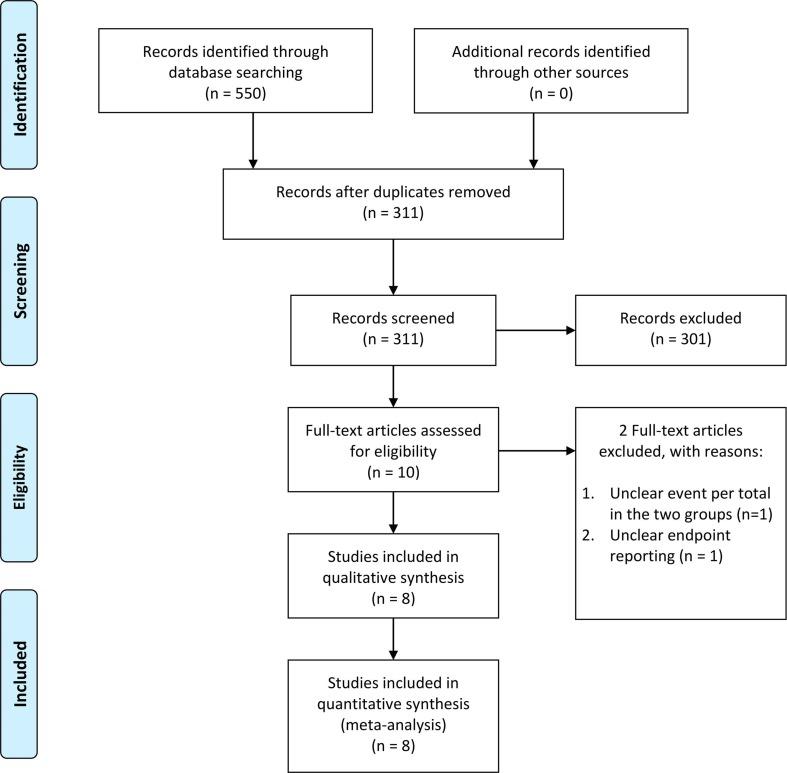
Eight studies comprising of 5530 patients were included in this systematic review and meta-analysis. There were three RCTs and five observational studies. Pooled analysis showed that colchicine was associated with lower mortality in patients with COVID-19 (OR 0.47 [0.31, 0.72], p = 0.001; I: 30.9, p = 0.181). Meta-regression analysis showed that the association between colchicine and mortality was reduced by increasing age (OR 0.92 [0.85, 1.00], p = 0.05), but not gender (reference: male, p = 0.999), diabetes (p = 0.376), hypertension (p = 0.133), and CAD (p = 0.354).
CONCLUSION
This meta-analysis indicates that colchicine may reduce mortality in patients with COVID-19. Meta-regression analysis showed that the benefit was reduced as age increases.
PROSPERO
CRD42021240609.
目的
本系统评价通过荟萃分析和荟萃回归,旨在评估秋水仙碱对 2019 年冠状病毒病(COVID-19)患者死亡率的影响,并分析影响这种关联的因素。
方法
从数据库建立之初到 2021 年 3 月 3 日,我们使用 PubMed、Scopus 和 Embase 数据库进行了系统的文献检索。我们纳入了符合以下所有标准的研究:1)观察性研究或报告 COVID-19 患者的随机对照试验(RCT),2)报告秋水仙碱使用情况,3)30 天内死亡率。研究对象的年龄、住院或门诊环境以及疾病严重程度均不受限制。干预措施是在 COVID-19 治疗期间使用秋水仙碱。对照组接受安慰剂或标准治疗。结局是死亡率,汇总的效应估计值报告为比值比(OR)。采用随机效应受限最大似然荟萃回归分析评估影响汇总效应估计值的因素。
结果
本系统评价和荟萃分析共纳入了 8 项研究,包含 5530 例患者。其中包括 3 项 RCT 和 5 项观察性研究。汇总分析显示,秋水仙碱与 COVID-19 患者的死亡率降低相关(OR 0.47 [0.31, 0.72],p = 0.001;I² = 30.9%,p = 0.181)。荟萃回归分析显示,秋水仙碱与死亡率之间的关联随着年龄的增加而减弱(OR 0.92 [0.85, 1.00],p = 0.05),但与性别(参考:男性,p = 0.999)、糖尿病(p = 0.376)、高血压(p = 0.133)和 CAD(p = 0.354)无关。
结论
本荟萃分析表明,秋水仙碱可能降低 COVID-19 患者的死亡率。荟萃回归分析显示,随着年龄的增加,益处会降低。
PROSPERO
CRD42021240609。



 Zotero 插件