
秋水仙碱治疗新冠病毒肺炎患者的疗效:一项系统评价与荟萃分析
Efficacy of Colchicine in the Treatment of COVID-19 Patients: A Systematic Review and Meta-Analysis.
作者信息
Toro-Huamanchumo Carlos J, Benites-Meza Jerry K, Mamani-García Carlos S, Bustamante-Paytan Diego, Gracia-Ramos Abraham Edgar, Diaz-Vélez Cristian, Barboza Joshuan J
机构信息
Escuela de Medicina, Universidad Cesar Vallejo, Trujillo 13007, Peru.
Sociedad Científica de Estudiantes de Medicina de la Universidad Nacional de Trujillo, Trujillo 13011, Peru.
出版信息
J Clin Med. 2022 May 6;11(9):2615. doi: 10.3390/jcm11092615.
OBJECTIVE
We assessed the efficacy of colchicine in COVID-19 patients through a systematic review.
METHODS
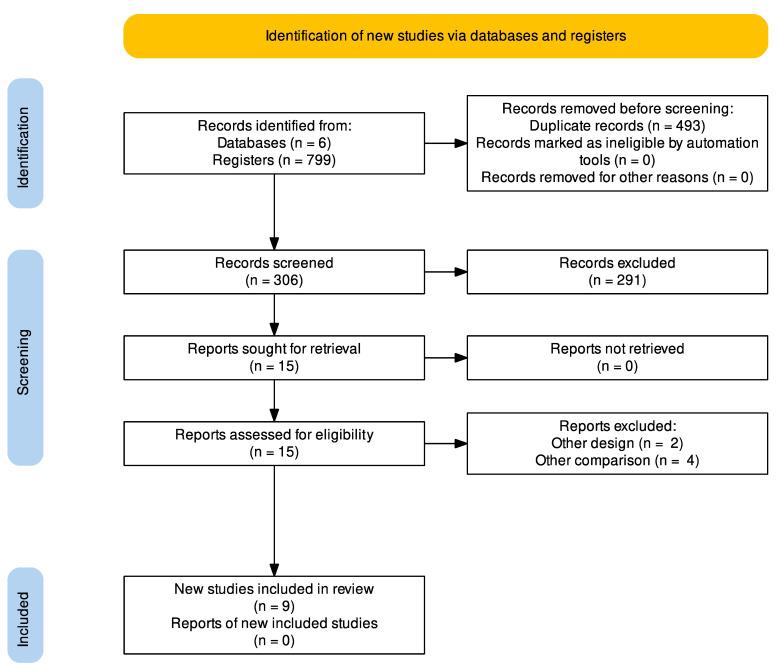
Six databases were searched until March 2022 for studies assessing colchicine versus control in hospitalized patients with COVID-19. The primary outcome was mortality, and secondary outcome was length of hospitalization. Inverse variance and random effect meta-analyses were performed. The strength of evidence was assessed using GRADE.
RESULTS
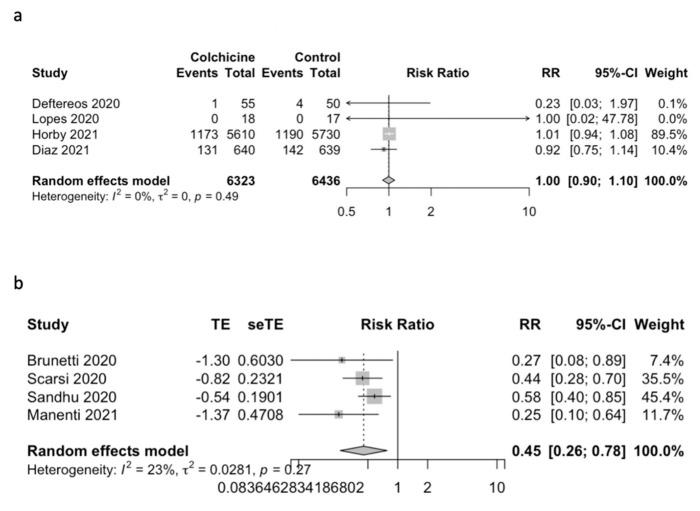
Nine studies (five randomized clinical trials (RCTs) and four non-randomized studies of intervention (NRSI); = 13,478). Colchicine did not reduce mortality in comparison with the standard of care in RCTs (RR 0.99; 95%CI 0.90 to 1.10; = 0.90); however, it did reduce mortality in NRSI studies (RR 0.45; 95%CI 0.26 to 0.77; = 0.02). In the analysis of RCTs, colchicine did not reduce the length of hospitalization in comparison with the standard of care (MD: -2.25 days; 95%CI: -9.34 to 4.84; = 0.15). Most studies were scored as having a high risk of bias. Quality of evidence was very low for primary and secondary outcomes.
CONCLUSION
Colchicine did not reduce the mortality and length of hospitalization in comparison with the standard of care in hospitalized patients with COVID-19. The published evidence is insufficient and of very low quality to recommend treatment in patients with COVID-19.
目的
我们通过系统评价评估了秋水仙碱对新冠肺炎患者的疗效。
方法
检索了六个数据库,直至2022年3月,以查找评估秋水仙碱与对照组在新冠肺炎住院患者中的疗效的研究。主要结局为死亡率,次要结局为住院时间。进行了逆方差和随机效应荟萃分析。使用GRADE评估证据的强度。
结果
九项研究(五项随机临床试验(RCT)和四项非随机干预研究(NRSI);n = 13478)。在RCT中,与标准治疗相比,秋水仙碱并未降低死亡率(RR 0.99;95%CI 0.90至1.10;P = 0.90);然而,在NRSI研究中,它确实降低了死亡率(RR 0.45;95%CI 0.26至0.77;P = 0.02)。在RCT分析中,与标准治疗相比,秋水仙碱并未缩短住院时间(MD:-2.25天;95%CI:-9.34至4.84;P = 0.15)。大多数研究被评为具有高偏倚风险。主要和次要结局的证据质量非常低。
结论
与新冠肺炎住院患者的标准治疗相比,秋水仙碱并未降低死亡率和缩短住院时间。已发表的证据不足且质量非常低,无法推荐用于新冠肺炎患者的治疗。

 Zotero 插件