
儿童常见慢性炎症性疾病中的肠道微生物群。
Intestinal Microbiota in Common Chronic Inflammatory Disorders Affecting Children.
机构信息
Chair and Department of Biochemistry, Medical University of Warsaw, Warsaw, Poland.
Klarman Cell Observatory, Broad Institute of MIT and Harvard, Cambridge, MA, United States.
出版信息
Front Immunol. 2021 Jun 7;12:642166. doi: 10.3389/fimmu.2021.642166. eCollection 2021.
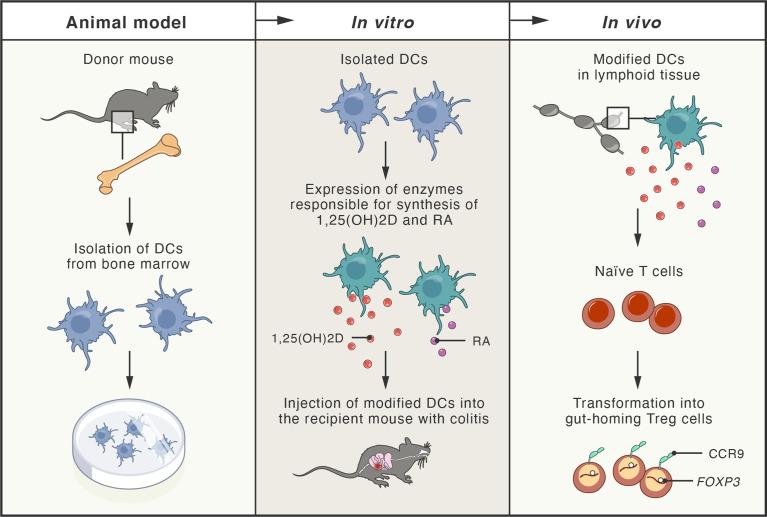
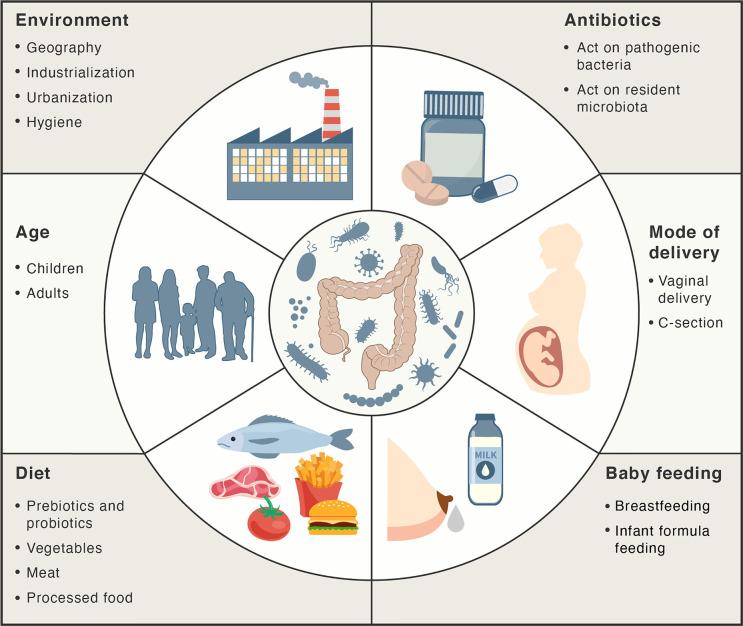
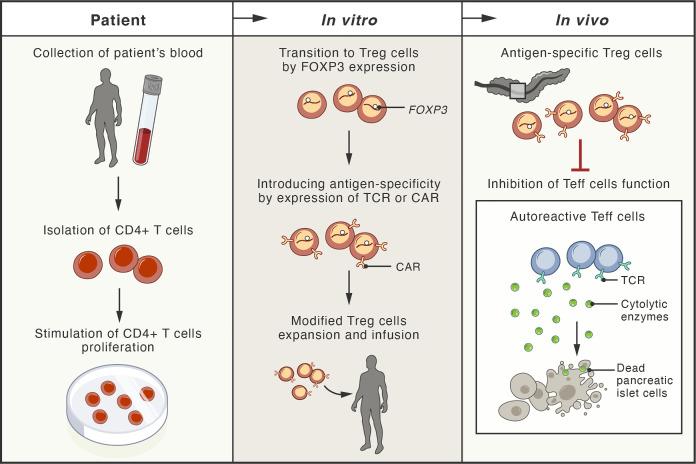
The incidence and prevalence rate of chronic inflammatory disorders is on the rise in the pediatric population. Recent research indicates the crucial role of interactions between the altered intestinal microbiome and the immune system in the pathogenesis of several chronic inflammatory disorders in children, such as inflammatory bowel disease (IBD) and autoimmune diseases, such as type 1 diabetes mellitus (T1DM) and celiac disease (CeD). Here, we review recent knowledge concerning the pathogenic mechanisms underlying these disorders, and summarize the facts suggesting that the initiation and progression of IBD, T1DM, and CeD can be partially attributed to disturbances in the patterns of composition and abundance of the gut microbiota. The standard available therapies for chronic inflammatory disorders in children largely aim to treat symptoms. Although constant efforts are being made to maximize the quality of life for children in the long-term, sustained improvements are still difficult to achieve. Additional challenges are the changing physiology associated with growth and development of children, a population that is particularly susceptible to medication-related adverse effects. In this review, we explore new promising therapeutic approaches aimed at modulation of either gut microbiota or the activity of the immune system to induce a long-lasting remission of chronic inflammatory disorders. Recent preclinical studies and clinical trials have evaluated new approaches, for instance the adoptive transfer of immune cells, with genetically engineered regulatory T cells expressing antigen-specific chimeric antigen receptors. These approaches have revolutionized cancer treatments and have the potential for the protection of high-risk children from developing autoimmune diseases and effective management of inflammatory disorders. The review also focuses on the findings of studies that indicate that the responses to a variety of immunotherapies can be enhanced by strategic manipulation of gut microbiota, thus emphasizing on the importance of proper interaction between the gut microbiota and immune system for sustained health benefits and improvement of the quality of life of pediatric patients.
慢性炎症性疾病在儿科人群中的发病率和患病率呈上升趋势。最近的研究表明,肠道微生物组与免疫系统之间的相互作用在儿童几种慢性炎症性疾病的发病机制中起着关键作用,如炎症性肠病(IBD)和自身免疫性疾病,如 1 型糖尿病(T1DM)和乳糜泻(CeD)。在这里,我们回顾了这些疾病发病机制的最新知识,并总结了一些事实,表明 IBD、T1DM 和 CeD 的发生和进展部分归因于肠道微生物群组成和丰度模式的紊乱。目前针对儿童慢性炎症性疾病的标准治疗方法主要旨在治疗症状。尽管人们一直在努力长期提高儿童的生活质量,但仍难以实现持续改善。此外,儿童的生长发育相关的生理变化以及儿童特别容易受到药物相关不良反应的影响,这些都是额外的挑战。在这篇综述中,我们探讨了旨在调节肠道微生物群或免疫系统活性以诱导慢性炎症性疾病长期缓解的新的有前途的治疗方法。最近的临床前研究和临床试验评估了新方法,例如表达抗原特异性嵌合抗原受体的基因工程调节性 T 细胞的免疫细胞过继转移。这些方法彻底改变了癌症治疗方法,并有潜力保护高危儿童免受自身免疫性疾病的侵害,并对炎症性疾病进行有效的管理。该综述还重点介绍了一些研究结果,这些研究结果表明,通过策略性地操纵肠道微生物群可以增强对各种免疫疗法的反应,从而强调了肠道微生物群和免疫系统之间的适当相互作用对于持续的健康益处和改善儿科患者的生活质量的重要性。


 Zotero 插件