
[物种名称]的比较质体基因组分析及其对海盘车亚科基因组进化和系统发育的意义 。 需注意,原文中“of ”后缺少具体内容,以上翻译是根据已有部分尽量完整表述。
Comparative plastome analysis of , with implications for genome evolution and phylogeny of Asteroideae.
作者信息
Mehmood Furrukh, Rahim Abdur, Heidari Parviz, Ahmed Ibrar, Poczai Péter
机构信息
Department of Biochemistry Faculty of Biological Sciences Quaid-i-Azam University Islamabad Pakistan.
Department of Zoology Post Graduate College Nowshera Abdul Wali Khan University Mardan Pakistan.
出版信息
Ecol Evol. 2021 May 6;11(12):7810-7826. doi: 10.1002/ece3.7614. eCollection 2021 Jun.
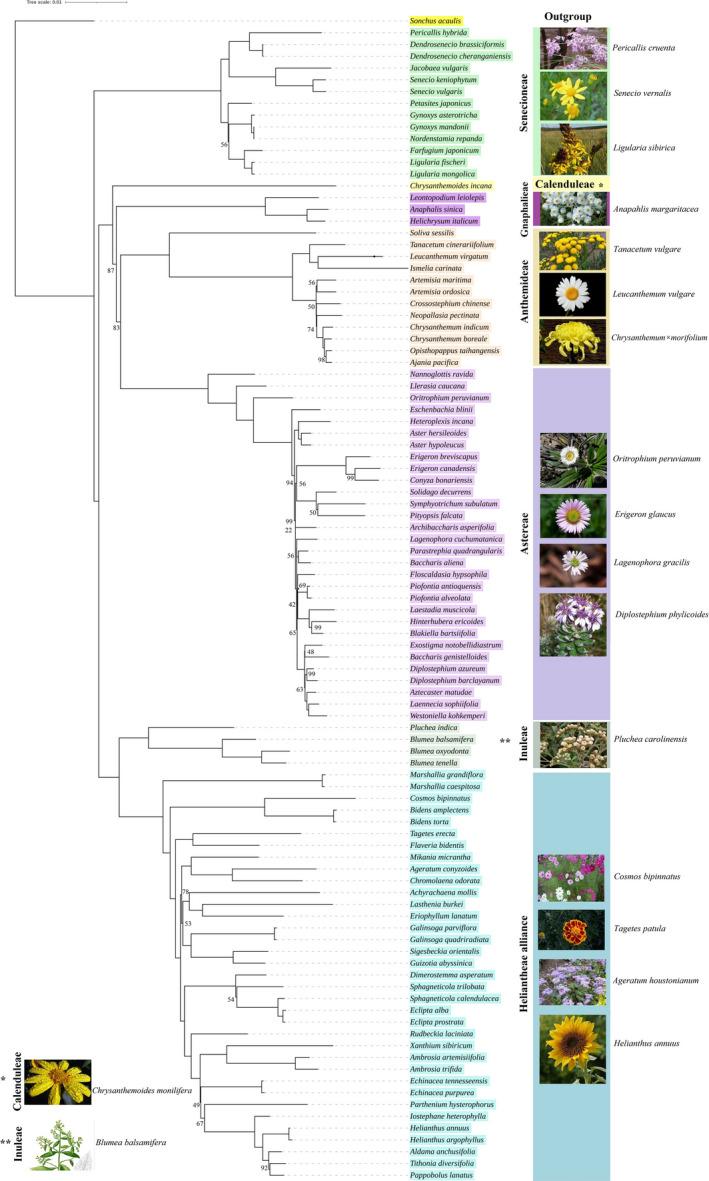
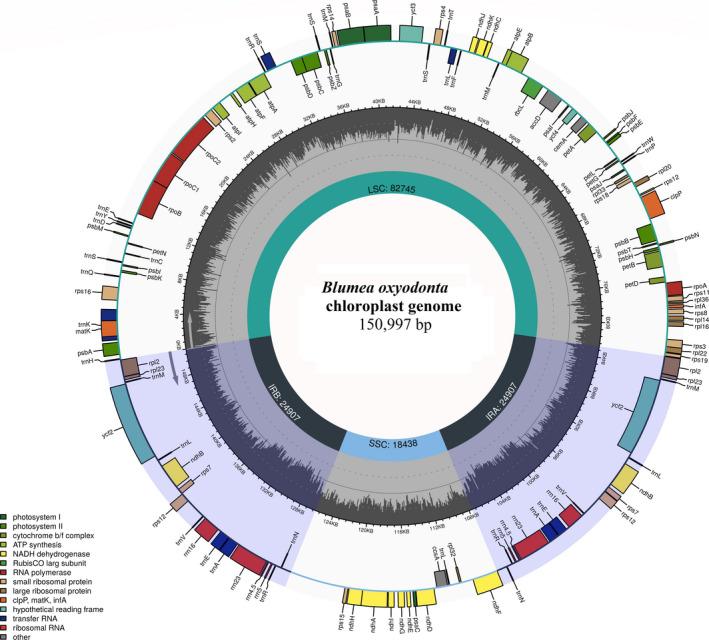
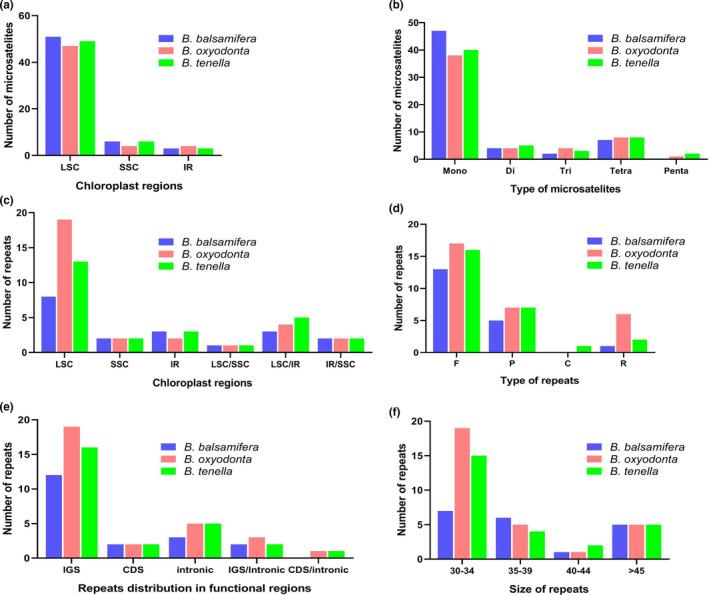
The genus (Asteroideae, Asteraceae) comprises about 100 species, including herbs, shrubs, and small trees. Previous studies have been unable to resolve taxonomic issues and the phylogeny of the genus due to the low polymorphism of molecular markers. Therefore, suitable polymorphic regions need to be identified. Here, we de novo assembled plastomes of the three species . , , and and compared them with 26 other species of Asteroideae after correction of annotations. These species have quadripartite plastomes with similar gene content, genome organization, and inverted repeat contraction and expansion comprising 113 genes, including 80 protein-coding, 29 transfer RNA, and 4 ribosomal RNA genes. The comparative analysis of codon usage, amino acid frequency, microsatellite repeats, oligonucleotide repeats, and transition and transversion substitutions has revealed high resemblance among the newly assembled species of . We identified 10 highly polymorphic regions with nucleotide diversity above 0.02, including 16-Q, 1, F-32, N-M, and 32-L, and they may be suitable for the development of robust, authentic, and cost-effective markers for barcoding and inference of the phylogeny of the genus . Among these highly polymorphic regions, five regions also co-occurred with oligonucleotide repeats and support use of repeats as a proxy for the identification of polymorphic loci. The phylogenetic analysis revealed a close relationship between and within the tribe Inuleae. At tribe level, our phylogeny supports a sister relationship between Astereae and Anthemideae rooted as Gnaphalieae, Calenduleae, and Senecioneae. These results are contradictory to recent studies which reported a sister relationship between "Senecioneae and Anthemideae" and "Astereae and Gnaphalieae" or a sister relationship between Astereae and Gnaphalieae rooted as Calenduleae, Anthemideae, and then Senecioneae using nuclear genome sequences. The conflicting phylogenetic signals observed at the tribal level between plastidt and nuclear genome data require further investigation.
该属(菊科紫菀亚科)包含约100个物种,包括草本植物、灌木和小乔木。由于分子标记的低多态性,先前的研究未能解决该属的分类问题和系统发育问题。因此,需要识别合适的多态性区域。在此,我们对三种紫菀属物种([物种名称1]、[物种名称2]和[物种名称3])的质体基因组进行了从头组装,并在注释校正后将它们与紫菀亚科的其他26个物种进行了比较。这些物种具有四分体质体基因组,其基因含量、基因组组织以及反向重复序列的收缩和扩展相似,包含113个基因,其中包括80个蛋白质编码基因、29个转运RNA基因和4个核糖体RNA基因。对密码子使用、氨基酸频率、微卫星重复序列、寡核苷酸重复序列以及转换和颠换替代的比较分析表明,新组装的紫菀属物种之间具有高度相似性。我们识别出10个核苷酸多样性高于0.02的高度多态性区域,包括16 - Q、1、F - 32、N - M和32 - L,它们可能适用于开发用于该属条形码和系统发育推断的强大、可靠且具有成本效益的标记。在这些高度多态性区域中,有五个区域还与寡核苷酸重复序列同时出现,并支持将重复序列用作识别多态性位点的替代方法。系统发育分析揭示了旋覆花族内[物种名称4]和[物种名称5]之间的密切关系。在族级水平上,我们的系统发育支持紫菀族和春黄菊族之间的姐妹关系,其根为鼠麴草族、金盏花族和千里光族。这些结果与最近的研究相矛盾,最近的研究使用核基因组序列报道了“千里光族和春黄菊族”以及“紫菀族和鼠麴草族”之间的姐妹关系,或者以金盏花族、春黄菊族,然后是千里光族为根的紫菀族和鼠麴草族之间的姐妹关系。在质体和核基因组数据之间在族级水平上观察到的相互矛盾的系统发育信号需要进一步研究。



 Zotero 插件