
心血管疾病治疗开发中的 EV 货物分拣。
EV Cargo Sorting in Therapeutic Development for Cardiovascular Disease.
机构信息
Cardiovascular Research Center, Icahn School of Medicine at Mount Sinai, One Gustav L. Levy, P.O. Box 1030, New York, NY 10029, USA.
出版信息
Cells. 2021 Jun 15;10(6):1500. doi: 10.3390/cells10061500.
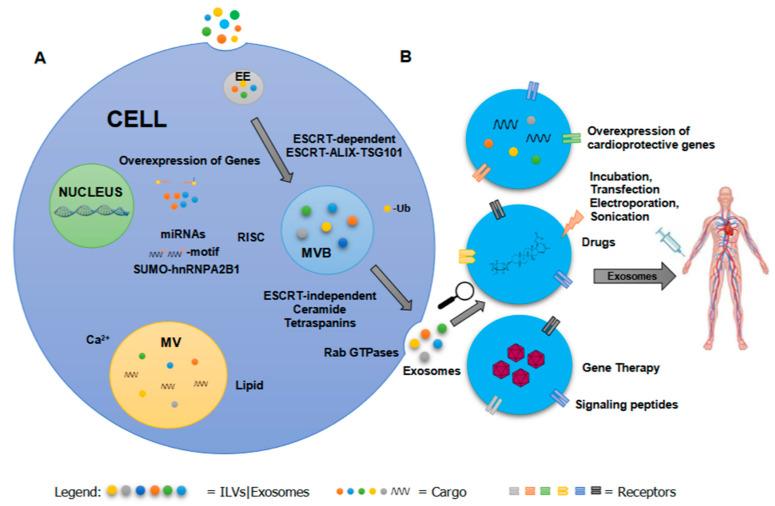
Cardiovascular disease remains the leading cause of morbidity and mortality in the world. Thus, therapeutic interventions to circumvent this growing burden are of utmost importance. Extracellular vesicles (EVs) actively secreted by most living cells, play a key role in paracrine and endocrine intercellular communication via exchange of biological molecules. As the content of secreted EVs reflect the physiology and pathology of the cell of their origin, EVs play a significant role in cellular homeostasis, disease pathogenesis and diagnostics. Moreover, EVs are gaining popularity in clinics as therapeutic and drug delivery vehicles, transferring bioactive molecules such as proteins, genes, miRNAs and other therapeutic agents to target cells to treat diseases and deter disease progression. Despite our limited but growing knowledge of EV biology, it is imperative to understand the complex mechanisms of EV cargo sorting in pursuit of designing next generation EV-based therapeutic delivery systems. In this review, we highlight the mechanisms of EV cargo sorting and methods of EV bioengineering and discuss engineered EVs as a potential therapeutic delivery system to treat cardiovascular disease.
心血管疾病仍然是世界上发病率和死亡率的主要原因。因此,规避这种日益增长的负担的治疗干预措施至关重要。细胞外囊泡(EVs)是大多数活细胞主动分泌的,通过交换生物分子在旁分泌和内分泌细胞间通讯中发挥关键作用。由于分泌的 EV 中的内容反映了其起源细胞的生理和病理,因此 EV 在细胞内稳态、疾病发病机制和诊断中发挥着重要作用。此外,EV 作为治疗和药物传递载体在临床上越来越受欢迎,将生物活性分子(如蛋白质、基因、miRNA 和其他治疗剂)传递到靶细胞以治疗疾病和阻止疾病进展。尽管我们对 EV 生物学的了解有限,但增长迅速,但必须了解 EV 货物分拣的复杂机制,以设计下一代基于 EV 的治疗性递药系统。在这篇综述中,我们强调了 EV 货物分拣的机制和 EV 生物工程的方法,并讨论了工程化 EV 作为治疗心血管疾病的潜在治疗性递药系统。
 Zotero 插件