
臭氧水在微生物控制中的应用:稳定性、体外杀菌潜力及细胞毒性分析
Ozonized Water in Microbial Control: Analysis of the Stability, In Vitro Biocidal Potential, and Cytotoxicity.
作者信息
Santos Laerte Marlon Conceição Dos, Silva Eduardo Santos da, Oliveira Fabricia Oliveira, Rodrigues Leticia de Alencar Pereira, Neves Paulo Roberto Freitas, Meira Cássio Santana, Moreira Greta Almeida Fernandes, Lobato Gabriela Monteiro, Nascimento Carlos, Gerhardt Marcelo, Lessa Arlene Souza, Mascarenhas Luis Alberto Breda, Machado Bruna Aparecida Souza
机构信息
University Center SENAI/CIMATEC, SENAI Institute of Innovation in Health Advanced Systems (ISI SAS), Salvador 41650-010, Bahia, Brazil.
University Center SENAI/CIMATEC, SENAI Computational Modeling and Industrial Technology, Salvador 41650-010, Bahia, Brazil.
出版信息
Biology (Basel). 2021 Jun 12;10(6):525. doi: 10.3390/biology10060525.
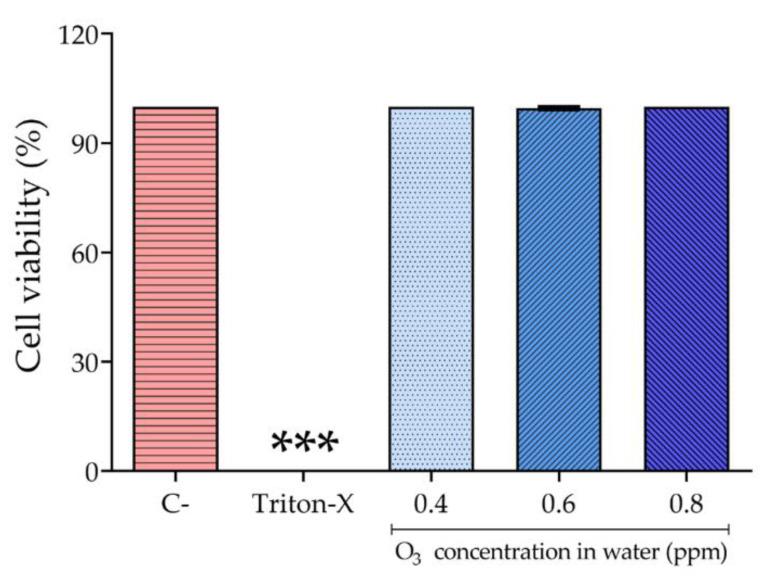
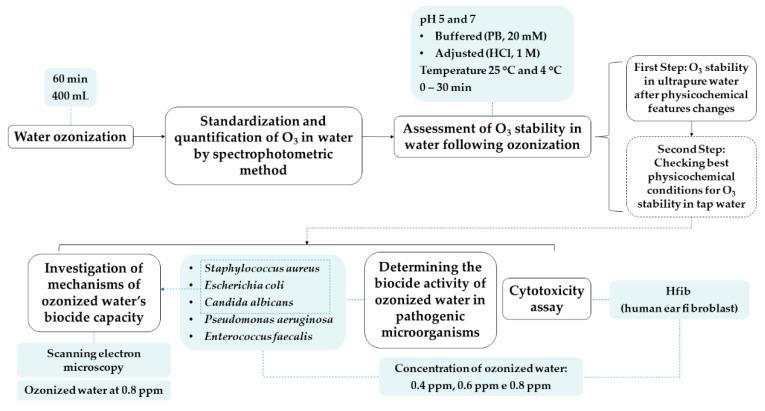
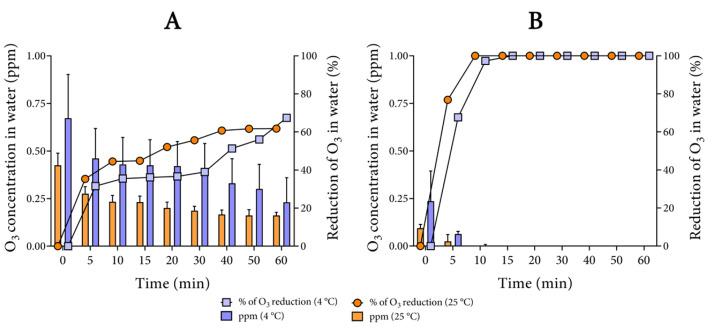
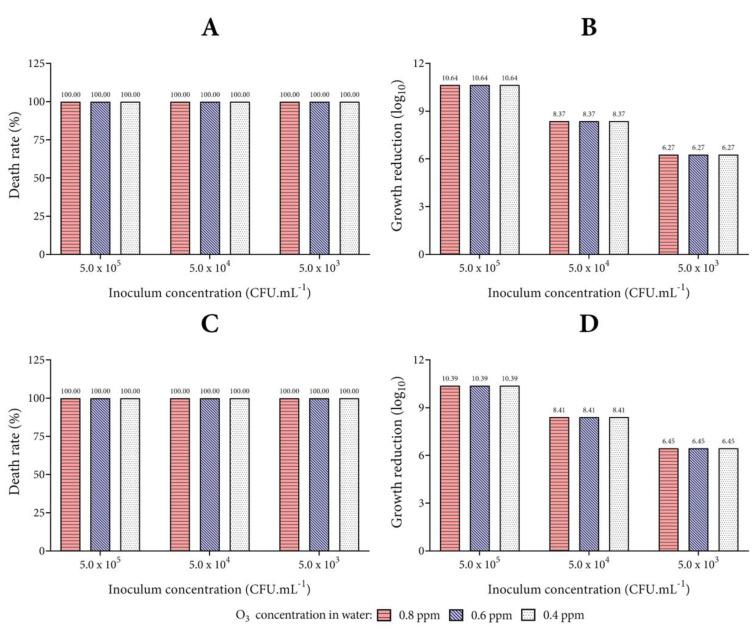
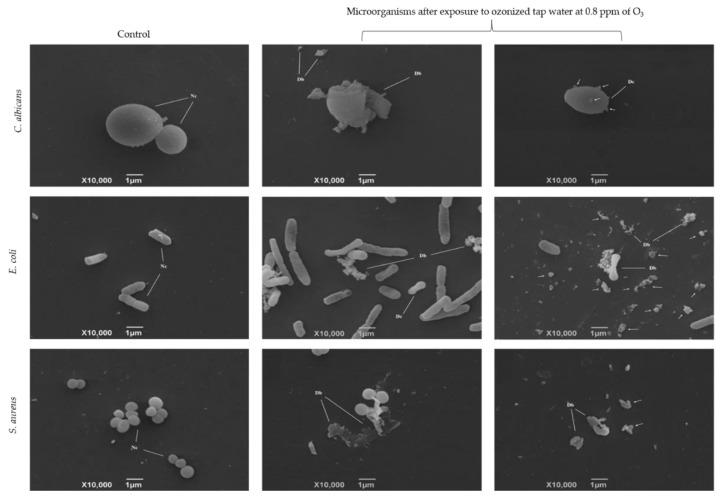
O dissolved in water (or ozonized water) has been considered a potent antimicrobial agent, and this study aimed to test this through microbiological and in vitro assays. The stability of O was accessed following modifications of the physicochemical parameters of water, such as the temperature and pH, with or without buffering. Three concentrations of O (0.4, 0.6, and 0.8 ppm) dissolved in water were tested against different microorganisms, and an analysis of the cytotoxic effects was also conducted using the human ear fibroblast cell line (Hfib). Under the physicochemical conditions of 4 °C and pH 5, O remained the most stable and concentrated compared to pH 7 and water at 25 °C. Exposure to ozonized water resulted in high mortality rates for , , , , and . Scanning electron micrograph images indicate that the effects on osmotic stability due to cell wall lysis might be one of the killing mechanisms of ozonized water. The biocidal agent was biocompatible and presented no cytotoxic effect against Hfib cells. Therefore, due to its cytocompatibility and biocidal action, ozonized water can be considered a viable alternative for microbial control, being possible, for example, its use in disinfection processes.
溶解于水(或臭氧水)中的臭氧被认为是一种有效的抗菌剂,本研究旨在通过微生物学和体外试验对此进行验证。在有或没有缓冲的情况下,通过改变水的物理化学参数(如温度和pH值)来研究臭氧的稳定性。测试了溶解于水中的三种浓度的臭氧(0.4、0.6和0.8 ppm)对不同微生物的作用,并使用人耳成纤维细胞系(Hfib)进行了细胞毒性作用分析。在4°C和pH 5的物理化学条件下,与25°C的pH 7的水相比,臭氧保持最稳定且浓度最高。暴露于臭氧水会导致[此处原文缺失具体微生物名称]的高死亡率。扫描电子显微镜图像表明,由于细胞壁裂解导致的渗透稳定性变化可能是臭氧水的杀伤机制之一。该杀菌剂具有生物相容性,对Hfib细胞无细胞毒性作用。因此,由于其细胞相容性和杀菌作用,臭氧水可被视为微生物控制的可行替代方法,例如,它可用于消毒过程。




 Zotero 插件