
腹横肌平面阻滞和竖脊肌平面阻滞对剖宫产术后急性疼痛的效果:一项随机、单盲、对照试验。
The Effectiveness of Transversus Abdominis Plane and Quadratus Lumborum Blocks in Acute Postoperative Pain Following Cesarean Section-A Randomized, Single-Blind, Controlled Trial.
机构信息
II Department of Anesthesiology and Intensive Care, Medical University of Lublin, Ul. Staszica 16, 20-081 Lublin, Poland.
Department of Obstetrics and Pathology of Pregnancy, Medical University of Lublin, 20-081 Lublin, Poland.
出版信息
Int J Environ Res Public Health. 2021 Jun 30;18(13):7034. doi: 10.3390/ijerph18137034.
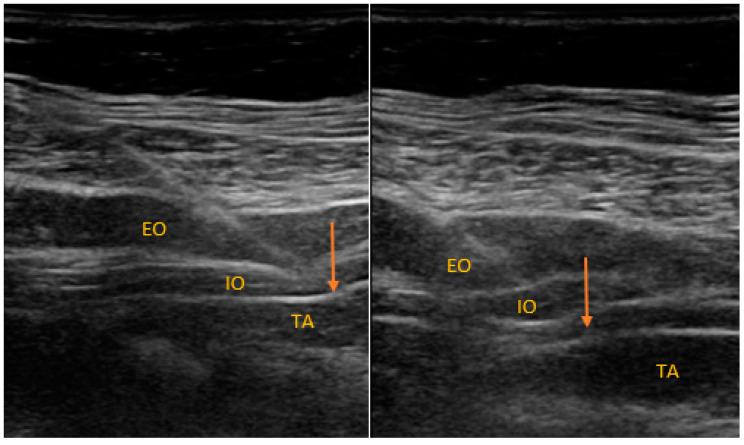
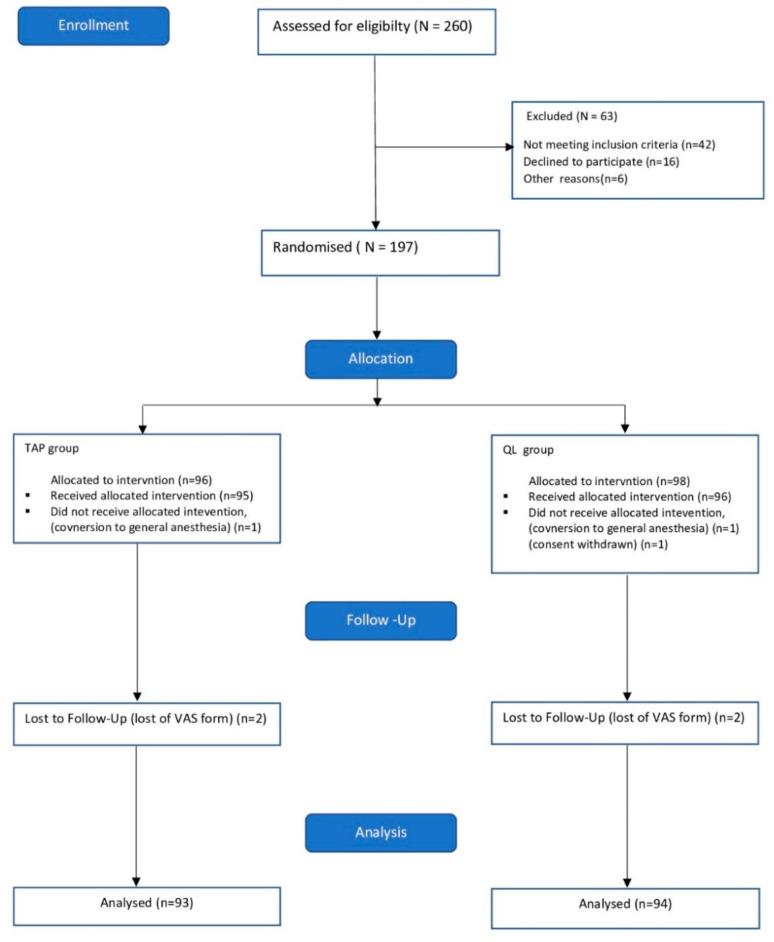
Acute pain intensity related to cesarean section (CS) may be extensive and is often underestimated. This may influence mothers' quality of life and their children's development. Regional analgesia techniques that include transversus abdominis plane block (TAPB) and quadratus lumborum block (QLB) have proven their efficacy in the postoperative period after CS. Although several randomized controlled studies and one meta-analysis have investigated the utility of TAPB and QLB in the reduction of acute and chronic pain after CS, only one study directly compared both types of regional blocks and revealed superiority of QLB over TAPB. Our study aimed to reevaluate the effectiveness of transversus TAPB and QLB in controlling acute postoperative pain after CS. We recruited 197 women with singleton pregnancies undergoing CS under spinal anesthesia. The patients were randomized to receive either TAPB or QLB after CS. The acute postoperative pain was evaluated using the visual analog scale (VAS) at 2, 4, 8, 12 and 24 h after the operation. No significant difference in acute postoperative pain intensity between the groups was found. The patients who received TAPB had a higher demand for supplemental morphine injections ( < 0.039). In our study, none of the evaluated regional blocks demonstrated an advantage over the other regarding acute postoperative pain management.
剖宫产术后(CS)的急性疼痛强度可能较大,且往往被低估。这可能会影响产妇的生活质量及其子女的发育。已经证明,包括腹横肌平面阻滞(TAPB)和腰方肌阻滞(QLB)在内的区域镇痛技术在 CS 后的术后期间有效。尽管已经有几项随机对照研究和一项荟萃分析调查了 TAPB 和 QLB 在减少 CS 后急性和慢性疼痛方面的作用,但只有一项研究直接比较了这两种类型的区域阻滞,并显示 QLB 优于 TAPB。我们的研究旨在重新评估 TAPB 和 QLB 在控制 CS 后急性术后疼痛方面的有效性。我们招募了 197 名接受脊髓麻醉下 CS 的单胎妊娠女性。患者在 CS 后被随机分配接受 TAPB 或 QLB。术后 2、4、8、12 和 24 小时使用视觉模拟量表(VAS)评估急性术后疼痛。两组之间的急性术后疼痛强度无显著差异。接受 TAPB 的患者对补充吗啡注射的需求更高(<0.039)。在我们的研究中,在急性术后疼痛管理方面,没有一种评估的区域阻滞方法比其他方法具有优势。



 Zotero 插件