
COVID-19 疫情爆发期间药品恐慌性购买的收入梯度。
Income gradient of pharmaceutical panic buying at the outbreak of the COVID-19 pandemic.
机构信息
Centre for Economic and Regional Studies, Budapest, Hungary.
Corvinus University of Budapest, Budapest, Hungary.
出版信息
Health Econ. 2021 Sep;30(9):2312-2320. doi: 10.1002/hec.4378. Epub 2021 Jul 3.
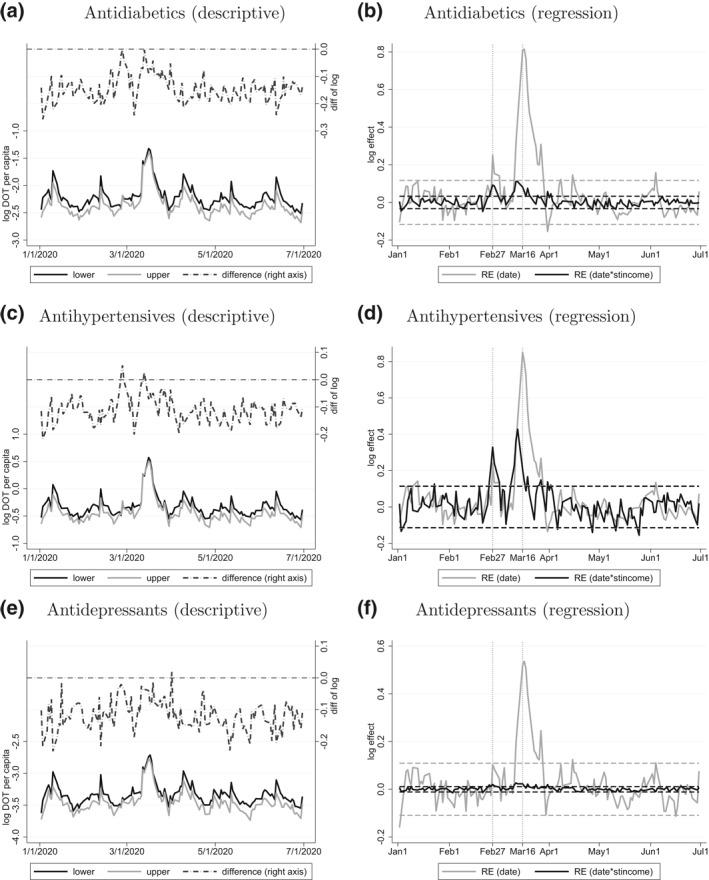
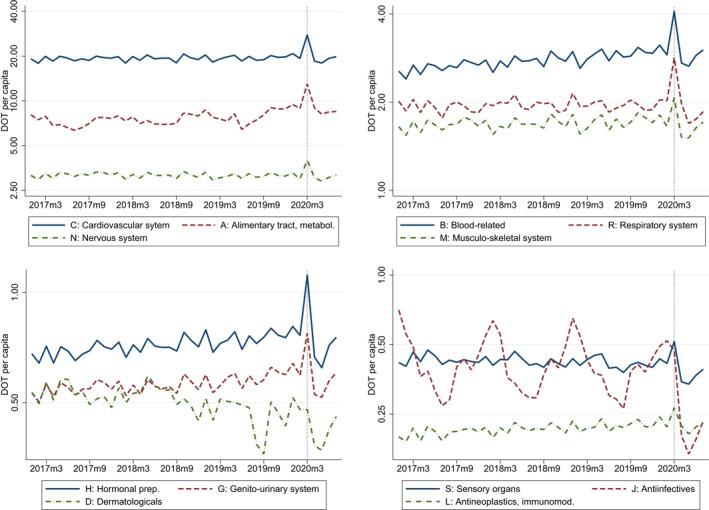
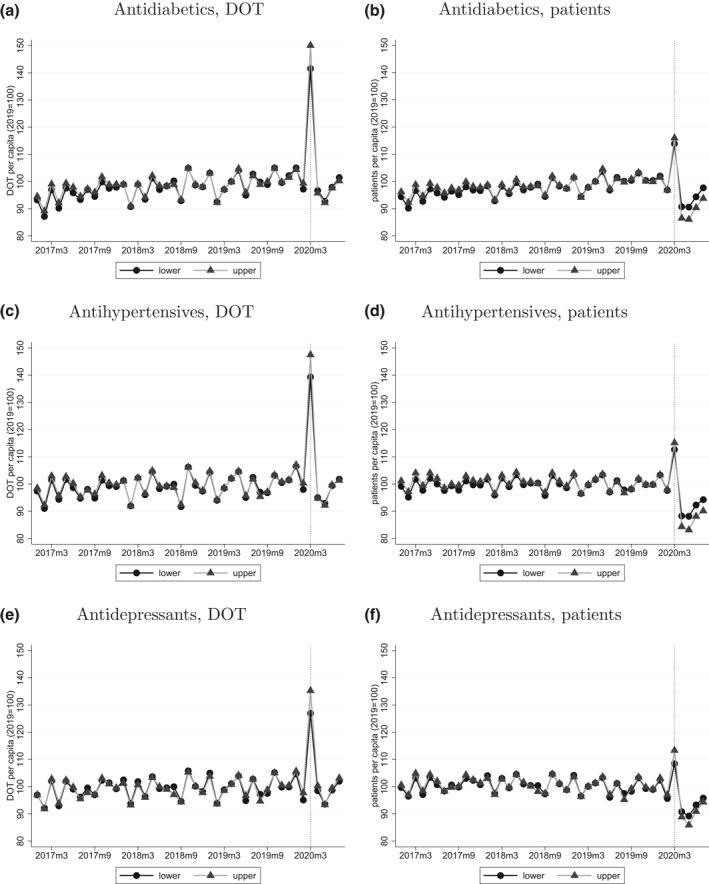
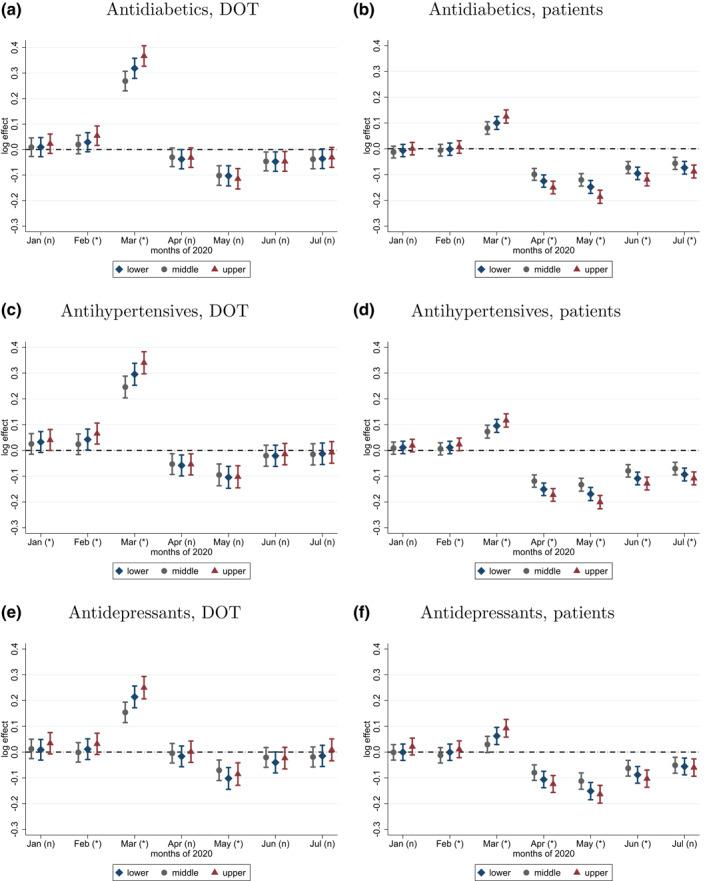
We analyze the timing, magnitude, and income dependence of pharmaceutical panic buying around the outbreak of the COVID-19 pandemic in Hungary. We use district-level monthly and daily administrative data on detailed categories of pharmaceutical purchases, merge them to income statistics, and estimate multilevel panel models. Our main results are as follows. First, the days of therapy (DOT) of pharmaceutical purchases increased by more than 30% in March 2020, when major lockdown measures were announced. This pattern holds for almost all categories of pharmaceuticals. Second, shortly after the panic reactions, the aggregate amount of pharmaceutical purchases returned to their preshock levels; however, the frequency of pharmacy visits decreased. Third, the panic buying reaction was significantly stronger in richer geographical areas, where-according to the daily data-people also reacted earlier to the pandemic-related news. Overall, the results suggest that panic buying of pharmaceuticals can have detrimental effects on vulnerable populations.
我们分析了 COVID-19 大流行在匈牙利爆发前后的药品恐慌性购买的时间、幅度和收入依赖性。我们使用了关于药品购买详细类别的区级月度和每日行政数据,将其与收入统计数据进行了合并,并估计了多层次面板模型。我们的主要结果如下。首先,在宣布实施重大封锁措施的 2020 年 3 月,药品购买的治疗天数(DOT)增加了 30%以上。这一模式适用于几乎所有类别的药品。其次,在恐慌反应之后不久,药品购买的总量就恢复到了冲击前的水平;然而,去药店的频率却降低了。第三,在较富裕的地区,恐慌性购买反应更为强烈,根据每日数据,这些地区的人们对与疫情相关的新闻也更早做出了反应。总的来说,这些结果表明,药品恐慌性购买可能会对弱势群体产生不利影响。

 Zotero 插件