
二甲双胍通过 ATF4 诱导的 REDD1 和 Sestrin2 表达抑制 mTORC1。
Inhibition of mTORC1 through ATF4-induced REDD1 and Sestrin2 expression by Metformin.
机构信息
Division of Fusion Radiology Research, Korea Institute of Radiological & Medical Sciences, 75 Nowon-ro, Nowon-gu, Seoul, 01812, Republic of Korea.
Department of Food and Microbial Technology, Seoul Women's University, 621 Hwarangro, Nowon-gu, Seoul, 01797, Republic of Korea.
出版信息
BMC Cancer. 2021 Jul 12;21(1):803. doi: 10.1186/s12885-021-08346-x.
BACKGROUND
Although the major anticancer effect of metformin involves AMPK-dependent or AMPK-independent mTORC1 inhibition, the mechanisms of action are still not fully understood.
METHODS
To investigate the molecular mechanisms underlying the effect of metformin on the mTORC1 inhibition, MTT assay, RT-PCR, and western blot analysis were performed.
RESULTS
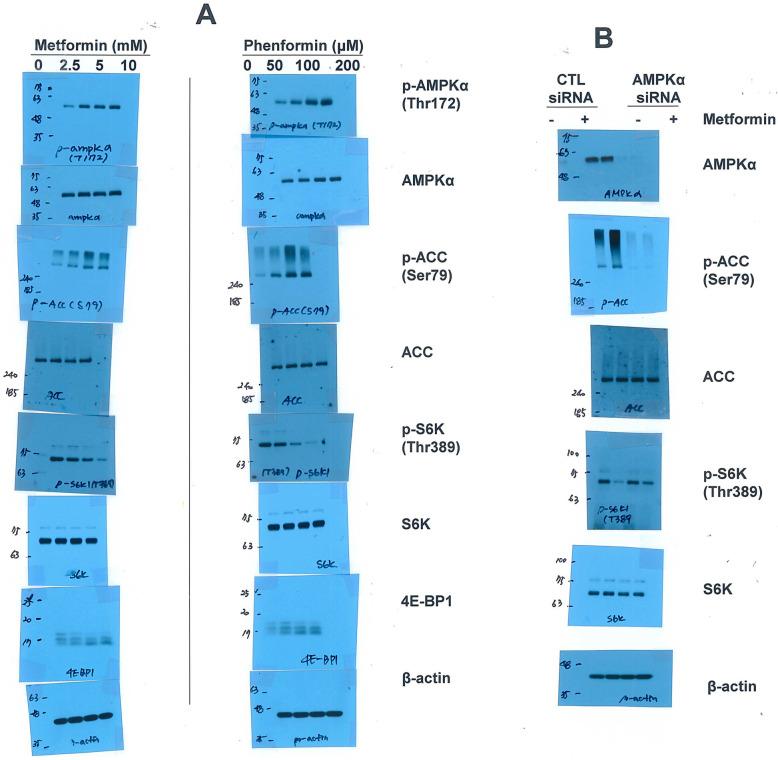
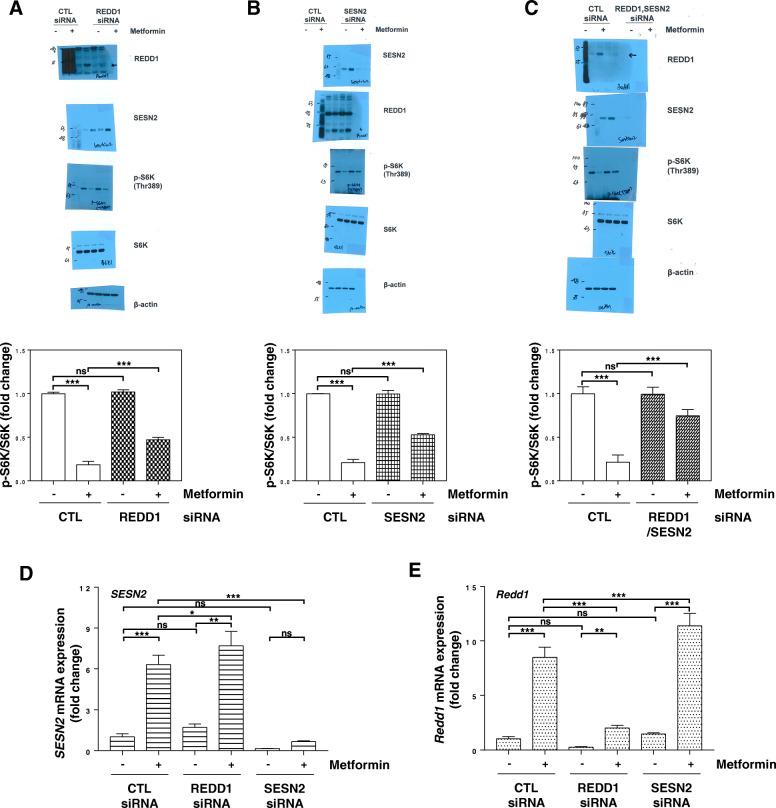
Metformin induced the expression of ATF4, REDD1, and Sestrin2 concomitant with its inhibition of mTORC1 activity. Treatment with REDD1 or Sestrin2 siRNA reversed the mTORC1 inhibition induced by metformin, indicating that REDD1 and Sestrin2 are important for the inhibition of mTORC1 triggered by metformin treatment. Moreover, REDD1- and Sestrin2-mediated mTORC1 inhibition in response to metformin was independent of AMPK activation. Additionally, lapatinib enhances cell sensitivity to metformin, and knockdown of REDD1 and Sestrin2 decreased cell sensitivity to metformin and lapatinib.
CONCLUSIONS
ATF4-induced REDD1 and Sestrin2 expression in response to metformin plays an important role in mTORC1 inhibition independent of AMPK activation, and this signalling pathway could have therapeutic value.
背景
尽管二甲双胍的主要抗癌作用涉及 AMPK 依赖或 AMPK 非依赖的 mTORC1 抑制,但作用机制仍不完全清楚。
方法
为了研究二甲双胍抑制 mTORC1 作用的分子机制,进行了 MTT 检测、RT-PCR 和 Western blot 分析。
结果
二甲双胍诱导 ATF4、REDD1 和 Sestrin2 的表达,同时抑制 mTORC1 活性。用 REDD1 或 Sestrin2 siRNA 处理可逆转二甲双胍诱导的 mTORC1 抑制,表明 REDD1 和 Sestrin2 对二甲双胍治疗引发的 mTORC1 抑制很重要。此外,REDD1 和 Sestrin2 介导的对二甲双胍的 mTORC1 抑制与 AMPK 激活无关。此外,拉帕替尼增强了细胞对二甲双胍的敏感性,而 REDD1 和 Sestrin2 的敲低降低了细胞对二甲双胍和拉帕替尼的敏感性。
结论
二甲双胍诱导的 ATF4 应答的 REDD1 和 Sestrin2 表达在 mTORC1 抑制中发挥重要作用,且不依赖于 AMPK 激活,该信号通路可能具有治疗价值。



 Zotero 插件