
SARS-CoV-2:是否存在神经入侵?
SARS-CoV-2: is there neuroinvasion?
机构信息
Department of Neuroscience, University of Rochester, URMC, 601 Elmwood Avenue, Rochester, NY, 14642, USA.
出版信息
Fluids Barriers CNS. 2021 Jul 14;18(1):32. doi: 10.1186/s12987-021-00267-y.
BACKGROUND
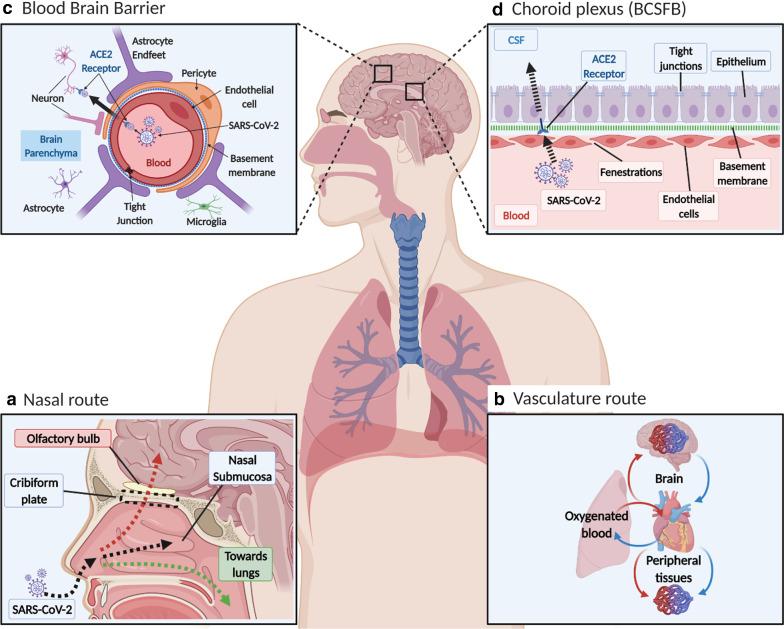
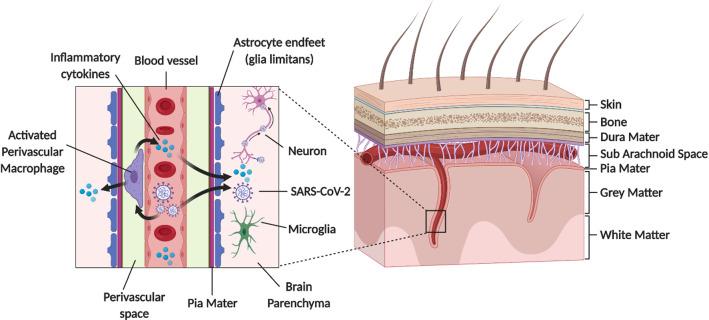
SARS-CoV-2, a coronavirus (CoV), is known to cause acute respiratory distress syndrome, and a number of non-respiratory complications, particularly in older male patients with prior health conditions, such as obesity, diabetes and hypertension. These prior health conditions are associated with vascular dysfunction, and the CoV disease 2019 (COVID-19) complications include multiorgan failure and neurological problems. While the main route of entry into the body is inhalation, this virus has been found in many tissues, including the choroid plexus and meningeal vessels, and in neurons and CSF.
MAIN BODY
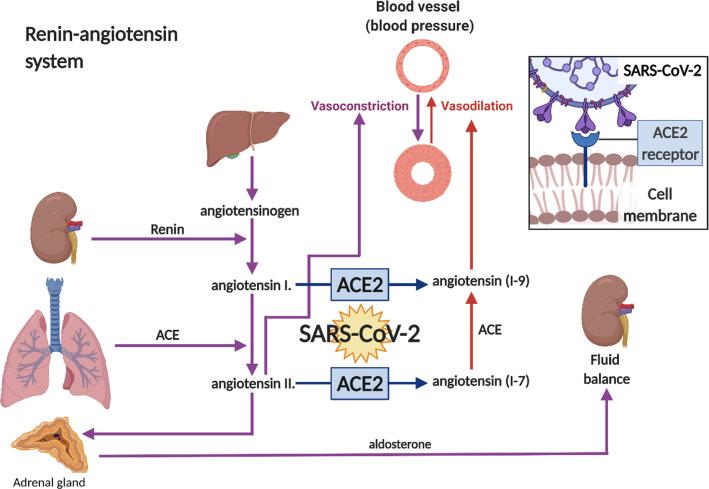
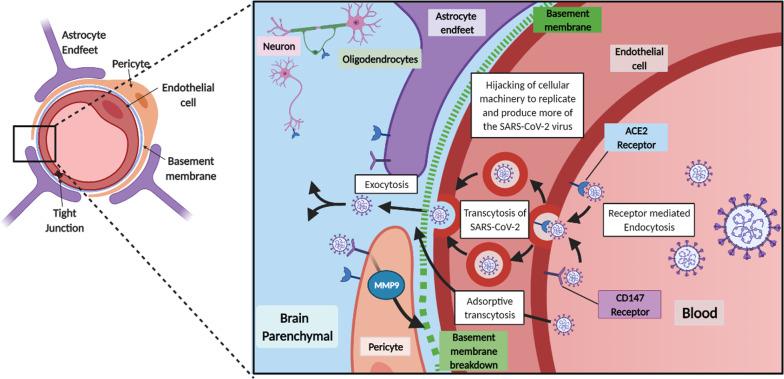
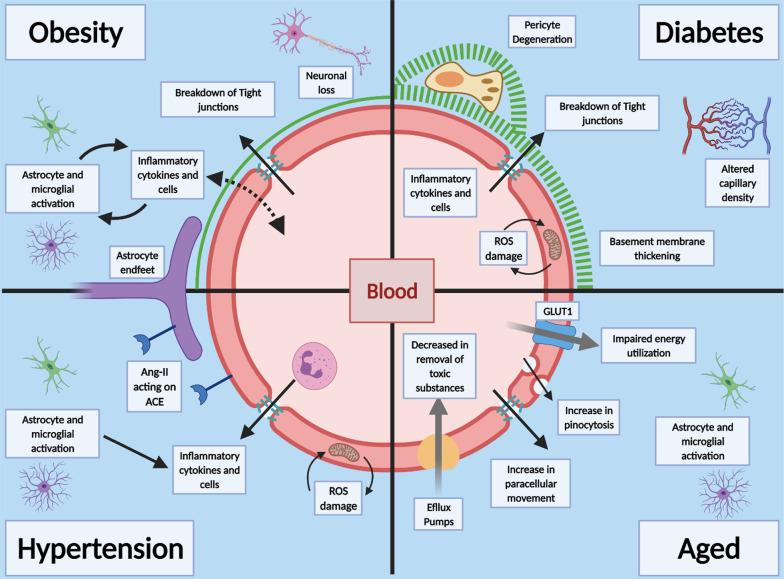
We reviewed SARS-CoV-2/COVID-19, ACE2 distribution and beneficial effects, the CNS vascular barriers, possible mechanisms by which the virus enters the brain, outlined prior health conditions (obesity, hypertension and diabetes), neurological COVID-19 manifestation and the aging cerebrovascualture. The overall aim is to provide the general reader with a breadth of information on this type of virus and the wide distribution of its main receptor so as to better understand the significance of neurological complications, uniqueness of the brain, and the pre-existing medical conditions that affect brain. The main issue is that there is no sound evidence for large flux of SARS-CoV-2 into brain, at present, compared to its invasion of the inhalation pathways.
CONCLUSIONS
While SARS-CoV-2 is detected in brains from severely infected patients, it is unclear on how it gets there. There is no sound evidence of SARS-CoV-2 flux into brain to significantly contribute to the overall outcomes once the respiratory system is invaded by the virus. The consensus, based on the normal route of infection and presence of SARS-CoV-2 in severely infected patients, is that the olfactory mucosa is a possible route into brain. Studies are needed to demonstrate flux of SARS-CoV-2 into brain, and its replication in the parenchyma to demonstrate neuroinvasion. It is possible that the neurological manifestations of COVID-19 are a consequence of mainly cardio-respiratory distress and multiorgan failure. Understanding potential SARS-CoV-2 neuroinvasion pathways could help to better define the non-respiratory neurological manifestation of COVID-19.
背景
已知 SARS-CoV-2(一种冠状病毒)可导致急性呼吸窘迫综合征,以及许多非呼吸并发症,特别是在肥胖、糖尿病和高血压等先前存在健康状况的老年男性患者中。这些先前存在的健康状况与血管功能障碍有关,而 2019 年新型冠状病毒病(COVID-19)并发症包括多器官衰竭和神经系统问题。尽管进入人体的主要途径是吸入,但该病毒已在许多组织中被发现,包括脉络丛和脑膜血管,以及神经元和脑脊液中。
正文
我们回顾了 SARS-CoV-2/COVID-19、ACE2 分布和有益作用、中枢神经系统血管屏障、病毒进入大脑的可能机制、概述了先前存在的健康状况(肥胖、高血压和糖尿病)、COVID-19 神经系统表现和老龄化的脑脉管系统。总体目标是为普通读者提供有关这种病毒及其主要受体广泛分布的广泛信息,以便更好地理解神经系统并发症的意义、大脑的独特性以及影响大脑的先前存在的医疗状况。主要问题是,与病毒入侵呼吸系统相比,目前没有充分证据表明 SARS-CoV-2 大量流入大脑。
结论
虽然在严重感染患者的大脑中检测到 SARS-CoV-2,但它是如何进入大脑的尚不清楚。目前没有充分证据表明 SARS-CoV-2 流入大脑会显著影响病毒入侵呼吸系统后的整体结果。根据正常感染途径和严重感染患者中存在 SARS-CoV-2 的共识,嗅黏膜是进入大脑的可能途径。需要研究来证明 SARS-CoV-2 流入大脑及其在实质中的复制,以证明神经入侵。COVID-19 的神经系统表现可能是心肺窘迫和多器官衰竭的主要后果。了解 SARS-CoV-2 潜在的神经入侵途径有助于更好地定义 COVID-19 的非呼吸神经系统表现。

 Zotero 插件