
一个利用小鼠类器官验证结直肠癌驱动基因的平台。
A Platform for Validating Colorectal Cancer Driver Genes Using Mouse Organoids.
作者信息
Takeda Haruna
机构信息
Laboratory of Molecular Genetics, National Cancer Center Research Institute, Tokyo, Japan.
出版信息
Front Genet. 2021 Jun 28;12:698771. doi: 10.3389/fgene.2021.698771. eCollection 2021.
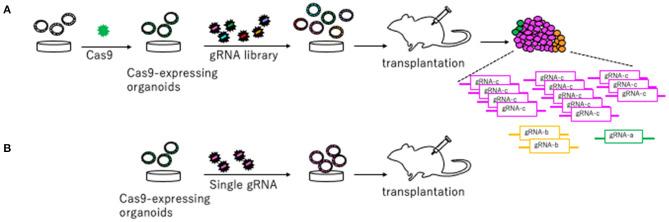
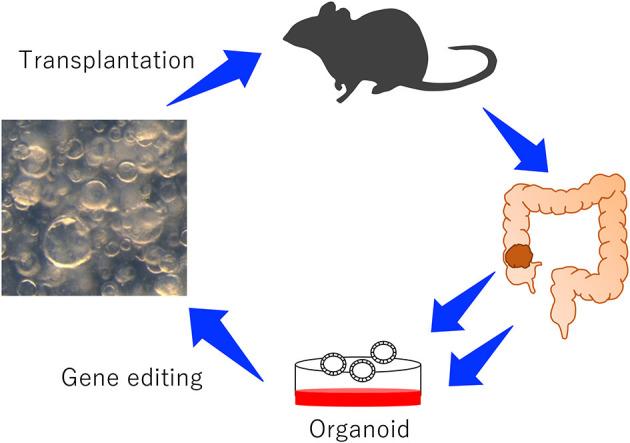
Systematic approaches for functionally validating cancer genes are needed since numerous genes mutated in cancer tissues have been identified from cancer genome sequencing. The mouse organoid culture system has been extensively used in the field of cancer research since mouse organoids can faithfully recapitulate the physiological behavior of the cells. Taking advantage of this, we recently described a platform for functionally validating colorectal cancer (CRC) driver genes that utilized CRISPR-Cas9 in mouse intestinal tumor organoids. In this review, we will describe how mouse organoids have been applied to CRC research and focus on how CRC genes can be validated using mouse organoids.
由于通过癌症基因组测序已鉴定出许多在癌组织中发生突变的基因,因此需要用于对癌症基因进行功能验证的系统方法。小鼠类器官培养系统已在癌症研究领域中广泛使用,因为小鼠类器官可以忠实地再现细胞的生理行为。利用这一点,我们最近描述了一个在小鼠肠道肿瘤类器官中利用CRISPR-Cas9对结直肠癌(CRC)驱动基因进行功能验证的平台。在这篇综述中,我们将描述小鼠类器官如何应用于CRC研究,并重点关注如何使用小鼠类器官验证CRC基因。
 Zotero 插件