
多孔动物门中的塑料:巴拿马博卡斯德尔托罗海域海绵和海水中潜在微塑料的存在情况
Plastics in Porifera: The occurrence of potential microplastics in marine sponges and seawater from Bocas del Toro, Panamá.
作者信息
Fallon Bailey R, Freeman Christopher J
机构信息
Department of Biology, College of Charleston, Charleston, SC, United States.
出版信息
PeerJ. 2021 Jul 8;9:e11638. doi: 10.7717/peerj.11638. eCollection 2021.
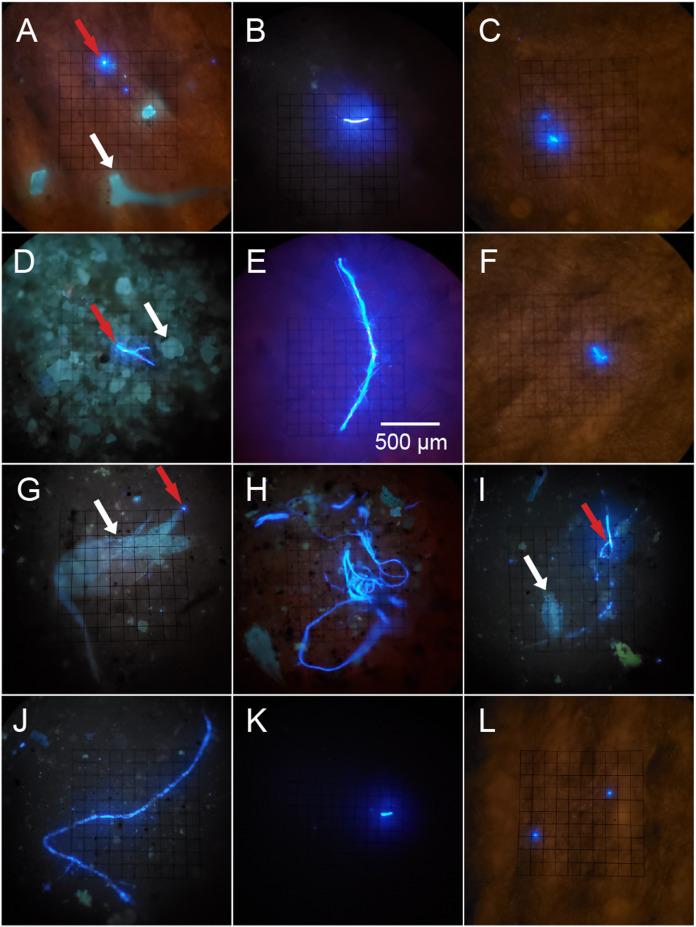
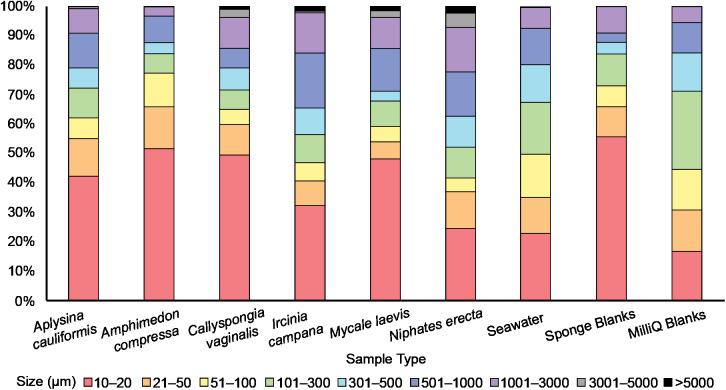
Microplastics (MP) are now considered ubiquitous across global aquatic environments. The ingestion of MP by fish and other marine vertebrates is well studied, but the ingestion of MP by marine invertebrates is not. Sponges (Phylum Porifera) are particularly understudied when it comes to MP ingestion, even though they are widely distributed across benthic habitats, can process large volumes of seawater, and can retain small particles within their water filtration systems. This study examines the presence of potential MP (PMP) in wild marine sponges and seawater collected in Bocas del Toro, Panamá. Subsurface seawater and tissue from six common Caribbean sponge species was collected in Saigon Bay, a heavily impacted, shallow-water coral reef. Seawater samples were filtered onto glass fiber filters to retain any PMP present and sponge tissue was digested with bleach, heated and filtered. Filters were examined using fluorescence microscopy to quantify PMP. An average of 107 ± 25 PMP L was detected in seawater from Saigon Bay with particles ranging in size between 10 μm and ~3,000 μm. The number of PMP found in sponge tissue ranged between 6 ± 4 and 169 ± 71 PMP g of dry tissue. Most particles found in sponge samples were very small (10-20 μm), but fibers greater than 5,000 μm were detected. Our results indicate that PMP exists within the tissues of the sponges we studied, but future studies should confirm the presence of MP in sponges using chemical analysis. Most importantly, the discrepancy between low levels of PMP in our sponge samples and high levels in the surrounding seawater highlights the potential for sponges to resist and/or egest MP. Finally, we provide a critical evaluation of our methods to improve their use in future MP work with benthic marine organisms.
微塑料(MP)如今被认为在全球水生环境中无处不在。鱼类和其他海洋脊椎动物对微塑料的摄取已得到充分研究,但海洋无脊椎动物对微塑料的摄取情况却未被充分研究。尽管海绵(多孔动物门)广泛分布于底栖生境,能够处理大量海水,并能在其水过滤系统中截留小颗粒,但在微塑料摄取方面,海绵尤其未得到充分研究。本研究调查了在巴拿马博卡斯德尔托罗采集的野生海洋海绵和海水中潜在微塑料(PMP)的存在情况。在一个受到严重影响的浅水珊瑚礁——西贡湾,采集了六种常见加勒比海绵物种的次表层海水和组织样本。海水样本通过玻璃纤维滤膜过滤,以截留任何存在的潜在微塑料,海绵组织用漂白剂消化、加热并过滤。使用荧光显微镜检查滤膜,以量化潜在微塑料。在西贡湾海水中平均检测到每升107±25个潜在微塑料,颗粒大小在10微米至约3000微米之间。在海绵组织中发现的潜在微塑料数量在每克干组织6±4至169±71个潜在微塑料之间。在海绵样本中发现的大多数颗粒非常小(10 - 20微米),但也检测到了大于5000微米的纤维。我们的结果表明,在我们研究的海绵组织中存在潜在微塑料,但未来的研究应使用化学分析来确认海绵中微塑料的存在。最重要的是,我们海绵样本中潜在微塑料含量低与周围海水中含量高之间的差异,凸显了海绵抵抗和/或排出微塑料的潜力。最后,我们对我们的方法进行了批判性评估,以改进其在未来对底栖海洋生物的微塑料研究中的应用。


 Zotero 插件