
微塑料:对珊瑚和其他珊瑚礁生物的影响。
Microplastics: impacts on corals and other reef organisms.
机构信息
Institute of Environmental Science and Research, 27 Creyke Road, Ilam, Christchurch 8041, New Zealand.
出版信息
Emerg Top Life Sci. 2022 Mar 14;6(1):81-93. doi: 10.1042/ETLS20210236.
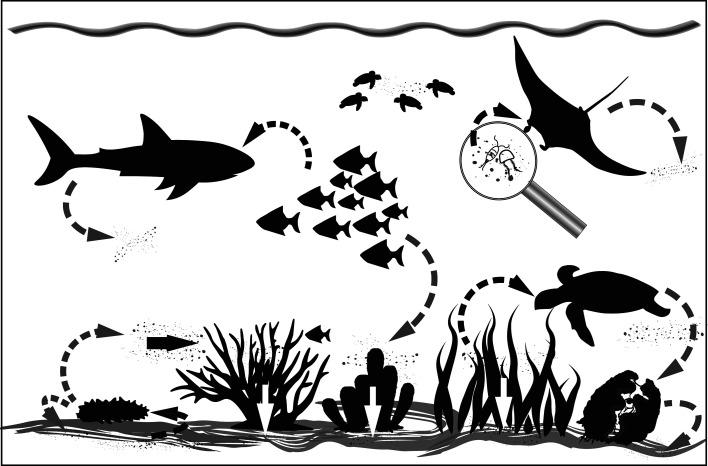
Plastic pollution in a growing problem globally. In addition to the continuous flow of plastic particles to the environment from direct sources, and through the natural wear and tear of items, the plastics that are already there have the potential to breakdown further and therefore provide an immense source of plastic particles. With the continued rise in levels of plastic production, and consequently increasing levels entering our marine environments it is imperative that we understand its impacts. There is evidence microplastic and nanoplastic (MNP) pose a serious threat to all the world's marine ecosystems and biota, across all taxa and trophic levels, having individual- to ecosystem-level impacts, although these impacts are not fully understood. Microplastics (MPs; 0.1-5 mm) have been consistently found associated with the biota, water and sediments of all coral reefs studied, but due to limitations in the current techniques, a knowledge gap exists for the level of nanoplastic (NP; <1 µm). This is of particular concern as it is this size fraction that is thought to pose the greatest risk due to their ability to translocate into different organs and across cell membranes. Furthermore, few studies have examined the interactions of MNP exposure and other anthropogenic stressors such as ocean acidification and rising temperature. To support the decision-making required to protect these ecosystems, an advancement in standardised methods for the assessment of both MP and NPs is essential. This knowledge, and that of predicted levels can then be used to determine potential impacts more accurately.
塑料污染是一个日益严重的全球性问题。除了直接来源和物品自然磨损导致的塑料颗粒不断流向环境外,已经存在的塑料还有可能进一步分解,从而成为大量塑料颗粒的来源。随着塑料产量的持续增长,以及越来越多的塑料进入我们的海洋环境,我们必须了解其影响。有证据表明,微塑料和纳米塑料(MNP)对世界上所有的海洋生态系统和生物群构成严重威胁,跨越所有分类群和营养级,对个体和生态系统都有影响,尽管这些影响尚未完全了解。微塑料(MP;0.1-5 毫米)一直与所有研究过的珊瑚礁中的生物、水和沉积物有关,但由于当前技术的局限性,纳米塑料(NP;<1 微米)的水平存在知识空白。这尤其令人担忧,因为正是由于它们能够转移到不同的器官和穿过细胞膜,所以这一尺寸的塑料颗粒被认为是最危险的。此外,很少有研究探讨过 MNP 暴露与其他人为压力源(如海洋酸化和气温上升)之间的相互作用。为了支持保护这些生态系统所需的决策,必须改进用于评估 MPs 和 NPs 的标准化方法。有了这些知识和预测水平,就可以更准确地确定潜在影响。
 Zotero 插件