
米替福新通过削弱米替福新耐药株利什曼原虫的固有免疫识别,增强其感染力。
Miltefosine enhances infectivity of a miltefosine-resistant Leishmania infantum strain by attenuating its innate immune recognition.
机构信息
University of Antwerp, Department of Biomedical Sciences, Laboratory of Microbiology, Parasitology and Hygiene (LMPH), Wilrijk, Belgium.
Vrije Universiteit Brussel, Laboratory for Cellular and Molecular Immunology (CMIM), Brussels, Belgium.
出版信息
PLoS Negl Trop Dis. 2021 Jul 22;15(7):e0009622. doi: 10.1371/journal.pntd.0009622. eCollection 2021 Jul.
BACKGROUND
Miltefosine (MIL) is currently the only oral drug available to treat visceral leishmaniasis but its use as first-line monotherapy has been compromised by an increasing treatment failure. Despite the scarce number of resistant clinical isolates, MIL-resistance by mutations in a single aminophospholipid transporter gene can easily be selected in a laboratory environment. These mutations result in a reduced survival in the mammalian host, which can partially be restored by exposure to MIL, suggesting a kind of drug-dependency.
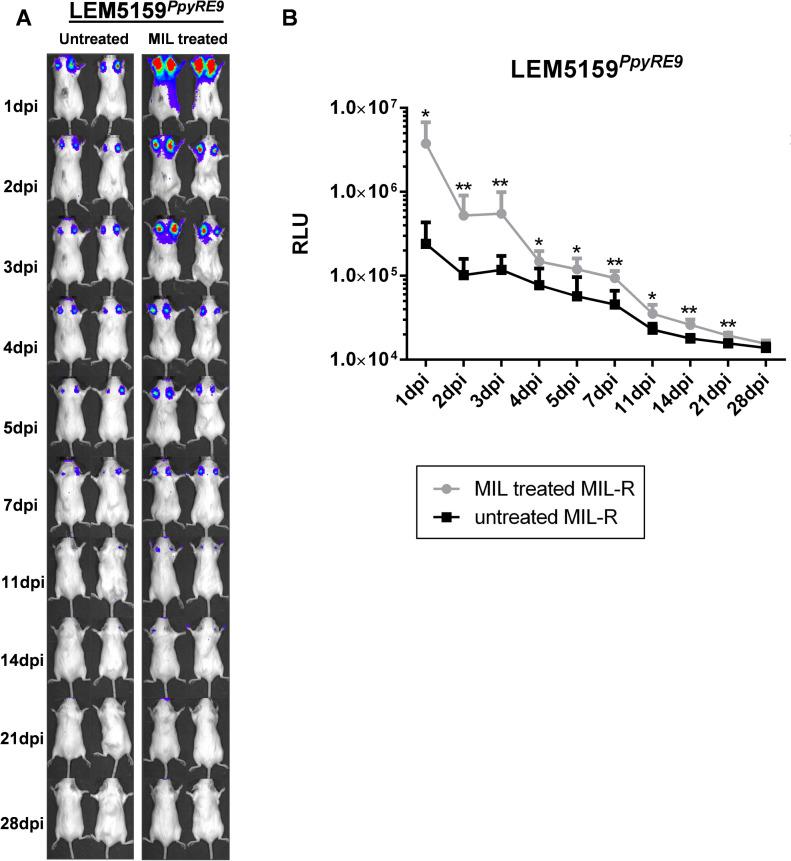
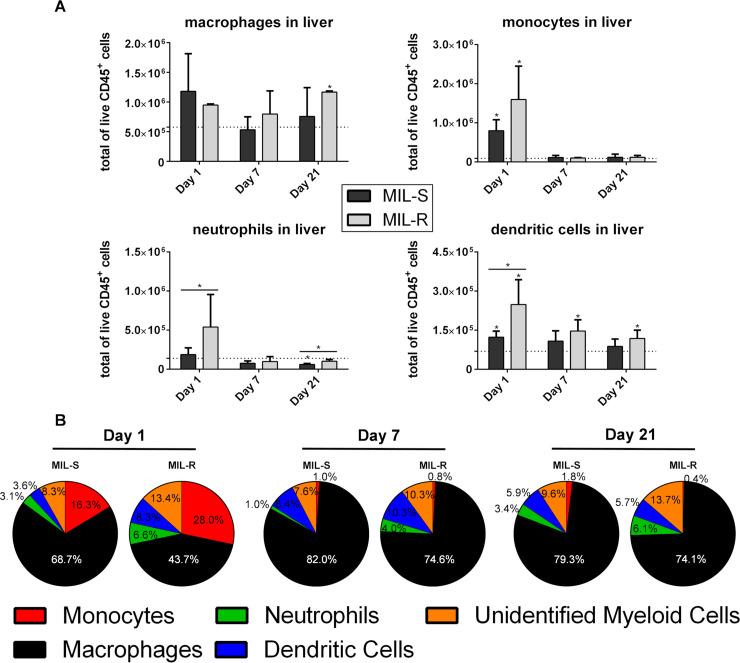
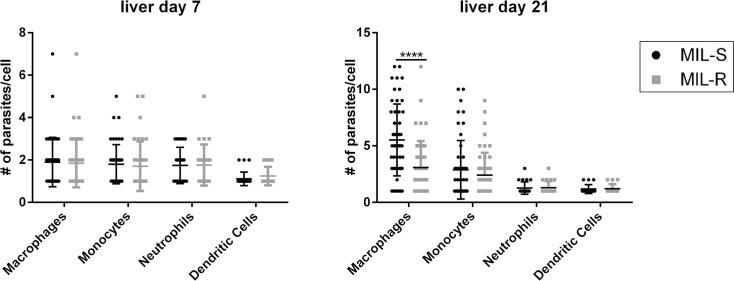
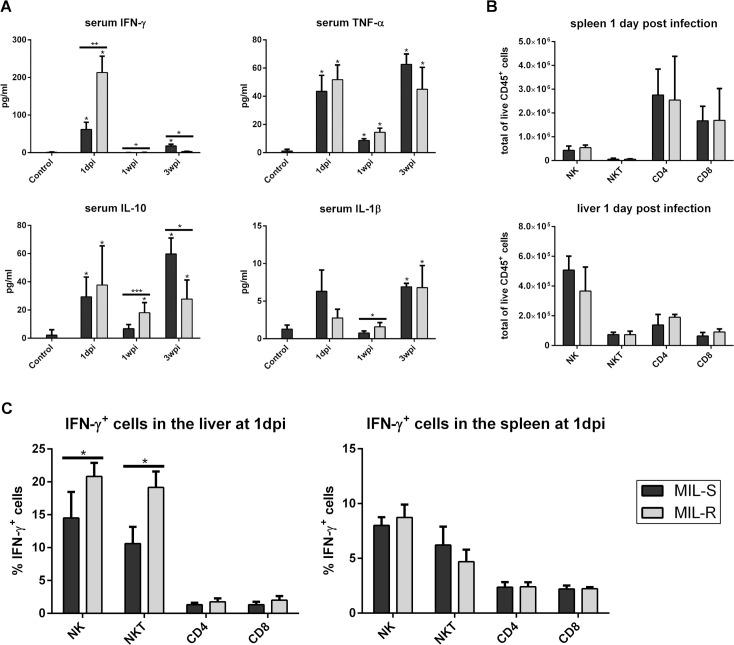
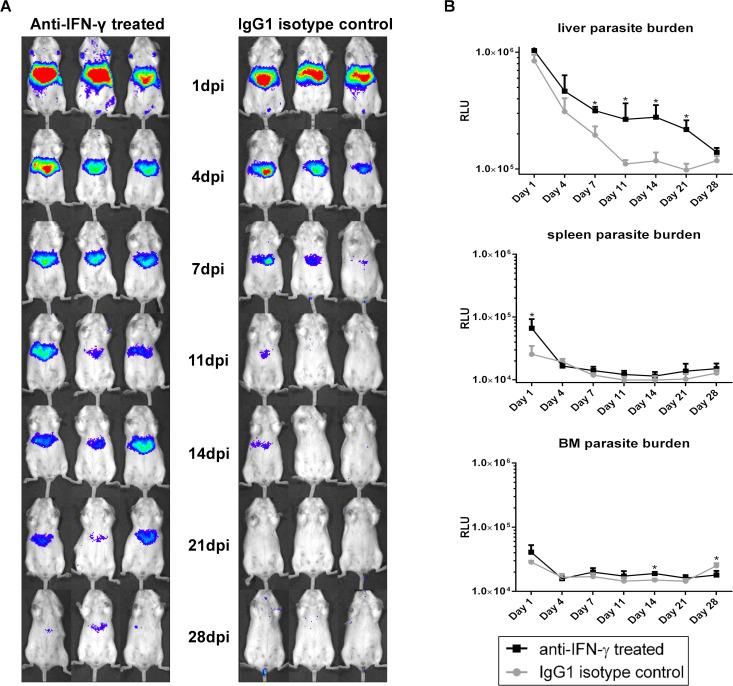
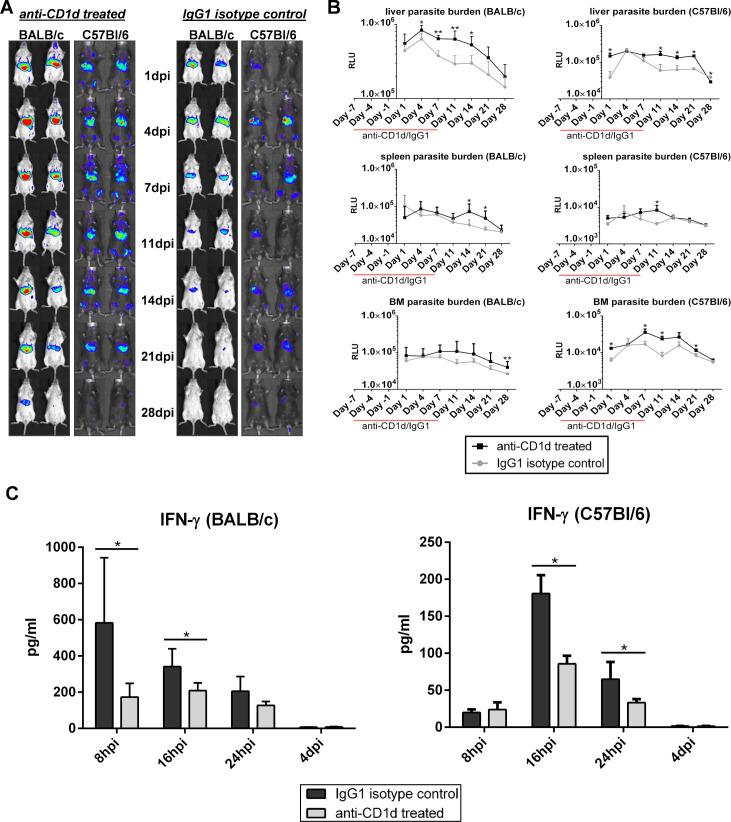
METHODOLOGY/PRINCIPAL FINDINGS: To enable a combined study of the infection dynamics and underlying immunological events for differential in vivo survival, firefly luciferase (PpyRE9) / red fluorescent protein (DsRed) double-reporter strains were generated of MIL-resistant (MIL-R) and syngeneic MIL-sensitive (MIL-S) Leishmania infantum. Results in C57Bl/6 and BALB/c mice show that MIL-R parasites induce an increased innate immune response that is characterized by enhanced influx and infection of neutrophils, monocytes and dendritic cells in the liver and elevated serum IFN-γ levels, finally resulting in a less efficient establishment in liver macrophages. The elevated IFN-γ levels were shown to originate from an increased response of hepatic NK and NKT cells to the MIL-R parasites. In addition, we demonstrated that MIL could increase the in vivo fitness of MIL-R parasites by lowering NK and NKT cell activation, leading to a reduced IFN-γ production.
CONCLUSIONS/SIGNIFICANCE: Differential induction of innate immune responses in the liver was found to underlie the attenuated phenotype of a MIL-R parasite and its peculiar feature of drug-dependency. The impact of MIL on hepatic NK and NKT activation and IFN-γ production following recognition of a MIL-R strain indicates that this mechanism may sustain infections with resistant parasites and contribute to treatment failure.
背景
米替福新(MIL)是目前治疗内脏利什曼病唯一可用的口服药物,但由于治疗失败率不断上升,其作为一线单药治疗的应用受到了影响。尽管耐药临床分离株的数量很少,但在实验室环境中,单个氨基磷脂转运基因的突变很容易导致 MIL 耐药。这些突变导致在哺乳动物宿主中的存活率降低,而暴露于 MIL 可部分恢复这种存活率,这表明存在某种药物依赖性。
方法/主要发现:为了能够对感染动力学和潜在的免疫事件进行联合研究,以观察不同的体内存活情况,我们生成了米替福新耐药(MIL-R)和同源米替福新敏感(MIL-S)利什曼原虫的萤火虫荧光素酶(PpyRE9)/红色荧光蛋白(DsRed)双报告株。在 C57Bl/6 和 BALB/c 小鼠中的结果表明,MIL-R 寄生虫诱导了增强的固有免疫反应,其特征为肝脏中中性粒细胞、单核细胞和树突状细胞的流入和感染增加,以及血清 IFN-γ水平升高,最终导致肝巨噬细胞中寄生虫的定植效率降低。升高的 IFN-γ 水平来源于肝 NK 和 NKT 细胞对 MIL-R 寄生虫的反应增加。此外,我们还证明 MIL 可以通过降低 NK 和 NKT 细胞的激活来增加 MIL-R 寄生虫的体内适应性,从而导致 IFN-γ 产生减少。
结论/意义:在肝脏中发现固有免疫反应的差异诱导是 MIL-R 寄生虫减毒表型的基础,也是其药物依赖性的独特特征。MIL 对肝 NK 和 NKT 激活以及识别 MIL-R 株后 IFN-γ 产生的影响表明,这种机制可能维持耐药寄生虫的感染,并导致治疗失败。




 Zotero 插件