
酒精摄入和肠道微生物组视角下的免疫系统。
The Immune System through the Lens of Alcohol Intake and Gut Microbiota.
机构信息
Departamento de Psicobiología y Metodología en Ciencias del Comportamiento, Facultad de Psicología, Universidad Complutense de Madrid, 28223 Madrid, Spain.
Unidad Gestión Clínica de Salud Mental, Instituto de Investigación Biomédica de Málaga (IBIMA), Hospital Regional Universitario de Málaga, Malaga University, 29010 Málaga, Spain.
出版信息
Int J Mol Sci. 2021 Jul 13;22(14):7485. doi: 10.3390/ijms22147485.
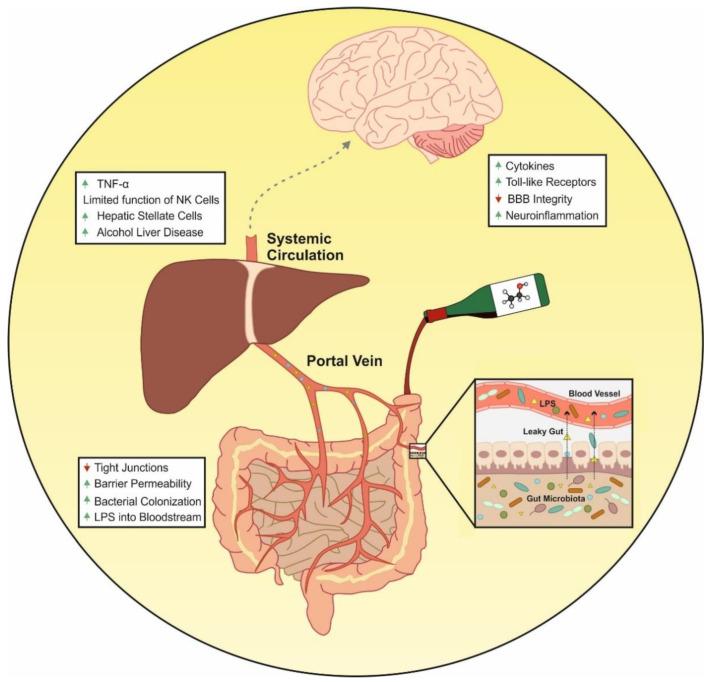
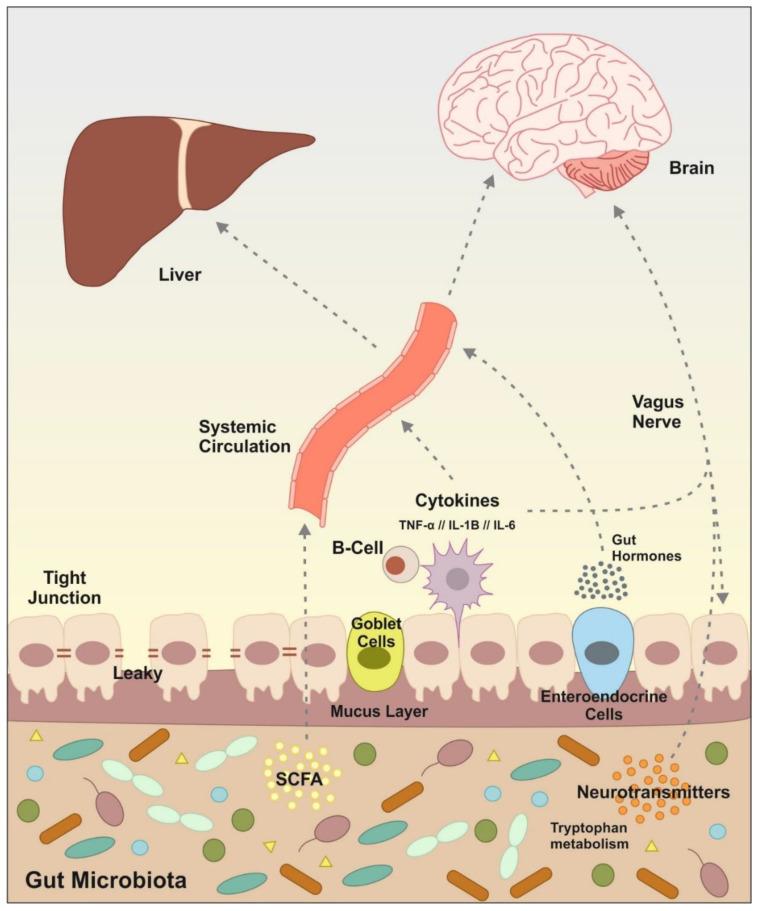
The human gut is the largest organ with immune function in our body, responsible for regulating the homeostasis of the intestinal barrier. A diverse, complex and dynamic population of microorganisms, called microbiota, which exert a significant impact on the host during homeostasis and disease, supports this role. In fact, intestinal bacteria maintain immune and metabolic homeostasis, protecting our organism against pathogens. The development of numerous inflammatory disorders and infections has been linked to altered gut bacterial composition or dysbiosis. Multiple factors contribute to the establishment of the human gut microbiota. For instance, diet is considered as one of the many drivers in shaping the gut microbiota across the lifetime. By contrast, alcohol is one of the many factors that disrupt the proper functioning of the gut, leading to a disruption of the intestinal barrier integrity that increases the permeability of the mucosa, with the final result of a disrupted mucosal immunity. This damage to the permeability of the intestinal membrane allows bacteria and their components to enter the blood tissue, reaching other organs such as the liver or the brain. Although chronic heavy drinking has harmful effects on the immune system cells at the systemic level, this review focuses on the effect produced on gut, brain and liver, because of their significance in the link between alcohol consumption, gut microbiota and the immune system.
人体肠道是体内具有免疫功能的最大器官,负责调节肠道屏障的内稳态。微生物群落(称为肠道菌群)是一个多样化、复杂且动态的群体,它在维持内稳态和疾病期间对宿主产生重大影响,从而支持了这一作用。事实上,肠道细菌维持着免疫和代谢的内稳态,保护我们的机体免受病原体的侵害。许多炎症性疾病和感染的发展都与肠道细菌组成的改变或菌群失调有关。多种因素有助于建立人类肠道微生物群。例如,饮食被认为是一生中塑造肠道微生物群的众多驱动因素之一。相比之下,酒精是破坏肠道正常功能的众多因素之一,导致肠道屏障完整性受损,增加了黏膜的通透性,最终导致黏膜免疫功能紊乱。这种肠道膜通透性的损伤使细菌及其成分能够进入血液组织,到达其他器官,如肝脏或大脑。虽然慢性大量饮酒对系统性免疫细胞有不良影响,但本综述重点关注肠道、大脑和肝脏产生的影响,因为它们在酒精摄入、肠道微生物群和免疫系统之间的联系中具有重要意义。

 Zotero 插件