
形态学、结构和功能网络凸显了皮质-皮质下回路在主观认知衰退个体中的作用。
Morphological, Structural, and Functional Networks Highlight the Role of the Cortical-Subcortical Circuit in Individuals With Subjective Cognitive Decline.
作者信息
Xu Xiaowen, Wang Tao, Li Weikai, Li Hai, Xu Boyan, Zhang Min, Yue Ling, Wang Peijun, Xiao Shifu
机构信息
Department of Medical Imaging, Tongji Hospital, Tongji University School of Medicine, Tongji University, Shanghai, China.
Department of Geriatric Psychiatry, Shanghai Mental Health Center, Shanghai Jiao Tong University School of Medicine, Shanghai, China.
出版信息
Front Aging Neurosci. 2021 Jul 9;13:688113. doi: 10.3389/fnagi.2021.688113. eCollection 2021.
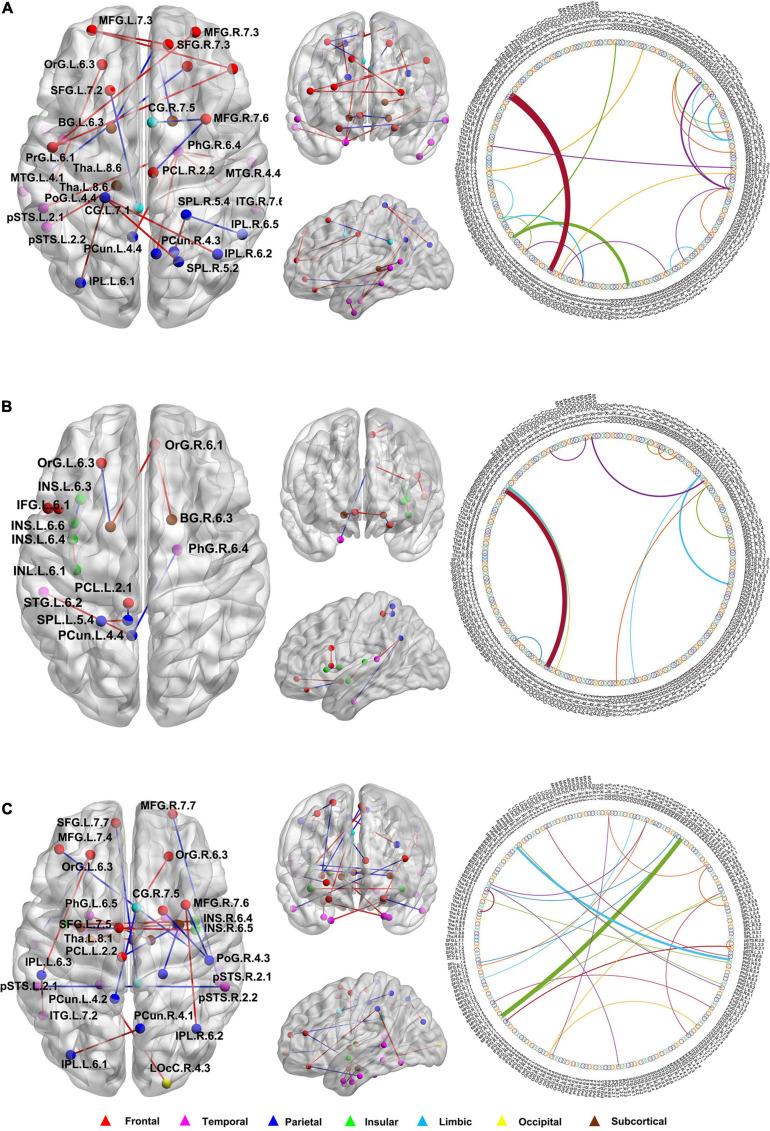
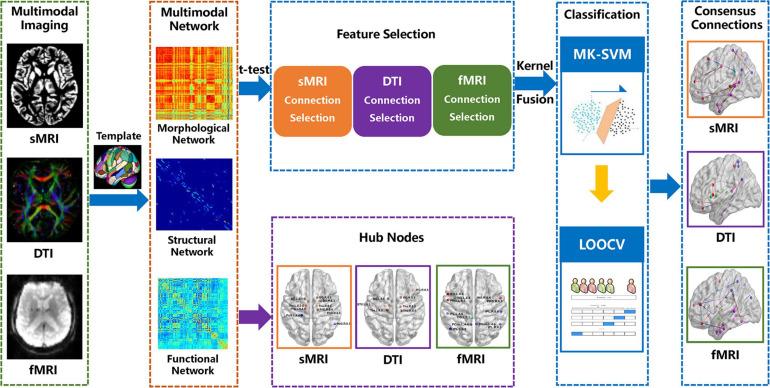
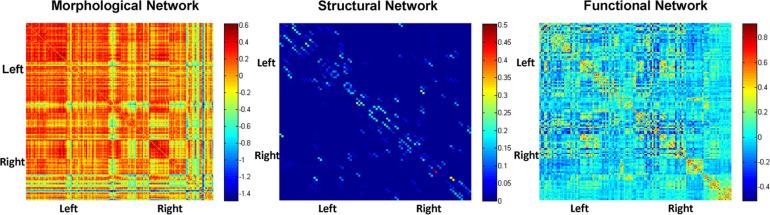
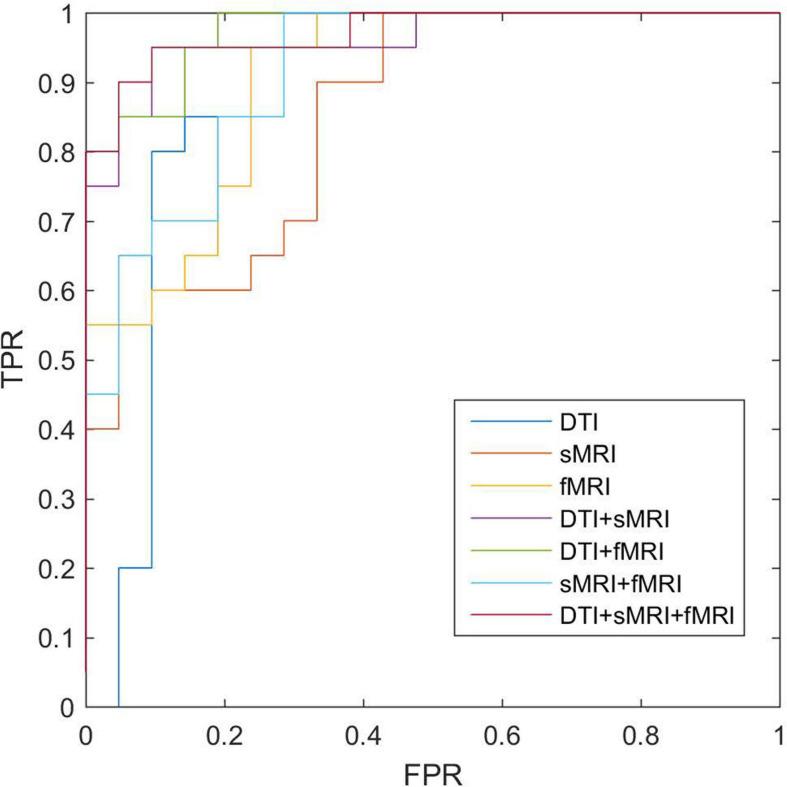
Subjective cognitive decline (SCD) is considered the earliest stage of the clinical manifestations of the continuous progression of Alzheimer's Disease (AD). Previous studies have suggested that multimodal brain networks play an important role in the early diagnosis and mechanisms underlying SCD. However, most of the previous studies focused on a single modality, and lacked correlation analysis between different modal biomarkers and brain regions. In order to further explore the specific characteristic of the multimodal brain networks in the stage of SCD, 22 individuals with SCD and 20 matched healthy controls (HCs) were recruited in the present study. We constructed the individual morphological, structural and functional brain networks based on 3D-T1 structural magnetic resonance imaging (sMRI), diffusion tensor imaging (DTI) and resting-state functional magnetic resonance imaging (rs-fMRI), respectively. A -test was used to select the connections with significant difference, and a multi-kernel support vector machine (MK-SVM) was applied to combine the selected multimodal connections to distinguish SCD from HCs. Moreover, we further identified the consensus connections of brain networks as the most discriminative features to explore the pathological mechanisms and potential biomarkers associated with SCD. Our results shown that the combination of three modal connections using MK-SVM achieved the best classification performance, with an accuracy of 92.68%, sensitivity of 95.00%, and specificity of 90.48%. Furthermore, the consensus connections and hub nodes based on the morphological, structural, and functional networks identified in our study exhibited abnormal cortical-subcortical connections in individuals with SCD. In addition, the functional networks presented more discriminative connections and hubs in the cortical-subcortical regions, and were found to perform better in distinguishing SCD from HCs. Therefore, our findings highlight the role of the cortical-subcortical circuit in individuals with SCD from the perspective of a multimodal brain network, providing potential biomarkers for the diagnosis and prediction of the preclinical stage of AD.
主观认知下降(SCD)被认为是阿尔茨海默病(AD)持续进展临床表现的最早阶段。先前的研究表明,多模态脑网络在SCD的早期诊断及潜在机制中发挥着重要作用。然而,大多数先前的研究集中于单一模态,且缺乏不同模态生物标志物与脑区之间的相关性分析。为了进一步探究SCD阶段多模态脑网络的具体特征,本研究招募了22名SCD个体和20名匹配的健康对照(HCs)。我们分别基于三维T1结构磁共振成像(sMRI)、扩散张量成像(DTI)和静息态功能磁共振成像(rs-fMRI)构建了个体形态学、结构和功能脑网络。采用t检验选择具有显著差异的连接,并应用多核支持向量机(MK-SVM)结合所选的多模态连接以区分SCD和HCs。此外,我们进一步将脑网络的一致性连接确定为最具判别力的特征,以探索与SCD相关的病理机制和潜在生物标志物。我们的结果表明,使用MK-SVM组合三种模态连接可实现最佳分类性能,准确率为92.68%,灵敏度为95.00%,特异性为90.48%。此外,基于我们研究中确定的形态学、结构和功能网络的一致性连接和枢纽节点在SCD个体中表现出异常的皮质-皮质下连接。此外,功能网络在皮质-皮质下区域呈现出更多具有判别力的连接和枢纽,并且在区分SCD和HCs方面表现更好。因此,我们的研究结果从多模态脑网络的角度突出了皮质-皮质下回路在SCD个体中的作用,为AD临床前期的诊断和预测提供了潜在的生物标志物。

 Zotero 插件