
基于多模态神经成像神经网络的特征检测用于阿尔茨海默病的诊断
Multi-Modal Neuroimaging Neural Network-Based Feature Detection for Diagnosis of Alzheimer's Disease.
作者信息
Meng Xianglian, Liu Junlong, Fan Xiang, Bian Chenyuan, Wei Qingpeng, Wang Ziwei, Liu Wenjie, Jiao Zhuqing
机构信息
School of Computer Information and Engineering, Changzhou Institute of Technology, Changzhou, China.
Shandong Provincial Key Laboratory of Digital Medicine and Computer-Assisted Surgery, Affiliated Hospital of Qingdao University, Qingdao, China.
出版信息
Front Aging Neurosci. 2022 May 16;14:911220. doi: 10.3389/fnagi.2022.911220. eCollection 2022.
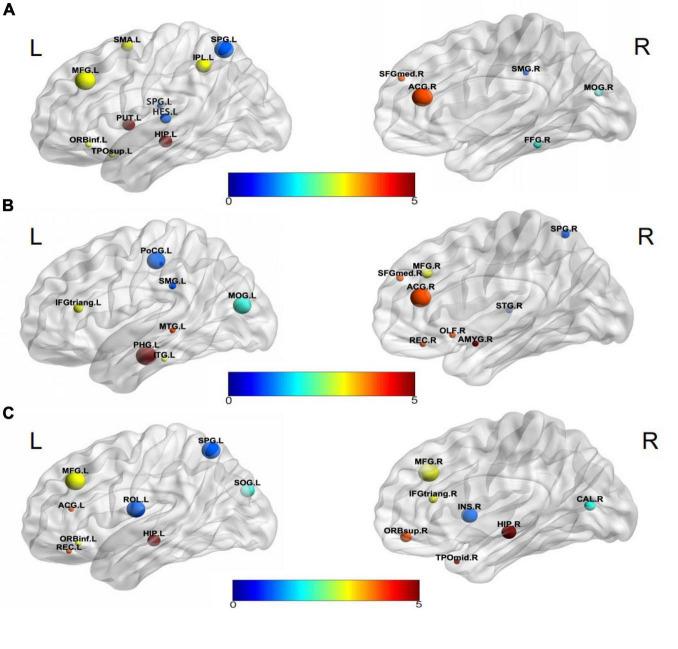
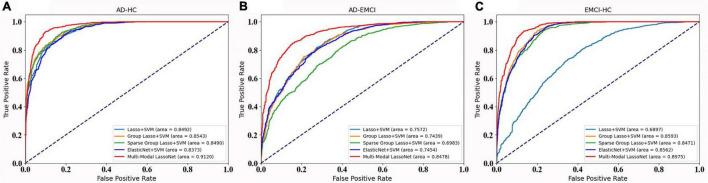
Alzheimer's disease (AD) is a neurodegenerative brain disease, and it is challenging to mine features that distinguish AD and healthy control (HC) from multiple datasets. Brain network modeling technology in AD using single-modal images often lacks supplementary information regarding multi-source resolution and has poor spatiotemporal sensitivity. In this study, we proposed a novel multi-modal LassoNet framework with a neural network for AD-related feature detection and classification. Specifically, data including two modalities of resting-state functional magnetic resonance imaging (rs-fMRI) and diffusion tensor imaging (DTI) were adopted for predicting pathological brain areas related to AD. The results of 10 repeated experiments and validation experiments in three groups prove that our proposed framework outperforms well in classification performance, generalization, and reproducibility. Also, we found discriminative brain regions, such as Hippocampus, Frontal_Inf_Orb_L, Parietal_Sup_L, Putamen_L, Fusiform_R, etc. These discoveries provide a novel method for AD research, and the experimental study demonstrates that the framework will further improve our understanding of the mechanisms underlying the development of AD.
阿尔茨海默病(AD)是一种神经退行性脑疾病,从多个数据集中挖掘区分AD与健康对照(HC)的特征具有挑战性。使用单模态图像的AD脑网络建模技术通常缺乏关于多源分辨率的补充信息,且时空敏感性较差。在本研究中,我们提出了一种用于AD相关特征检测和分类的新型多模态LassoNet框架,该框架带有一个神经网络。具体而言,采用静息态功能磁共振成像(rs-fMRI)和扩散张量成像(DTI)这两种模态的数据来预测与AD相关的脑病理区域。在三组中进行的10次重复实验和验证实验结果证明,我们提出的框架在分类性能、泛化能力和可重复性方面表现出色。此外,我们发现了具有鉴别性的脑区,如海马体、左额叶眶部、左顶上叶、左壳核、右梭状回等。这些发现为AD研究提供了一种新方法,并且实验研究表明该框架将进一步增进我们对AD发病机制的理解。


 Zotero 插件