
萝卜硫素通过激活 AMPK/SIRT1/PGC-1α通路保护肠道上皮细胞免受脂多糖诱导的损伤。
Sulforaphane protects intestinal epithelial cells against lipopolysaccharide-induced injury by activating the AMPK/SIRT1/PGC-1ɑ pathway.
机构信息
Department of Pharmacy, Xiangyang Central Hospital, Affiliated Hospital of Hubei University of Arts and Science, Xiangyang, China.
出版信息
Bioengineered. 2021 Dec;12(1):4349-4360. doi: 10.1080/21655979.2021.1952368.
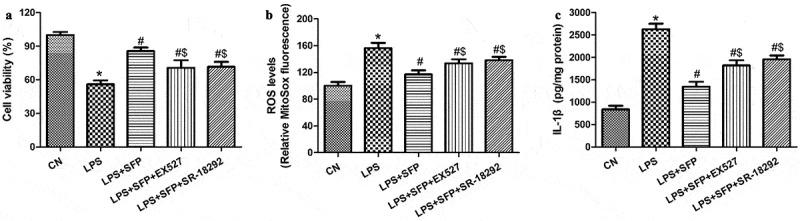
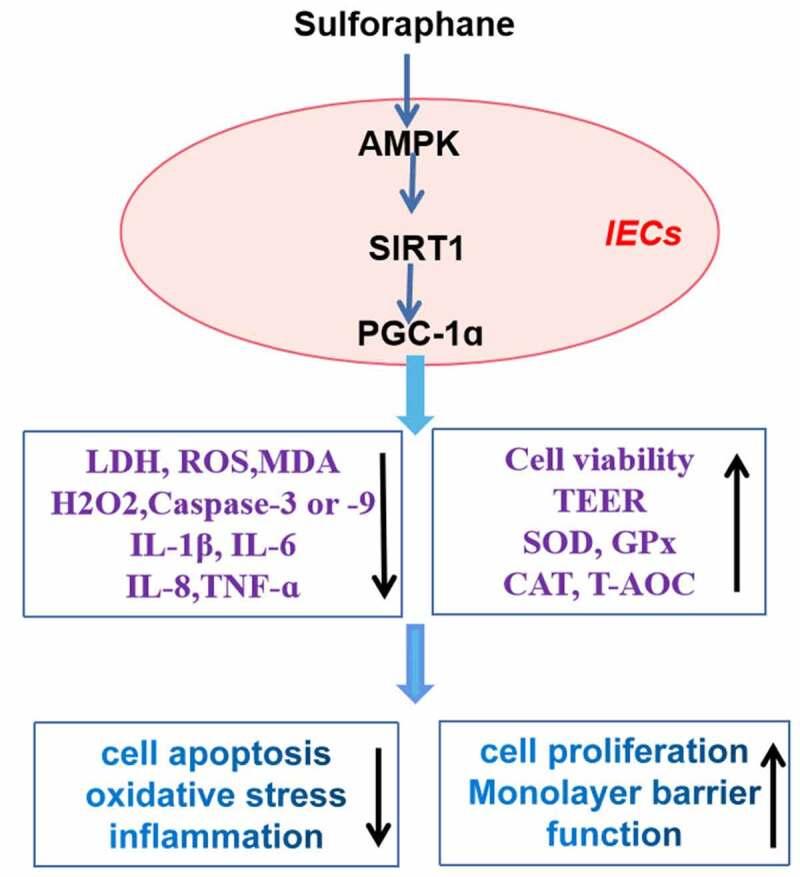
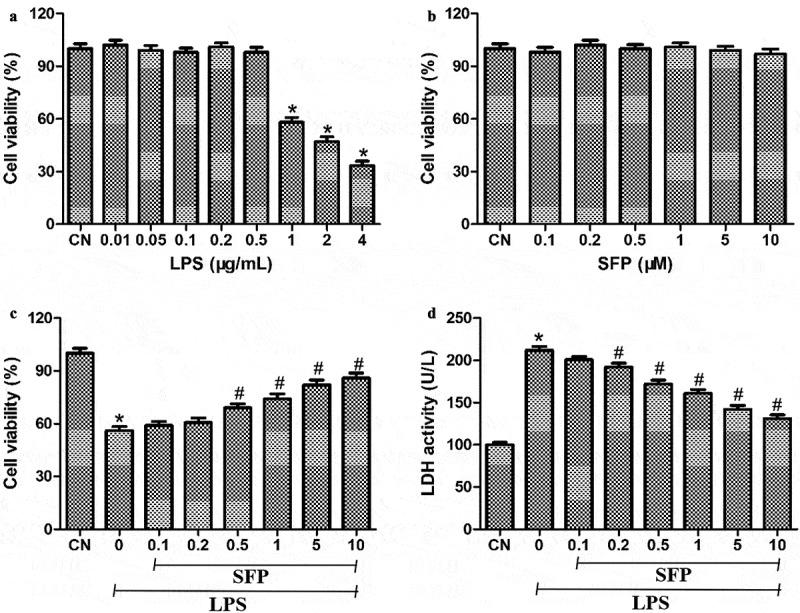
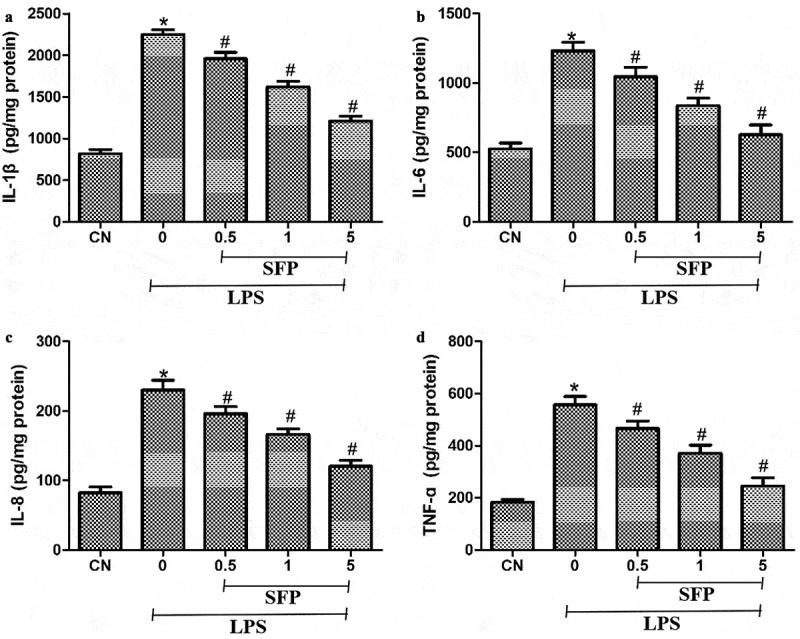
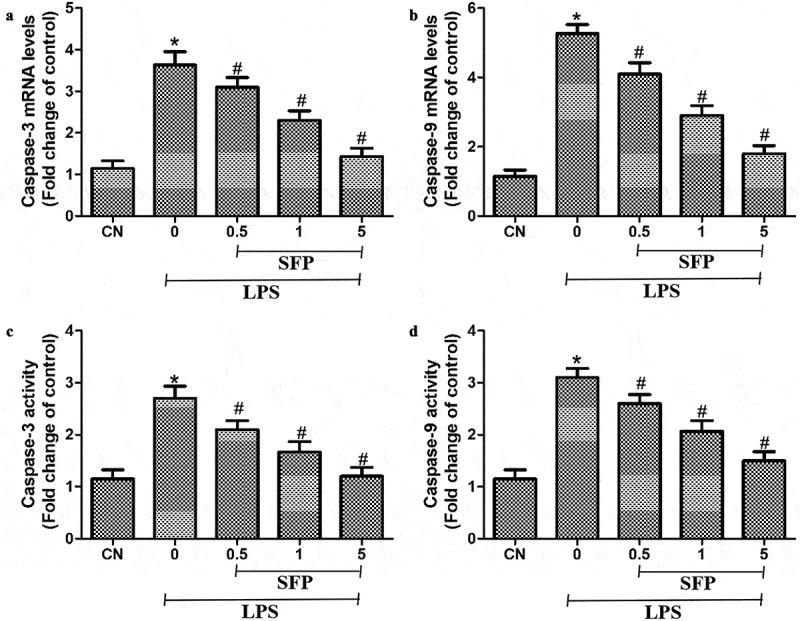
The naturally occurring isothiocyanate sulforaphane, found in vegetables, shows promising anti-inflammatory, anti-apoptosis, and anti-oxidative effects. Whether sulforaphane protects against lipopolysaccharide (LPS)-induced injury in intestinal epithelial cells is unclear. The present study examines the ability of sulforaphane to protect Caco-2 cultures from LPS-induced injury, as well as the mechanism involved. Caco-2 cells were incubated for 24 h with 1 μg/mL LPS and different concentrations of sulforaphane (0.1-10 μM). Then, various indicators of oxidative stress, inflammation, apoptosis, and intestinal permeability were assayed. Sulforaphane increased cell viability and reduced lactate dehydrogenase activity in LPS-treated Caco-2 cells in a concentration-dependent manner. Sulforaphane weakened LPS-induced increases in intestinal epithelial cell permeability and oxidative stress (based on assays of reactive oxygen species, DMA, and HO), and it increased levels of antioxidants (SOD, GPx, CAT and T-AOC). At the same time, sulforaphane weakened the ability of LPS to induce production of inflammatory cytokines (IL-1β, IL-6, IL-8 and TNF-α) and the pro-apoptotic caspases-3 and -9. Sulforaphane also upregulated p-AMPK, SIRT1, and PGC-1ɑ, whose inhibitors antagonized the compound's protective effects. Sulforaphane can protect intestinal epithelial cells against LPS-induced changes in intestinal permeability, oxidative stress, inflammation, and apoptosis. It appears to act by activating the AMPK/SIRT1/PGC-1ɑ pathway. The drug therefore shows potential for preventing LPS-induced intestinal injury.
天然存在的异硫氰酸酯萝卜硫素存在于蔬菜中,具有有希望的抗炎、抗细胞凋亡和抗氧化作用。萝卜硫素是否能保护肠上皮细胞免受脂多糖 (LPS) 诱导的损伤尚不清楚。本研究旨在研究萝卜硫素保护 Caco-2 细胞免受 LPS 诱导损伤的能力及其相关机制。Caco-2 细胞用 1μg/mL LPS 和不同浓度的萝卜硫素 (0.1-10μM) 孵育 24h。然后,测定各种氧化应激、炎症、凋亡和肠通透性的指标。萝卜硫素以浓度依赖的方式增加 LPS 处理的 Caco-2 细胞的细胞活力并降低乳酸脱氢酶活性。萝卜硫素减弱了 LPS 诱导的肠上皮细胞通透性和氧化应激的增加(基于活性氧、DMA 和 HO 的测定),并增加了抗氧化剂(SOD、GPx、CAT 和 T-AOC)的水平。同时,萝卜硫素减弱了 LPS 诱导产生炎症细胞因子(IL-1β、IL-6、IL-8 和 TNF-α)和促凋亡半胱天冬酶-3 和 -9 的能力。萝卜硫素还上调了 p-AMPK、SIRT1 和 PGC-1α,其抑制剂拮抗了该化合物的保护作用。萝卜硫素可以保护肠上皮细胞免受 LPS 诱导的肠通透性、氧化应激、炎症和凋亡变化的影响。它似乎通过激活 AMPK/SIRT1/PGC-1α 通路起作用。因此,该药物具有预防 LPS 诱导的肠道损伤的潜力。




 Zotero 插件