
使用杀菌紫外线、汽化过氧化氢和干热对被感染性诺如病毒污染的口罩和过滤式呼吸器进行消毒。
The use of germicidal ultraviolet light, vaporised hydrogen peroxide and dry heat to decontaminate face masks and filtering respirators contaminated with an infectious norovirus.
作者信息
Wielick Constance, Ludwig-Begall Louisa F, Dams Lorène, Razafimahefa Ravo M, Demeuldre Pierre-Francois, Napp Aurore, Laperre Jan, Jolois Olivier, Farnir Frédéric, Haubruge Eric, Thiry Etienne
机构信息
Veterinary Virology and Animal Viral Diseases, Department of Infectious and Parasitic Diseases, FARAH Research Centre, Faculty of Veterinary Medicine, University of Liège, Liège, Belgium.
Department of Hospital Pharmacy, The University Hospital Center, University of Liège, Liège, Belgium.
出版信息
Infect Prev Pract. 2021 Mar;3(1):100111. doi: 10.1016/j.infpip.2020.100111. Epub 2020 Dec 28.
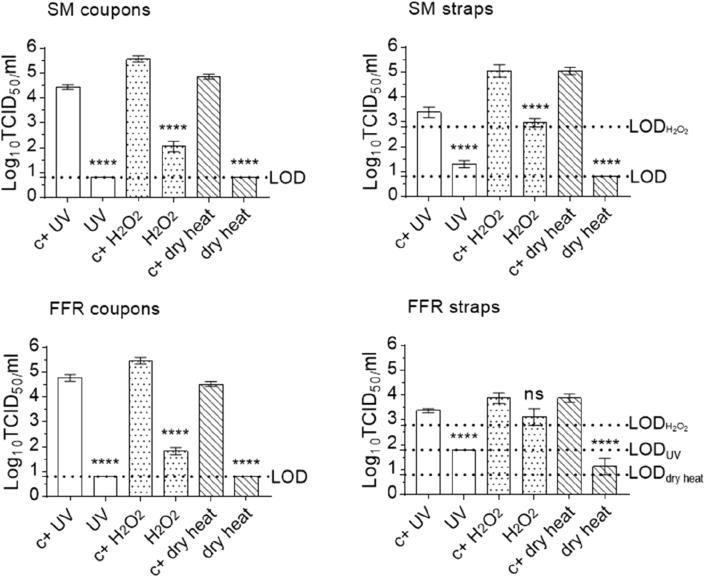
In the context of the SARS-CoV-2 pandemic, reuse of surgical masks and filtering facepiece respirators has been recommended. Their reuse necessitates procedures to inactivate contaminating human respiratory and oral pathogens. We previously demonstrated decontamination of masks and respirators contaminated with an infectious SARS-CoV-2 surrogate via ultraviolet germicidal irradiation, vaporised hydrogen peroxide, and use of dry heat. Here, we show that these same methods efficiently inactivate a more resistant, non-enveloped oral virus; decontamination of infectious murine norovirus-contaminated masks and respirators reduced viral titres by over four orders of magnitude on mask or respirator coupons.
在严重急性呼吸综合征冠状病毒2(SARS-CoV-2)大流行的背景下,有人建议重复使用外科口罩和过滤式面罩呼吸器。重复使用这些物品需要采取程序来灭活污染的人类呼吸道和口腔病原体。我们之前证明了通过紫外线杀菌照射、汽化过氧化氢和使用干热对被传染性SARS-CoV-2替代物污染的口罩和呼吸器进行消毒。在此,我们表明这些相同的方法能有效地灭活一种更具抗性的无包膜口腔病毒;对被传染性小鼠诺如病毒污染的口罩和呼吸器进行消毒,可使口罩或呼吸器样本上的病毒滴度降低四个数量级以上。

 Zotero 插件