
棕色脂肪组织与更健康的体脂分布和代谢益处相关,而与局部肥胖无关。
Brown adipose tissue is associated with healthier body fat distribution and metabolic benefits independent of regional adiposity.
机构信息
Department of Radiology, Memorial Sloan Kettering Cancer Center, New York, NY, USA.
Laboratory of Molecular Metabolism, The Rockefeller University, New York, NY, USA.
出版信息
Cell Rep Med. 2021 Jul 7;2(7):100332. doi: 10.1016/j.xcrm.2021.100332. eCollection 2021 Jul 20.
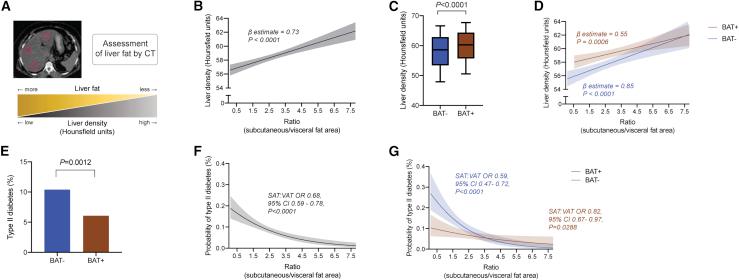
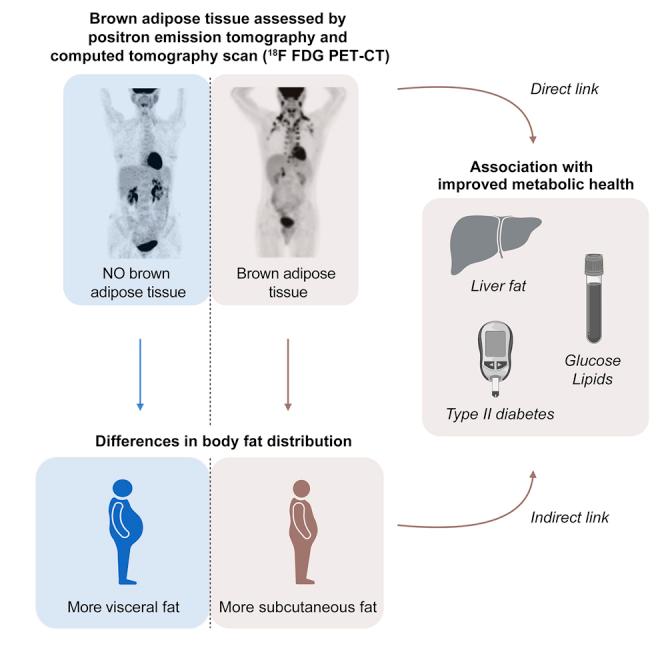
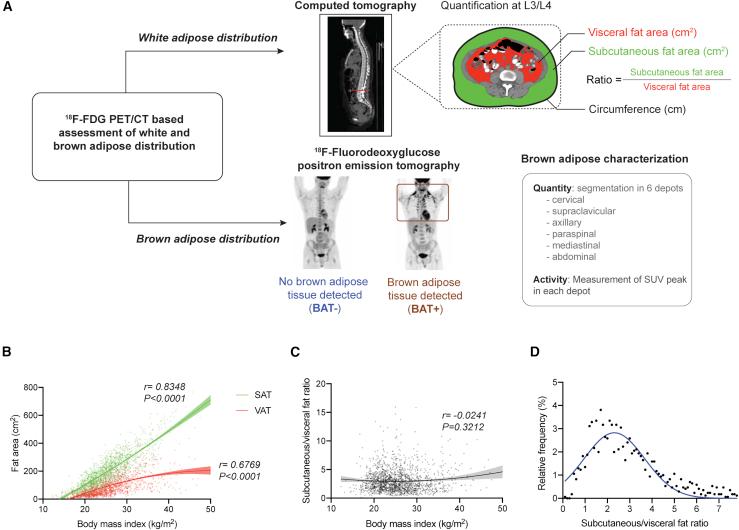
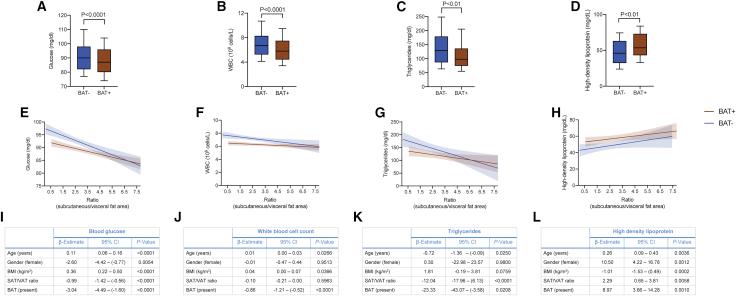
The association of brown adipose tissue (BAT) and body fat distribution and their combined effects on metabolic health in humans remains unknown. Here, we retrospectively identify individuals with and without BAT on F-fluorodeoxyglucose (F-FDG) positron emission tomography (PET)/computed tomography (CT) and assemble a propensity score-matched study cohort to compare body fat distribution and determine its role in mediating the benefits of brown fat. We find that BAT is associated with lower amounts of visceral adipose tissue and higher amounts of subcutaneous adipose tissue, resulting in less central obesity. In addition, BAT is independently associated with lower blood glucose and white blood cell count, improved lipids, lower prevalence of type 2 diabetes mellitus, and decreased liver fat accumulation. These observations are most prominent in individuals with central obesity. Our results support a role of BAT in protection from visceral adiposity and improved metabolic health.
棕色脂肪组织(BAT)与体脂分布的相关性及其对人体代谢健康的综合影响尚不清楚。本研究通过回顾性分析 F-氟脱氧葡萄糖(F-FDG)正电子发射断层扫描(PET)/计算机断层扫描(CT)检查中有无 BAT 的个体,建立倾向评分匹配研究队列,比较体脂分布,并确定其在介导棕色脂肪益处中的作用。研究发现,BAT 与内脏脂肪组织减少和皮下脂肪组织增加相关,导致中心性肥胖减少。此外,BAT 与较低的血糖和白细胞计数、改善的血脂、较低的 2 型糖尿病患病率以及肝脏脂肪堆积减少独立相关。这些观察结果在中心性肥胖个体中最为显著。本研究结果支持 BAT 在保护内脏肥胖和改善代谢健康方面的作用。


 Zotero 插件