
一种 A 型响应调节因子的自然变异赋予玉米耐冷性。
Natural variation in a type-A response regulator confers maize chilling tolerance.
作者信息
Zeng Rong, Li Zhuoyang, Shi Yiting, Fu Diyi, Yin Pan, Cheng Jinkui, Jiang Caifu, Yang Shuhua
机构信息
State Key Laboratory of Plant Physiology and Biochemistry, College of Biological Sciences, Center for Crop Functional Genomics and Molecular Breeding, China Agricultural University, Beijing, China.
出版信息
Nat Commun. 2021 Aug 5;12(1):4713. doi: 10.1038/s41467-021-25001-y.
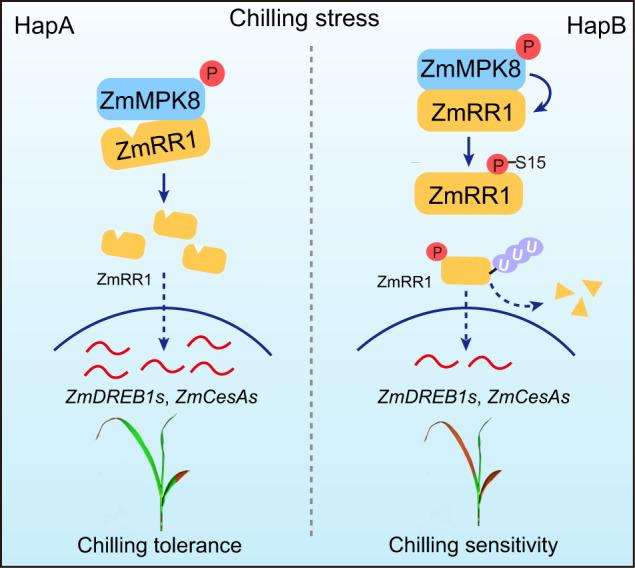
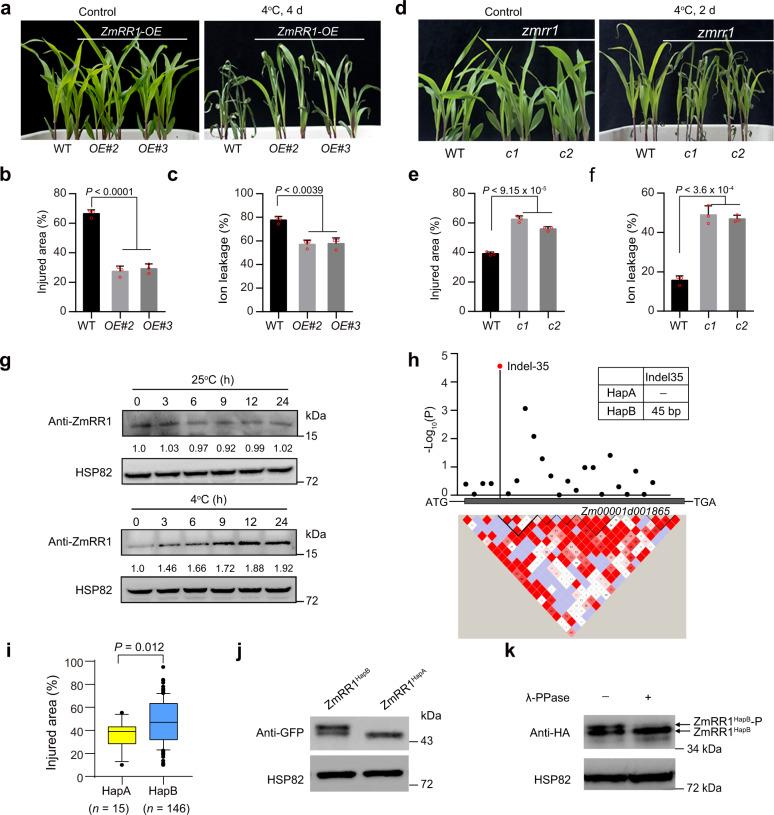
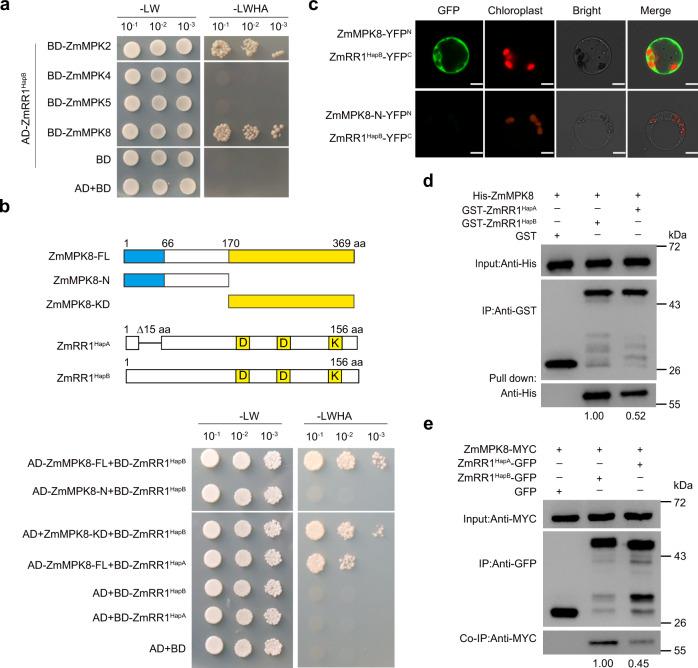
Maize (Zea mays L.) is a cold-sensitive species that often faces chilling stress, which adversely affects growth and reproduction. However, the genetic basis of low-temperature adaptation in maize remains unclear. Here, we demonstrate that natural variation in the type-A Response Regulator 1 (ZmRR1) gene leads to differences in chilling tolerance among maize inbred lines. Association analysis reveals that InDel-35 of ZmRR1, encoding a protein harboring a mitogen-activated protein kinase (MPK) phosphorylation residue, is strongly associated with chilling tolerance. ZmMPK8, a negative regulator of chilling tolerance, interacts with and phosphorylates ZmRR1 at Ser15. The deletion of a 45-bp region of ZmRR1 harboring Ser15 inhibits its degradation via the 26 S proteasome pathway by preventing its phosphorylation by ZmMPK8. Transcriptome analysis indicates that ZmRR1 positively regulates the expression of ZmDREB1 and Cellulose synthase (CesA) genes to enhance chilling tolerance. Our findings thus provide a potential genetic resource for improving chilling tolerance in maize.
玉米(Zea mays L.)是一种对低温敏感的物种,经常面临冷胁迫,这对其生长和繁殖产生不利影响。然而,玉米低温适应的遗传基础仍不清楚。在此,我们证明了A型响应调节因子1(ZmRR1)基因的自然变异导致玉米自交系之间的耐冷性差异。关联分析表明,ZmRR1的InDel-35编码一种含有丝裂原活化蛋白激酶(MPK)磷酸化残基的蛋白质,与耐冷性密切相关。ZmMPK8是耐冷性的负调节因子,它与ZmRR1相互作用并在Ser15处使其磷酸化。ZmRR1中含有Ser15的45bp区域的缺失通过阻止ZmMPK8对其磷酸化,抑制了其通过26S蛋白酶体途径的降解。转录组分析表明,ZmRR1正向调节ZmDREB1和纤维素合酶(CesA)基因的表达以增强耐冷性。因此,我们的研究结果为提高玉米耐冷性提供了潜在的遗传资源。


 Zotero 插件