
利用活的绿色微藻进行重金属的藻类修复机制:提高选择性和去除能力的物理化学及分子方法
Phycoremediation mechanisms of heavy metals using living green microalgae: physicochemical and molecular approaches for enhancing selectivity and removal capacity.
作者信息
Danouche Mohammed, El Ghachtouli Naïma, El Arroussi Hicham
机构信息
Green Biotechnology Center, Moroccan Foundation for Advanced Science, Innovation and Research (MAScIR), Rabat, Morocco.
Microbial Biotechnology and Bioactive Molecules Laboratory, Sciences and Technologies Faculty, Sidi Mohamed Ben Abdellah University, Fez, Morocco.
出版信息
Heliyon. 2021 Jul 16;7(7):e07609. doi: 10.1016/j.heliyon.2021.e07609. eCollection 2021 Jul.
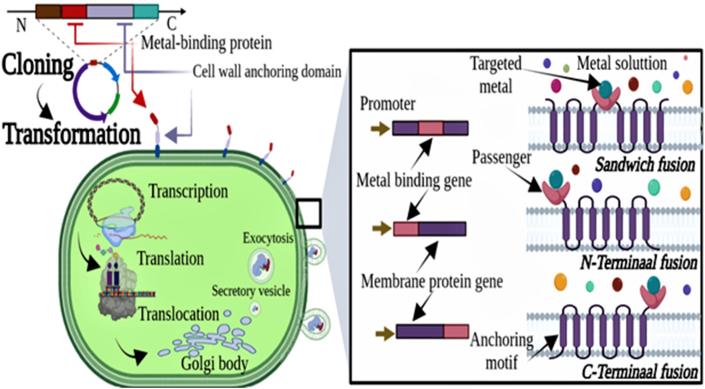
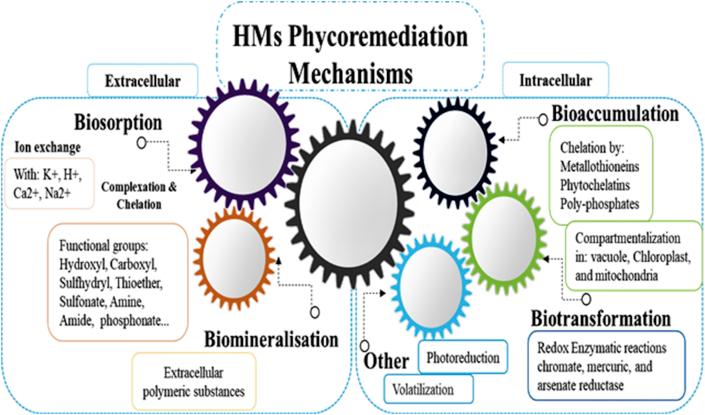
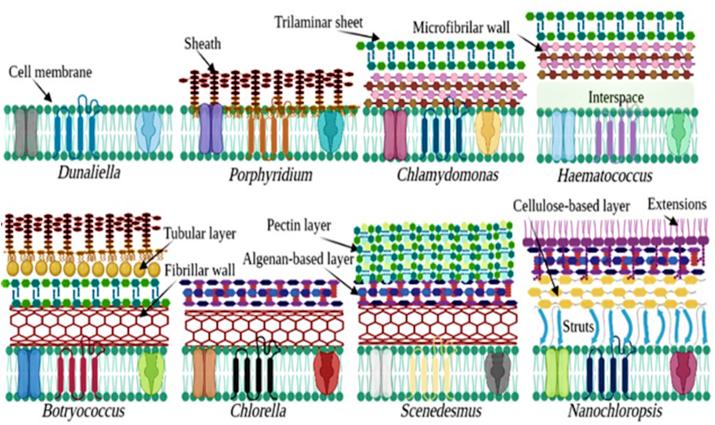
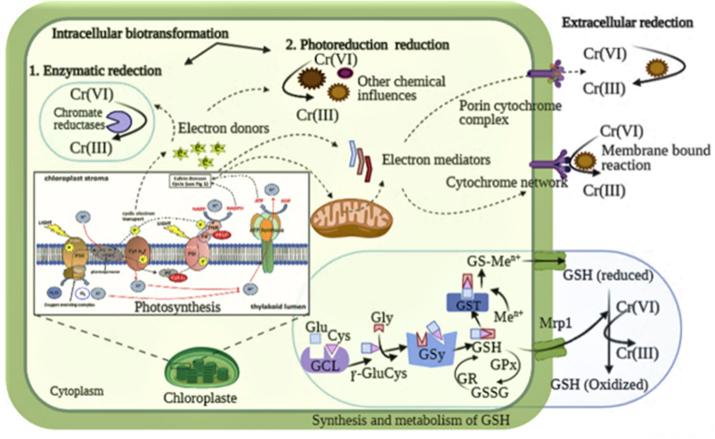
Heavy metal (HM) contamination of water bodies is a serious global environmental problem. Because they are not biodegradable, they can accumulate in food chains, causing various signs of toxicity to exposed organisms, including humans. Due to its effectiveness, low cost, and ecological aspect, phycoremediation, or the use of microalgae's ecological functions in the treatment of HMs contaminated wastewater, is one of the most recommended processes. This study aims to examine in depth the mechanisms involved in the phycoremediation of HMs by microalgae, it also provides an overview of the prospects for improving the productivity, selectivity, and cost-effectiveness of this bioprocess through physicochemical and genetic engineering applications. Firstly, this review proposes a detailed examination of the biosorption interactions between cell wall functional groups and HMs, and their complexation with extracellular polymeric substances released by microalgae in the extracellular environment under stress conditions. Subsequently, the metal transporters involved in the intracellular bioaccumulation of HMs as well as the main intracellular mechanisms including compartmentalization in cell organelles, enzymatic biotransformation, or photoreduction of HMs were also extensively reviewed. In the last section, future perspectives of physicochemical and genetic approaches that could be used to improve the phytoremediation process in terms of removal efficiency, selectivity for a targeted metal, or reduction of treatment time and cost are discussed, which paves the way for large-scale application of phytoremediation processes.
水体中的重金属(HM)污染是一个严重的全球环境问题。由于它们不可生物降解,会在食物链中积累,对包括人类在内的受暴露生物造成各种毒性迹象。由于其有效性、低成本和生态方面的优势,藻类修复,即利用微藻的生态功能处理受重金属污染的废水,是最值得推荐的方法之一。本研究旨在深入研究微藻对重金属进行藻类修复的相关机制,还概述了通过物理化学和基因工程应用提高该生物过程的生产力、选择性和成本效益的前景。首先,本综述详细探讨了细胞壁官能团与重金属之间的生物吸附相互作用,以及在应激条件下微藻在细胞外环境中释放的细胞外聚合物与重金属的络合作用。随后,还广泛综述了参与重金属细胞内生物积累的金属转运蛋白以及主要的细胞内机制,包括细胞器中的区室化、酶促生物转化或重金属的光还原。在最后一部分,讨论了可用于在去除效率、对目标金属的选择性或减少处理时间和成本方面改善植物修复过程的物理化学和基因方法的未来前景,这为植物修复过程的大规模应用铺平了道路。



 Zotero 插件