
基因工程是否是增强微藻介导的含重金属废水生物修复的途径?
Is Genetic Engineering a Route to Enhance Microalgae-Mediated Bioremediation of Heavy Metal-Containing Effluents?
机构信息
LEPABE-Laboratory for Process Engineering, Environment, Biotechnology and Energy, Rua Dr. Roberto Frias, s/n, 4200-465 Porto, Portugal.
Department of Chemical Engineering, University of Porto, Rua Dr. Roberto Frias, s/n, 4200-465 Porto, Portugal.
出版信息
Molecules. 2022 Feb 22;27(5):1473. doi: 10.3390/molecules27051473.
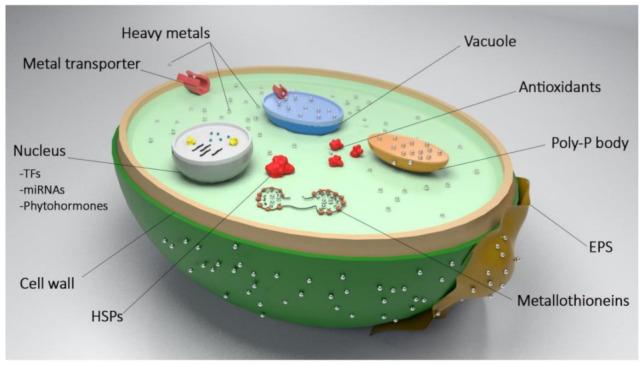
Contamination of the biosphere by heavy metals has been rising, due to accelerated anthropogenic activities, and is nowadays, a matter of serious global concern. Removal of such inorganic pollutants from aquatic environments via biological processes has earned great popularity, for its cost-effectiveness and high efficiency, compared to conventional physicochemical methods. Among candidate organisms, microalgae offer several competitive advantages; phycoremediation has even been claimed as the next generation of wastewater treatment technologies. Furthermore, integration of microalgae-mediated wastewater treatment and bioenergy production adds favorably to the economic feasibility of the former process-with energy security coming along with environmental sustainability. However, poor biomass productivity under abiotic stress conditions has hindered the large-scale deployment of microalgae. Recent advances encompassing molecular tools for genome editing, together with the advent of multiomics technologies and computational approaches, have permitted the design of tailor-made microalgal cell factories, which encompass multiple beneficial traits, while circumventing those associated with the bioaccumulation of unfavorable chemicals. Previous studies unfolded several routes through which genetic engineering-mediated improvements appear feasible (encompassing sequestration/uptake capacity and specificity for heavy metals); they can be categorized as metal transportation, chelation, or biotransformation, with regulation of metal- and oxidative stress response, as well as cell surface engineering playing a crucial role therein. This review covers the state-of-the-art metal stress mitigation mechanisms prevalent in microalgae, and discusses putative and tested metabolic engineering approaches, aimed at further improvement of those biological processes. Finally, current research gaps and future prospects arising from use of transgenic microalgae for heavy metal phycoremediation are reviewed.
由于人类活动的加速,重金属对生物圈的污染一直在加剧,如今已成为一个严重的全球性问题。与传统的物理化学方法相比,通过生物过程从水生环境中去除这些无机污染物具有成本效益高、效率高的特点,因此备受关注。在候选生物中,微藻具有多种竞争优势;甚至有人声称,藻修复是下一代废水处理技术。此外,将微藻介导的废水处理与生物能源生产相结合,有利于提高前者的经济可行性——能源安全伴随着环境可持续性。然而,在非生物胁迫条件下,生物量生产力低下阻碍了微藻的大规模应用。最近的进展包括用于基因组编辑的分子工具,以及多组学技术和计算方法的出现,使定制微藻细胞工厂的设计成为可能,这些工厂包含多种有益特性,同时避免了与不利化学物质的生物积累相关的特性。先前的研究揭示了遗传工程介导的改进似乎可行的几种途径(包括重金属的隔离/摄取能力和特异性);它们可以分为金属运输、螯合或生物转化,金属和氧化应激反应的调节以及细胞表面工程在其中起着至关重要的作用。本综述涵盖了微藻中普遍存在的金属胁迫缓解机制,并讨论了潜在的和经过测试的代谢工程方法,旨在进一步改进这些生物过程。最后,讨论了用于重金属藻修复的转基因微藻的当前研究差距和未来前景。

 Zotero 插件