
从亚利桑那树皮蝎毒液中鉴定和表征新型蛋白,这些蛋白抑制 Nav1.8,一种调节疼痛信号的电压门控钠离子通道。
Identification and Characterization of Novel Proteins from Arizona Bark Scorpion Venom That Inhibit Nav1.8, a Voltage-Gated Sodium Channel Regulator of Pain Signaling.
机构信息
Department of Cellular & Integrative Physiology, University of Texas Health Science Center San Antonio, San Antonio, TX 78229, USA.
Zoology Department, Faculty of Science, Minia University, El-Minia 61519, Egypt.
出版信息
Toxins (Basel). 2021 Jul 18;13(7):501. doi: 10.3390/toxins13070501.
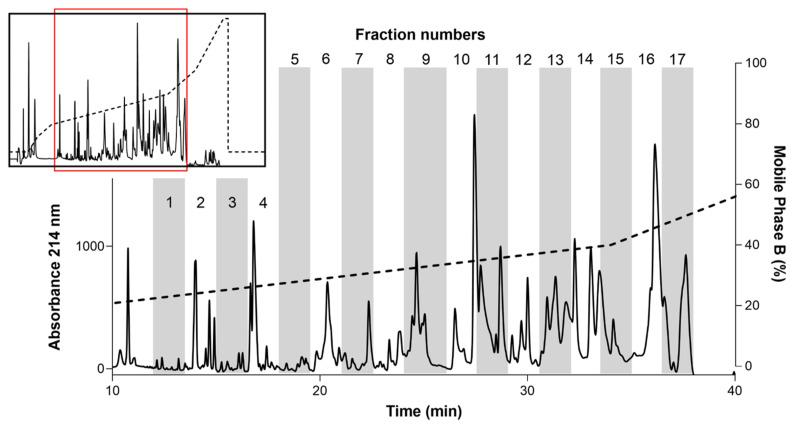
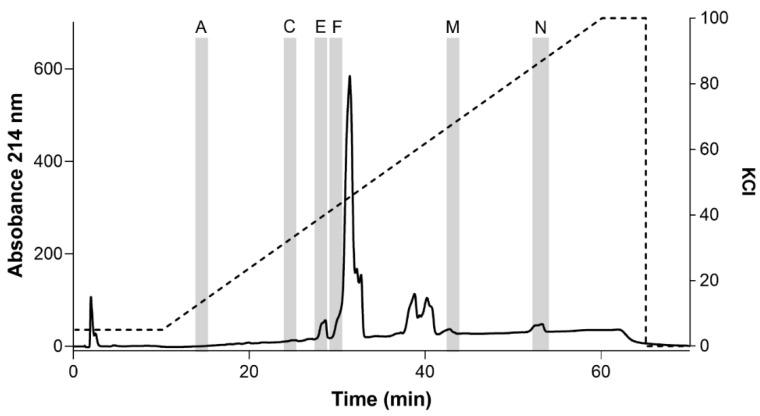
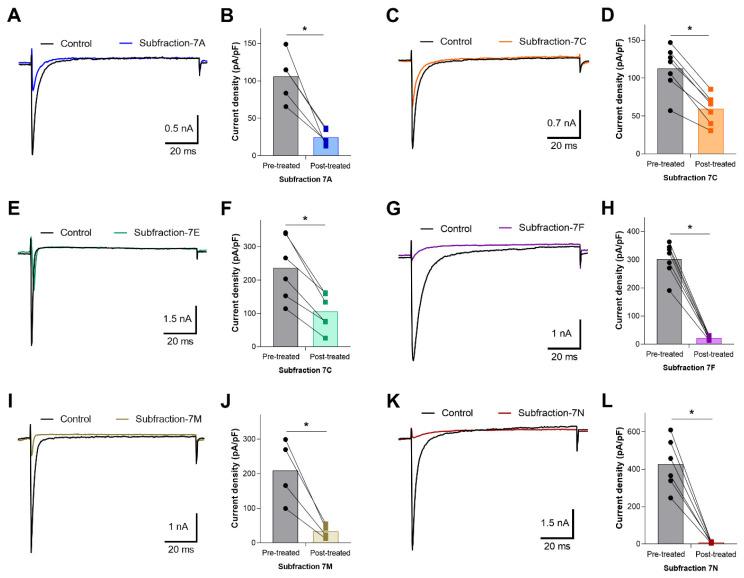
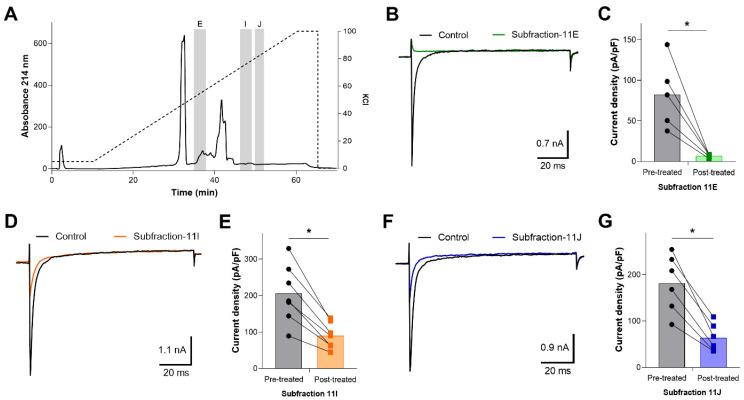
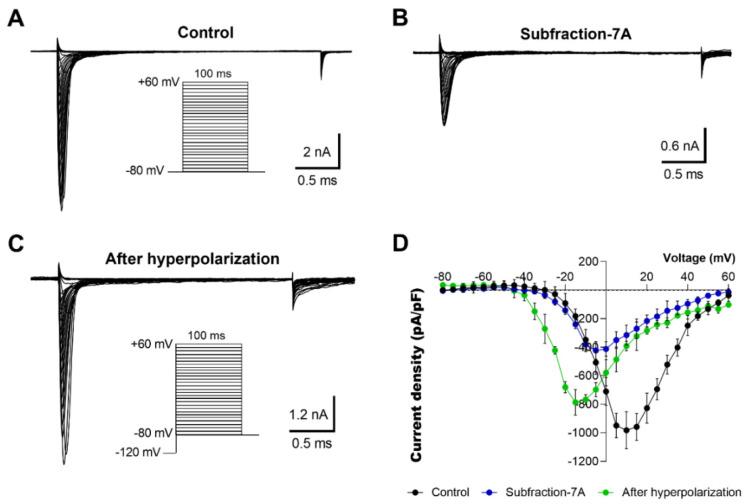
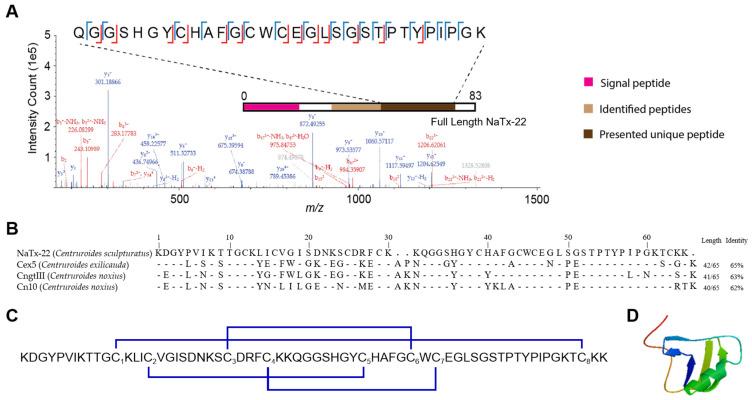
The voltage-gated sodium channel Nav1.8 is linked to neuropathic and inflammatory pain, highlighting the potential to serve as a drug target. However, the biophysical mechanisms that regulate Nav1.8 activation and inactivation gating are not completely understood. Progress has been hindered by a lack of biochemical tools for examining Nav1.8 gating mechanisms. Arizona bark scorpion () venom proteins inhibit Nav1.8 and block pain in grasshopper mice (). These proteins provide tools for examining Nav1.8 structure-activity relationships. To identify proteins that inhibit Nav1.8 activity, venom samples were fractioned using liquid chromatography (reversed-phase and ion exchange). A recombinant Nav1.8 clone expressed in ND7/23 cells was used to identify subfractions that inhibited Nav1.8 Na current. Mass-spectrometry-based bottom-up proteomic analyses identified unique peptides from inhibitory subfractions. A search of the peptides against the AZ bark scorpion venom gland transcriptome revealed four novel proteins between 40 and 60% conserved with venom proteins from scorpions in four genera (, , , and ). Ranging from 63 to 82 amino acids, each primary structure includes eight cysteines and a "CXCE" motif, where X = an aromatic residue (tryptophan, tyrosine, or phenylalanine). Electrophysiology data demonstrated that the inhibitory effects of bioactive subfractions can be removed by hyperpolarizing the channels, suggesting that proteins may function as gating modifiers as opposed to pore blockers.
电压门控钠离子通道 Nav1.8 与神经性和炎性疼痛有关,这突出表明它有作为药物靶点的潜力。然而,调节 Nav1.8 激活和失活门控的生物物理机制尚不完全清楚。由于缺乏用于检查 Nav1.8 门控机制的生化工具,进展受到了阻碍。亚利桑那树皮蝎()毒液蛋白抑制 Nav1.8 并阻止草地贪夜蛾()疼痛。这些蛋白质为检查 Nav1.8 结构-活性关系提供了工具。为了鉴定抑制 Nav1.8 活性的蛋白质,使用液相色谱(反相和离子交换)对毒液样品进行了分级。使用在 ND7/23 细胞中表达的重组 Nav1.8 克隆来鉴定抑制 Nav1.8 Na 电流的亚级分。基于质谱的自上而下的蛋白质组学分析从抑制亚级分中鉴定出独特的肽。针对 AZ 树皮蝎毒液腺转录组搜索肽,揭示了四个新的蛋白质,它们在 40%到 60%的保守性与来自四个属(,,,和)的蝎子毒液蛋白一致。每个一级结构的长度在 63 到 82 个氨基酸之间,都包含八个半胱氨酸和一个“CXCE”基序,其中 X 为芳香族残基(色氨酸、酪氨酸或苯丙氨酸)。电生理学数据表明,通道超极化可以去除生物活性亚级分的抑制作用,这表明蛋白质可能作为门控调节剂而不是孔阻滞剂发挥作用。




 Zotero 插件