
关于[具体内容]与兔腹泻之间关系的调查。 (你提供的原文中“and Rabbit Diarrhoea”前面缺少具体内容)
An Investigation of the Relationship between and Rabbit Diarrhoea.
作者信息
Shi Tuanyuan, Yan Xinlei, Sun Hongchao, Fu Yuan, Hao Lili, Zhou Yongxue, Liu Yan, Han Wenying, Bao Guolian, Suo Xun
机构信息
Department of Animal Parasitology, Institute of Animal Husbandry and Veterinary Medicine, Zhejiang Academy of Agricultural Science, Hangzhou 310021, China.
Department of Food Quality and Safety, Food Science and Engineering College of Inner Mongolia Agricultural University, Hohhot 010018, China.
出版信息
Pathogens. 2021 Jul 12;10(7):880. doi: 10.3390/pathogens10070880.
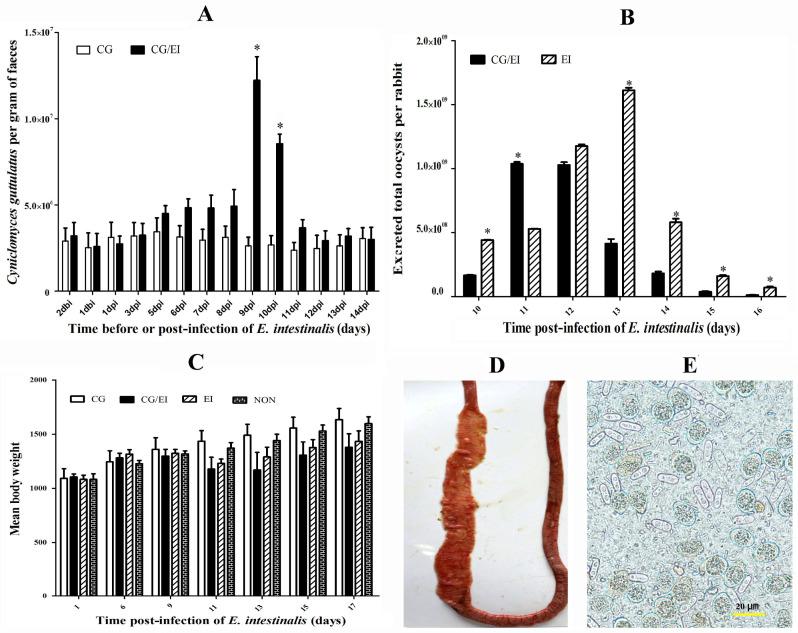
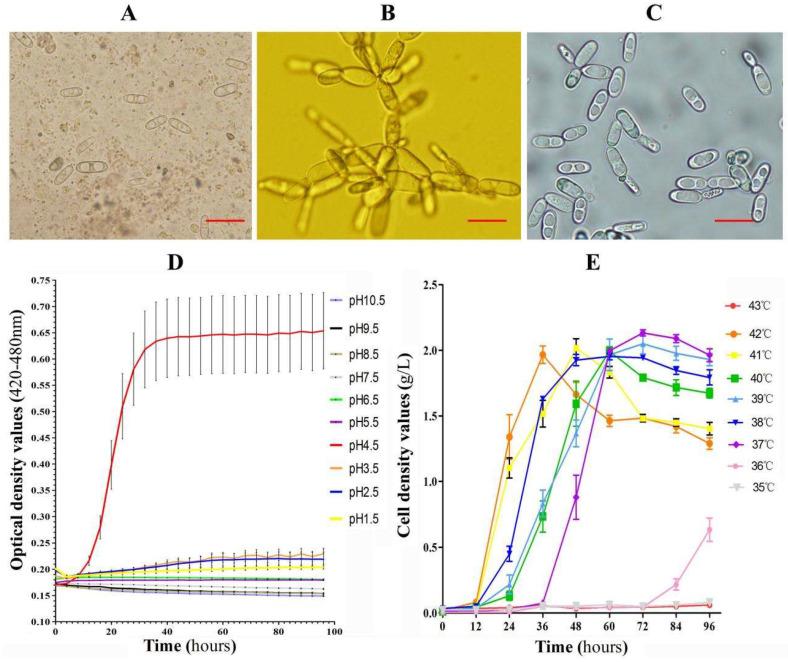
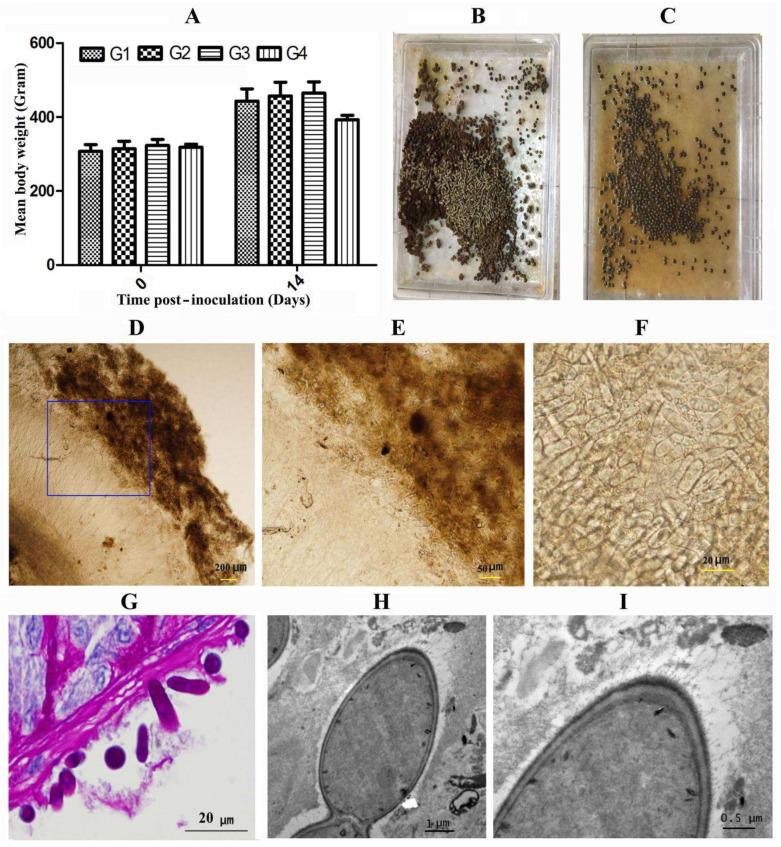
is usually recognised as an inhabitant of the gastrointestinal (GI) tract in rabbits. However, large numbers of are often detected in the faeces of diarrhoeic rabbits. The relationship of with rabbit diarrhoea needs to be clearly identified. In this study, a Zhejiang strain was isolated from a New Zealand White rabbit with severe diarrhoea and then inoculated into SPF New Zealand white rabbits alone or co-inoculated with another kind of pathogen in rabbits. Our results showed that the optimal culture medium pH and temperature for this yeast were pH 4.5 and 40-42 °C, respectively. The sequence lengths of the 18S and 26S ribosomal DNA fragments were 1559 bp and 632 bp, respectively, and showed 99.8% homology with the 18S ribosomal sequence of the NRRL Y-17561 isolate from dogs and 100% homology with the 26S ribosomal sequence of DPA-CGR1 and CGDPA-GP1 isolates from rabbits and guinea pigs, respectively. In animal experiments, the Zhejiang strain was not pathogenic to healthy rabbits, even when 1 × 10 vegetative cells were used per rabbit. Surprisingly, rabbits inoculated with yeast showed a slightly better body weight gain and higher food intake. However, SPF rabbits co-inoculated with and developed more severe coccidiosis than rabbits inoculated with or alone. In addition, we surveyed the prevalence of in rabbits and found that the positive rate was 83% in Zhejiang Province. In summary, the results indicated that alone is not pathogenic to healthy rabbits, although might be an opportunistic pathogen when the digestive tract is damaged by other pathogens, such as .
通常被认为是兔子胃肠道的一种寄居菌。然而,在腹泻兔子的粪便中经常检测到大量的[具体菌名未给出]。[具体菌名未给出]与兔子腹泻的关系需要明确确定。在本研究中,从一只患有严重腹泻的新西兰白兔中分离出一株[具体菌名未给出]浙江菌株,然后单独接种到无特定病原体(SPF)的新西兰白兔中,或与另一种兔子病原体共同接种。我们的结果表明,这种酵母的最佳培养基pH值和温度分别为pH 4.5和40 - 42°C。18S和26S核糖体DNA片段的序列长度分别为1559 bp和632 bp,与来自狗的NRRL Y - 1756菌株分离物的18S核糖体序列显示出99.8%的同源性,与来自兔子和豚鼠的DPA - CGR1和CGDPA - GP1分离物的26S核糖体序列分别显示出100%的同源性。在动物实验中,[具体菌名未给出]浙江菌株对健康兔子无致病性,即使每只兔子使用1×10个营养细胞。令人惊讶的是,接种酵母的兔子体重增加略好,采食量更高。然而,与[具体菌名未给出]和[另一种病原体名称未给出]共同接种的SPF兔子比单独接种[具体菌名未给出]或[另一种病原体名称未给出]的兔子患球虫病更严重。此外,我们调查了兔子中[具体菌名未给出]的流行情况,发现浙江省的阳性率为83%。总之,结果表明[具体菌名未给出]单独对健康兔子无致病性,尽管当消化道受到其他病原体(如[另一种病原体名称未给出])损害时,[具体菌名未给出]可能是一种机会性病原体。

 Zotero 插件