
(麻)籽乙醇提取物对氯丙嗪致抑郁模型的抗抑郁作用。
Anti-depressant effects of ethanol extract from (hemp) seed in chlorpromazine-induced depression model.
机构信息
Department of Integrated Biomedical and Life Science, Graduate School, Korea University, Seoul, Republic of Korea.
Institute of Human Behavior & Genetic, College of Medicine, Korea University, Seoul, Republic of Korea.
出版信息
Pharm Biol. 2021 Dec;59(1):998-1007. doi: 10.1080/13880209.2021.1949356.
CONTEXT
Depression is a severe mental illness caused by a deficiency of dopamine and serotonin. L. (Cannabaceae) has long been used to treat pain, nausea, and depression.
OBJECTIVE
This study investigates the anti-depressant effects of (hemp) seed ethanol extract (HE) in chlorpromazine (CPZ)-induced depression model.
MATERIALS AND METHODS
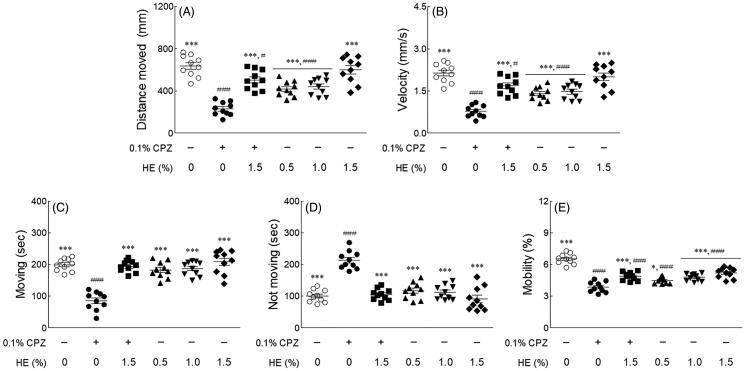
The normal group was untreated, and the control group was treated with CPZ (0.1% of media) for 7 days. The experimental groups were treated with a single HE treatment (0.5, 1.0, and 1.5% of media) and a mixture of 0.1% CPZ and HE for 7 days. The locomotor activity, behavioural patterns, depression-related gene expression, and neurotransmitters level of flies were investigated.
RESULTS
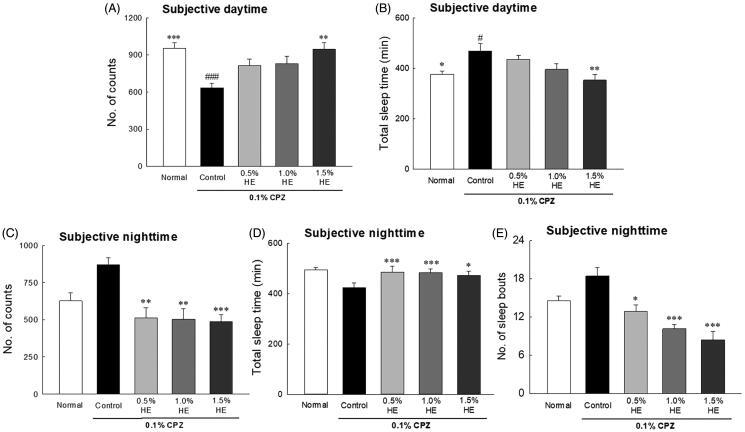
The behavioural patterns of individual flies were significantly reduced with 0.1% CPZ treatment. In contrast, combination treatment of 1.5% HE and 0.1% CPZ significantly increased subjective daytime activity ( < 0.001) and behavioural factors ( < 0.001). These results correlate with increased transcript levels of dopamine ( < 0.001) and serotonin ( < 0.05) receptors and concentration of dopamine ( < 0.05), levodopa ( < 0.001), 5-HTP ( < 0.05), and serotonin ( < 0.001) compared to those in the control group.
DISCUSSION AND CONCLUSIONS
Collectively, HE administration alleviates depression-like symptoms by modulating the circadian rhythm-related behaviours, transcript levels of neurotransmitter receptors, and neurotransmitter levels in the CPZ-induced model. However, additional research is needed to investigate the role of HE administration in behavioural patterns, reduction of the neurotransmitter, and signalling pathways of depression in a vertebrate model system.
背景
抑郁症是一种由多巴胺和血清素缺乏引起的严重精神疾病。大麻属(大麻科)长期以来一直被用于治疗疼痛、恶心和抑郁症。
目的
本研究调查大麻种子乙醇提取物(HE)在氯丙嗪(CPZ)诱导的抑郁模型中的抗抑郁作用。
材料和方法
正常组未处理,对照组用 CPZ(介质的 0.1%)处理 7 天。实验组用单一 HE 处理(介质的 0.5%、1.0%和 1.5%)和 CPZ 和 HE 的混合物(介质的 0.1%)处理 7 天。研究了苍蝇的运动活性、行为模式、与抑郁相关的基因表达和神经递质水平。
结果
个体苍蝇的行为模式在 0.1% CPZ 处理后明显减少。相比之下,1.5% HE 和 0.1% CPZ 的联合处理显著增加了主观日间活动( < 0.001)和行为因素( < 0.001)。这些结果与多巴胺( < 0.001)和血清素( < 0.05)受体的转录水平增加以及多巴胺( < 0.05)、左旋多巴( < 0.001)、5-HTP( < 0.05)和血清素( < 0.001)浓度的增加相关与对照组相比。
讨论与结论
总的来说,HE 给药通过调节生物钟相关行为、神经递质受体的转录水平和 CPZ 诱导模型中的神经递质水平,缓解抑郁样症状。然而,需要进一步研究以调查 HE 给药在脊椎动物模型系统中的行为模式、神经递质减少和抑郁信号通路中的作用。

 Zotero 插件