
长链非编码 RNA ANRIL 通过靶向抑制 miR-181a 和靶向 HMGB1 诱导的自噬来加重胰腺癌细胞对吉西他滨的化疗耐药性。
lncRNA ANRIL aggravates the chemoresistance of pancreatic cancer cells to gemcitabine by targeting inhibition of miR-181a and targeting HMGB1-induced autophagy.
机构信息
Department of Gastroenterology, Shanghai Ninth Peoples' Hospital, Shanghai Jiaotong University, Shanghai 200011, China.
Department of Pulmonary, Longhua Hospital, Shanghai University of Traditional Chinese Medicine, Shanghai 200032, China.
出版信息
Aging (Albany NY). 2021 Aug 10;13(15):19272-19281. doi: 10.18632/aging.203251.
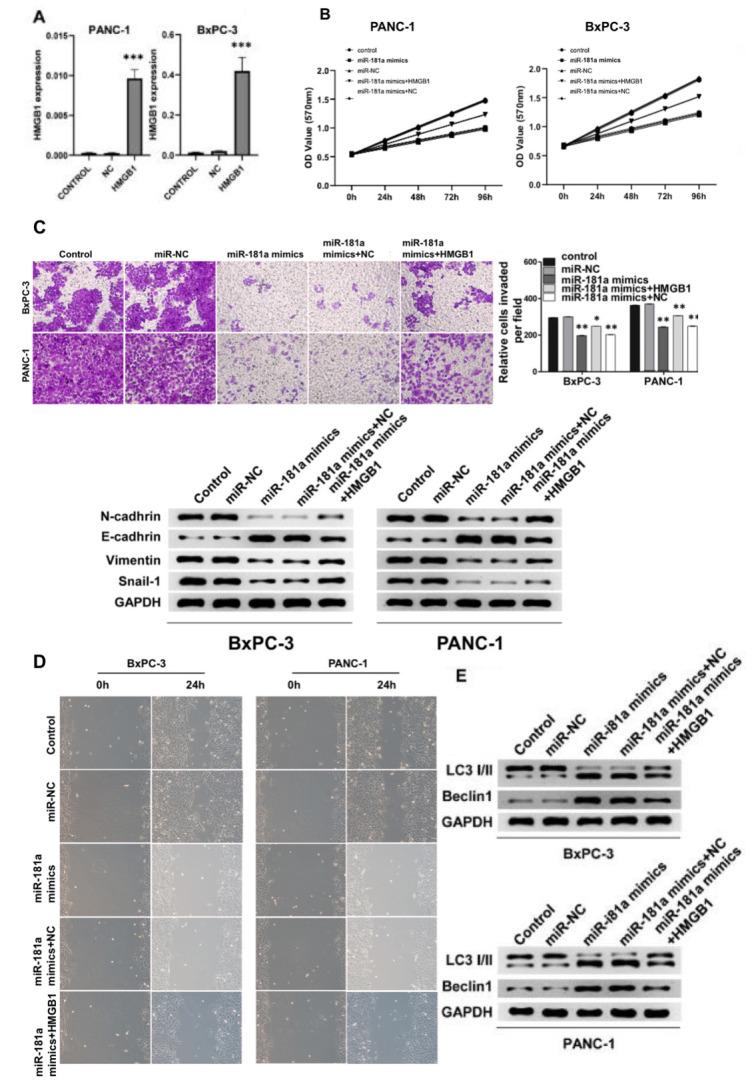
Recent studies focus on long noncoding RNAs (lncRNA) as crucial regulators of cancer biology that contribute to essential cancer cell functions such as cell proliferation, apoptosis, and metastasis. In pancreatic cancer, several lncRNAs have been mentioned as important actors in tumorigenesis. However, the function of lncRNA ANRIL (named as ANRIL as follows) in pancreatic cancer has not been elucidated. In the present study, we show that ANRIL was up-regulated while miR-181a was down-regulated in pancreatic cancer tissues and HMGB1 was highly expressed. Knockdown of ANRIL in pancreatic cancer repressed cellular proliferation, invasion, migration, and reduced chemotherapy resistance to gemcitabine. ANRIL was negatively correlated with miR-181a, while overexpression of miR-181a could reverse the effect. For further mechanism research, we found that miR-181a aimed to HMGB1 which activated cell autophagy. Taken together, our results implicate that the ANRIL, by targeting miR-181a, activates the HMGB1-induced cell autophagy, which is thought to be critical for oncogenesis.
最近的研究集中在长非编码 RNA(lncRNA)作为癌症生物学的关键调节剂,它们有助于癌细胞的基本功能,如细胞增殖、凋亡和转移。在胰腺癌中,已经有几种 lncRNA 被认为是肿瘤发生的重要因素。然而,lncRNA ANRIL(命名为 ANRIL)在胰腺癌中的功能尚未阐明。在本研究中,我们表明 ANRIL 在胰腺癌组织中上调,而 miR-181a 下调,HMGB1 高表达。在胰腺癌中敲低 ANRIL 抑制细胞增殖、侵袭、迁移,并降低对吉西他滨的化疗耐药性。ANRIL 与 miR-181a 呈负相关,而过表达 miR-181a 可以逆转这种作用。为了进一步研究机制,我们发现 miR-181a 靶向 HMGB1,激活细胞自噬。总之,我们的研究结果表明,ANRIL 通过靶向 miR-181a 激活 HMGB1 诱导的细胞自噬,这对肿瘤发生至关重要。



 Zotero 插件