
TMPRSS2 和 RNA 依赖性 RNA 聚合酶是治疗由 SARS-CoV-2 变异株(B.1.1.7 和 B.1.351)引起的 COVID-19 的有效治疗靶点。
TMPRSS2 and RNA-Dependent RNA Polymerase Are Effective Targets of Therapeutic Intervention for Treatment of COVID-19 Caused by SARS-CoV-2 Variants (B.1.1.7 and B.1.351).
机构信息
Zoonotic Virus Laboratory, Institut Pasteur Koreagrid.418549.5, Seongnam, South Korea.
CEO office, Institut Pasteur Koreagrid.418549.5, Seongnam, South Korea.
出版信息
Microbiol Spectr. 2021 Sep 3;9(1):e0047221. doi: 10.1128/Spectrum.00472-21. Epub 2021 Aug 11.
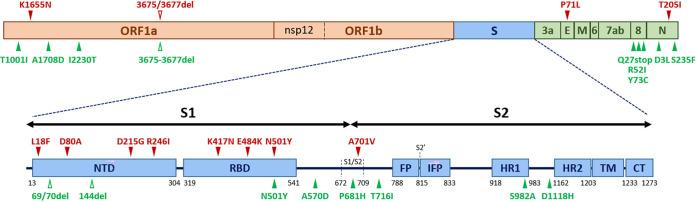
Severe acute respiratory syndrome coronavirus 2 (SARS-CoV-2) is a causative agent of the coronavirus disease 2019 (COVID-19) pandemic, and the development of therapeutic interventions is urgently needed. So far, monoclonal antibodies and drug repositioning are the main methods for drug development, and this effort was partially successful. Since the beginning of the COVID-19 pandemic, the emergence of SARS-CoV-2 variants has been reported in many parts of the world, and the main concern is whether the current vaccines and therapeutics are still effective against these variant viruses. Viral entry and viral RNA-dependent RNA polymerase (RdRp) are the main targets of current drug development; therefore, the inhibitory effects of transmembrane serine protease 2 (TMPRSS2) and RdRp inhibitors were compared among the early SARS-CoV-2 isolate (lineage A) and the two recent variants (lineage B.1.1.7 and lineage B.1.351) identified in the United Kingdom and South Africa, respectively. Our analysis of viral replication showed that the drugs targeting TMPRSS2 and RdRp are equally effective against the two variants of concern. The COVID-19 pandemic is causing unprecedented global problems in both public health and human society. While some vaccines and monoclonal antibodies were successfully developed very quickly and are currently being used, numerous variants of the causative SARS-CoV-2 are emerging and threatening the efficacy of vaccines and monoclonal antibodies. In order to respond to this challenge, we assessed antiviral efficacy of small-molecule inhibitors that are being developed for treatment of COVID-19 and found that they are still very effective against the SARS-CoV-2 variants. Since most small-molecule inhibitors target viral or host factors other than the mutated sequence of the viral spike protein, they are expected to be potent control measures against the COVID-19 pandemic.
严重急性呼吸综合征冠状病毒 2(SARS-CoV-2)是导致 2019 年冠状病毒病(COVID-19)大流行的病原体,迫切需要开发治疗干预措施。到目前为止,单克隆抗体和药物重新定位是药物开发的主要方法,这方面的努力取得了部分成功。自 COVID-19 大流行开始以来,世界许多地方都报告了 SARS-CoV-2 变体的出现,主要关注的是当前的疫苗和疗法是否仍然对这些变异病毒有效。病毒进入和病毒 RNA 依赖性 RNA 聚合酶(RdRp)是当前药物开发的主要目标;因此,比较了早期 SARS-CoV-2 分离株(谱系 A)和分别在英国和南非鉴定的两种最近的变体(谱系 B.1.1.7 和谱系 B.1.351)中跨膜丝氨酸蛋白酶 2(TMPRSS2)和 RdRp 抑制剂的抑制作用。我们对病毒复制的分析表明,针对 TMPRSS2 和 RdRp 的药物对两种关注变体均同样有效。COVID-19 大流行在公共卫生和人类社会两个方面都造成了前所未有的全球问题。虽然一些疫苗和单克隆抗体很快成功开发并正在使用,但引起疾病的 SARS-CoV-2 的许多变体正在出现,并威胁到疫苗和单克隆抗体的疗效。为了应对这一挑战,我们评估了正在开发用于治疗 COVID-19 的小分子抑制剂的抗病毒功效,发现它们对 SARS-CoV-2 变体仍然非常有效。由于大多数小分子抑制剂针对的是病毒或宿主因子,而不是病毒刺突蛋白的突变序列,因此它们有望成为控制 COVID-19 大流行的有力措施。


 Zotero 插件