
中枢神经系统病理学中反应性星形胶质细胞增生的多样性:异质性还是可塑性?
Diversity of Reactive Astrogliosis in CNS Pathology: Heterogeneity or Plasticity?
作者信息
Moulson Aaron J, Squair Jordan W, Franklin Robin J M, Tetzlaff Wolfram, Assinck Peggy
机构信息
Faculty of Medicine, University of British Columbia, Vancouver, BC, Canada.
International Collaboration on Repair Discoveries (ICORD), Vancouver, BC, Canada.
出版信息
Front Cell Neurosci. 2021 Jul 26;15:703810. doi: 10.3389/fncel.2021.703810. eCollection 2021.
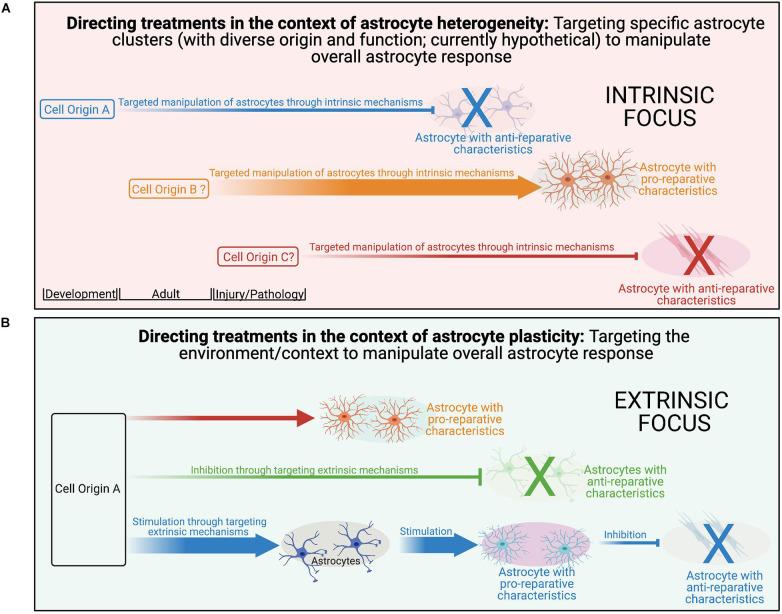
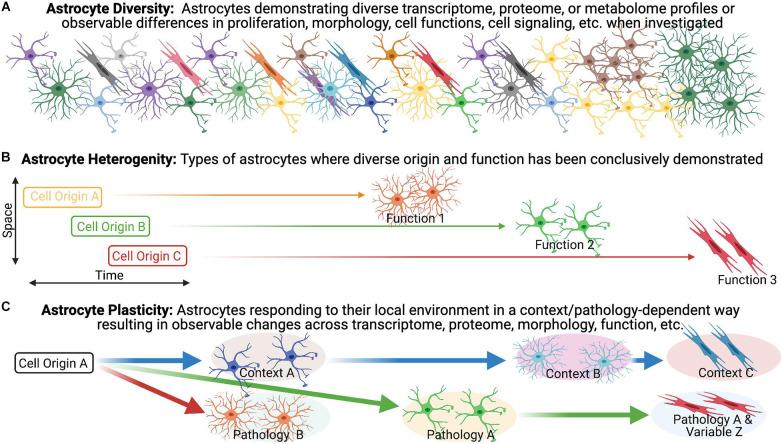
Astrocytes are essential for the development and homeostatic maintenance of the central nervous system (CNS). They are also critical players in the CNS injury response during which they undergo a process referred to as "reactive astrogliosis." Diversity in astrocyte morphology and gene expression, as revealed by transcriptional analysis, is well-recognized and has been reported in several CNS pathologies, including ischemic stroke, CNS demyelination, and traumatic injury. This diversity appears unique to the specific pathology, with significant variance across temporal, topographical, age, and sex-specific variables. Despite this, there is limited functional data corroborating this diversity. Furthermore, as reactive astrocytes display significant environmental-dependent plasticity and fate-mapping data on astrocyte subsets in the adult CNS is limited, it remains unclear whether this diversity represents heterogeneity or plasticity. As astrocytes are important for neuronal survival and CNS function post-injury, establishing to what extent this diversity reflects distinct established heterogeneous astrocyte subpopulations vs. environmentally dependent plasticity within established astrocyte subsets will be critical for guiding therapeutic development. To that end, we review the current state of knowledge on astrocyte diversity in the context of three representative CNS pathologies: ischemic stroke, demyelination, and traumatic injury, with the goal of identifying key limitations in our current knowledge and suggesting future areas of research needed to address them. We suggest that the majority of identified astrocyte diversity in CNS pathologies to date represents plasticity in response to dynamically changing post-injury environments as opposed to heterogeneity, an important consideration for the understanding of disease pathogenesis and the development of therapeutic interventions.
星形胶质细胞对于中枢神经系统(CNS)的发育和稳态维持至关重要。它们也是CNS损伤反应中的关键参与者,在此过程中它们会经历一个被称为“反应性星形胶质细胞增生”的过程。转录分析揭示的星形胶质细胞形态和基因表达的多样性已得到充分认识,并已在包括缺血性中风、CNS脱髓鞘和创伤性损伤在内的几种CNS病理中有所报道。这种多样性似乎特定于具体的病理情况,在时间、地形、年龄和性别特异性变量方面存在显著差异。尽管如此,证实这种多样性的功能数据有限。此外,由于反应性星形胶质细胞表现出显著的环境依赖性可塑性,而成人CNS中星形胶质细胞亚群的命运图谱数据有限,目前尚不清楚这种多样性是代表异质性还是可塑性。由于星形胶质细胞对神经元存活和损伤后CNS功能很重要,确定这种多样性在多大程度上反映了已确立的不同星形胶质细胞亚群与已确立的星形胶质细胞亚群内的环境依赖性可塑性,对于指导治疗开发至关重要。为此,我们在三种代表性CNS病理(缺血性中风、脱髓鞘和创伤性损伤)的背景下回顾了关于星形胶质细胞多样性的当前知识状态,目的是确定我们当前知识中的关键局限性,并提出解决这些局限性所需的未来研究领域。我们认为,迄今为止在CNS病理中确定的大多数星形胶质细胞多样性代表了对损伤后动态变化环境的可塑性,而非异质性,这是理解疾病发病机制和开发治疗干预措施的一个重要考虑因素。

 Zotero 插件