
食品中多胺的存在及烹饪过程的影响。
Occurrence of Polyamines in Foods and the Influence of Cooking Processes.
作者信息
Muñoz-Esparza Nelly C, Costa-Catala Judit, Comas-Basté Oriol, Toro-Funes Natalia, Latorre-Moratalla M Luz, Veciana-Nogués M Teresa, Vidal-Carou M Carmen
机构信息
Departament de Nutrició, Ciències de l'Alimentació i Gastronomia, Facultat de Farmàcia i Ciències de l'Alimentació, Campus de l'Alimentació de Torribera, Universitat de Barcelona, Av. Prat de la Riba 171, 08921 Santa Coloma de Gramenet, Spain.
Institut de Recerca en Nutrició i Seguretat Alimentària (INSA·UB), Universitat de Barcelona, Av. Prat de la Riba 171, 08921 Santa Coloma de Gramenet, Spain.
出版信息
Foods. 2021 Jul 29;10(8):1752. doi: 10.3390/foods10081752.
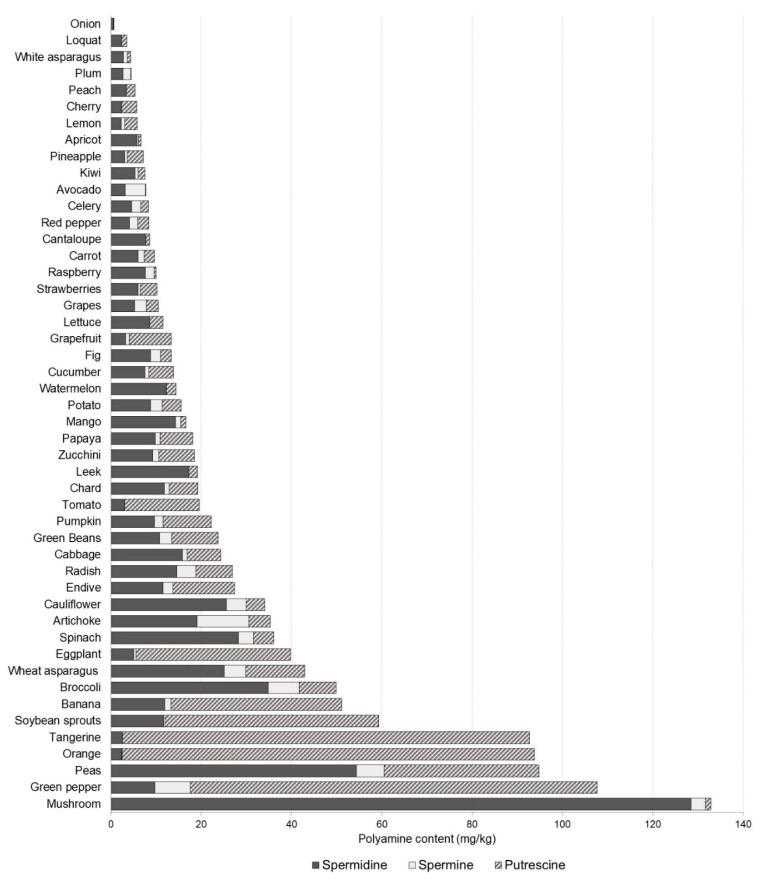
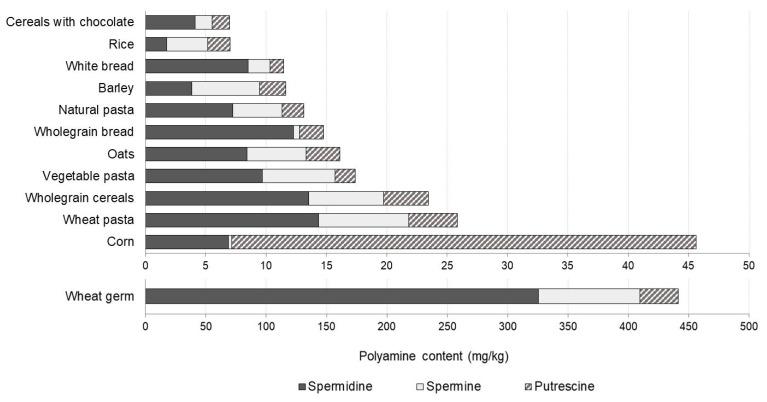
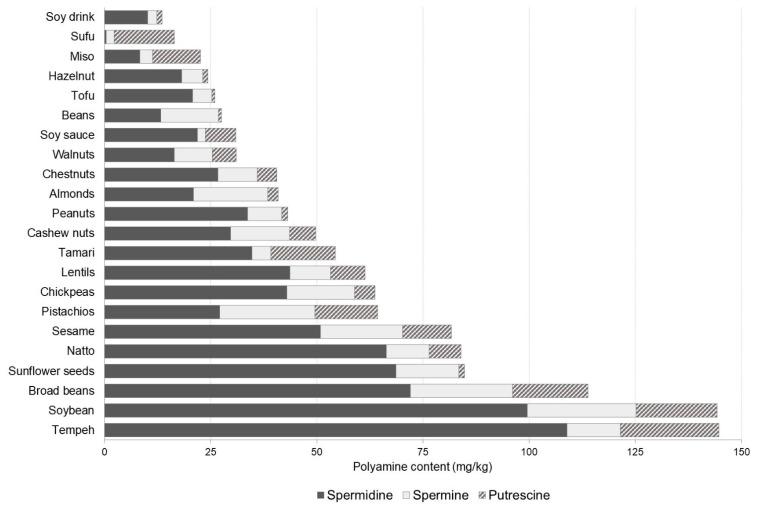
Dietary polyamines are involved in different aspects of human health and play an important role in the prevention of certain chronic conditions such as cardiovascular diseases and diabetes. Different polyamines can be found in all foods in variable amounts. Moreover, several culinary practices have been reported to modify the content and profile of these bioactive compounds in food although experimental data are still scarce and even contradictory. Therefore, the aim of this study was to evaluate the occurrence of polyamines in a large range of foods and to assess the effect of different cooking processes on the polyamine content of a few of them. The highest level of polyamines was found in wheat germ (440.6 mg/kg). Among foods of a plant origin, high levels of total polyamines over 90 mg/kg were determined in mushrooms, green peppers, peas, citrus fruit, broad beans and tempeh with spermidine being predominant (ranging from 54 to 109 mg/kg). In foods of an animal origin, the highest levels of polyamines, above all putrescine (42-130 mg/kg), were found in raw milk, hard and blue cheeses and in dry-fermented sausages. Regarding the influence of different domestic cooking processes, polyamine levels in food were reduced by up to 64% by boiling and grilling but remained practically unmodified by microwave and sous-vide cooking.
膳食多胺参与人体健康的不同方面,在预防某些慢性疾病如心血管疾病和糖尿病中发挥重要作用。不同的多胺可以在所有食物中以不同的量被发现。此外,据报道,一些烹饪方法会改变食物中这些生物活性化合物的含量和分布,尽管实验数据仍然稀少甚至相互矛盾。因此,本研究的目的是评估大量食物中多胺的存在情况,并评估不同烹饪过程对其中一些食物多胺含量的影响。在小麦胚芽中发现了最高水平的多胺(440.6毫克/千克)。在植物源性食物中,蘑菇、青椒、豌豆、柑橘类水果、蚕豆和豆豉中总多胺含量超过90毫克/千克,其中亚精胺占主导(范围为54至109毫克/千克)。在动物源性食物中,生牛奶、硬奶酪和蓝纹奶酪以及干发酵香肠中多胺含量最高,尤其是腐胺(42 - 130毫克/千克)。关于不同家庭烹饪过程的影响,煮沸和烤制会使食物中的多胺水平降低多达64%,但微波和低温长时间烹饪对其影响不大。

 Zotero 插件