
新一代二氢乳清酸脱氢酶(DHODH)抑制剂MEDS433可抑制严重急性呼吸综合征冠状病毒2(SARS-CoV-2)及其他人类冠状病毒的体外复制。
The New Generation DHODH Inhibitor MEDS433 Hinders the In Vitro Replication of SARS-CoV-2 and Other Human Coronaviruses.
作者信息
Calistri Arianna, Luganini Anna, Mognetti Barbara, Elder Elizabeth, Sibille Giulia, Conciatori Valeria, Del Vecchio Claudia, Sainas Stefano, Boschi Donatella, Montserrat Nuria, Mirazimi Ali, Lolli Marco Lucio, Gribaudo Giorgio, Parolin Cristina
机构信息
Department of Molecular Medicine, University of Padua, 35121 Padua, Italy.
Department of Life Sciences and Systems Biology, University of Turin, 10123 Turin, Italy.
出版信息
Microorganisms. 2021 Aug 14;9(8):1731. doi: 10.3390/microorganisms9081731.
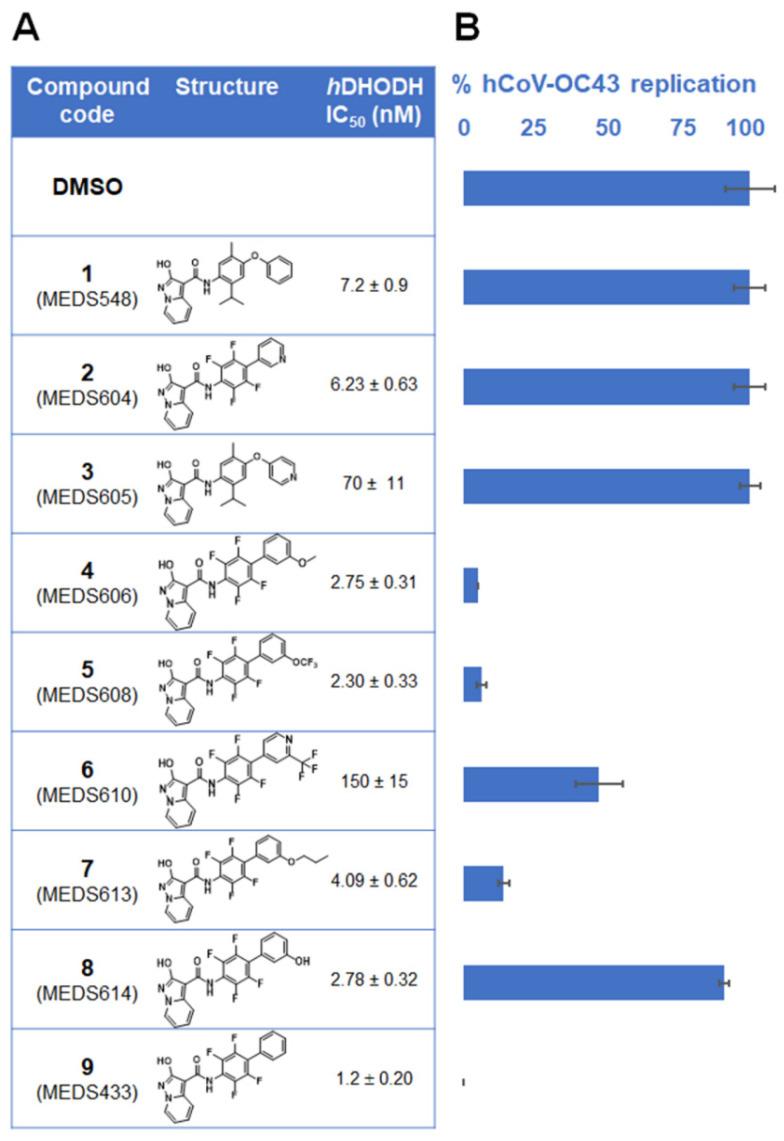
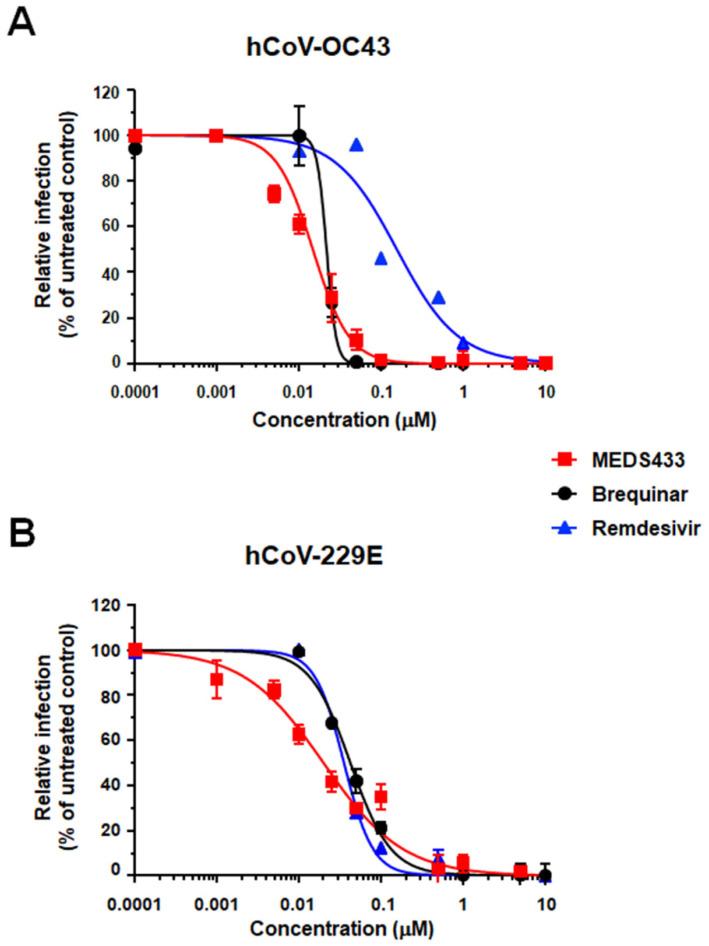
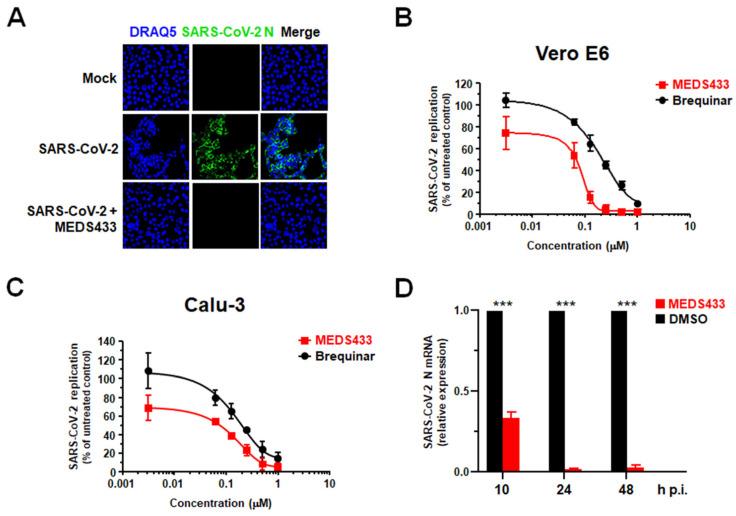
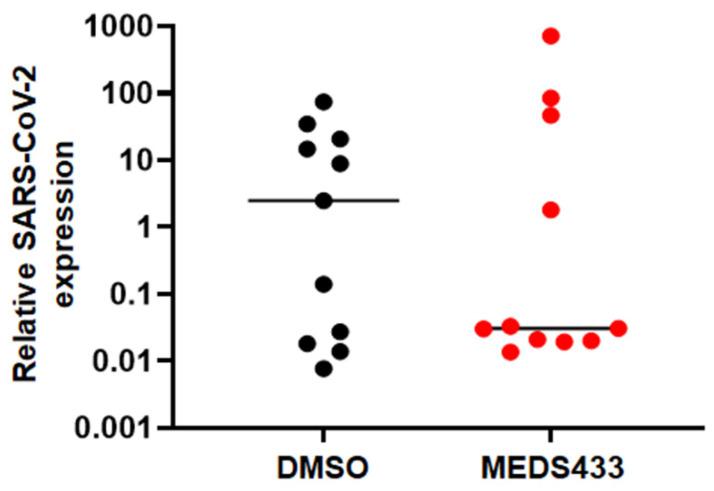
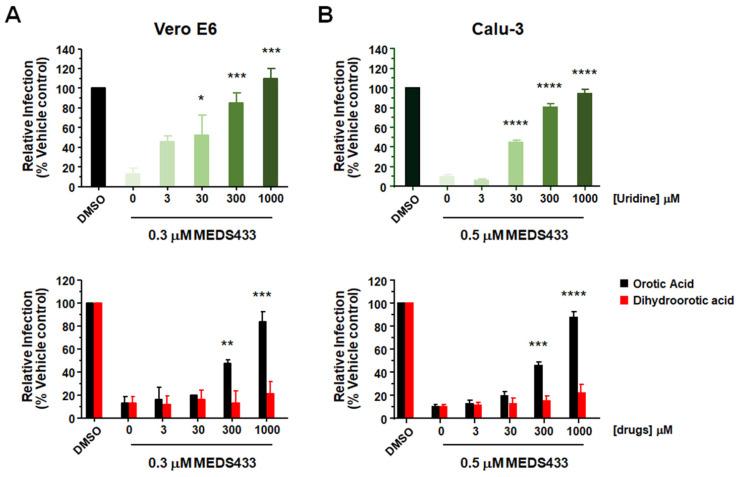
Although coronaviruses (CoVs) have long been predicted to cause zoonotic diseases and pandemics with high probability, the lack of effective anti-pan-CoVs drugs rapidly usable against the emerging SARS-CoV-2 actually prevented a promptly therapeutic intervention for COVID-19. Development of host-targeting antivirals could be an alternative strategy for the control of emerging CoVs infections, as they could be quickly repositioned from one pandemic event to another. To contribute to these pandemic preparedness efforts, here we report on the broad-spectrum CoVs antiviral activity of MEDS433, a new inhibitor of the human dihydroorotate dehydrogenase (DHODH), a key cellular enzyme of the de novo pyrimidine biosynthesis pathway. MEDS433 inhibited the in vitro replication of hCoV-OC43 and hCoV-229E, as well as of SARS-CoV-2, at low nanomolar range. Notably, the anti-SARS-CoV-2 activity of MEDS433 against SARS-CoV-2 was also observed in kidney organoids generated from human embryonic stem cells. Then, the antiviral activity of MEDS433 was reversed by the addition of exogenous uridine or the product of DHODH, the orotate, thus confirming DHODH as the specific target of MEDS433 in hCoVs-infected cells. Taken together, these findings suggest MEDS433 as a potential candidate to develop novel drugs for COVID-19, as well as broad-spectrum antiviral agents exploitable for future CoVs threats.
尽管长期以来人们一直预测冠状病毒(CoVs)很有可能引发人畜共患病和大流行,但缺乏能够快速用于对抗新出现的严重急性呼吸综合征冠状病毒2(SARS-CoV-2)的有效抗泛CoV药物,实际上阻碍了对2019冠状病毒病(COVID-19)的及时治疗干预。开发靶向宿主的抗病毒药物可能是控制新出现的CoV感染的一种替代策略,因为它们可以迅速从一次大流行事件转移到另一次大流行事件。为了助力这些大流行防范工作,在此我们报告了MEDS433的广谱抗CoV病毒活性,MEDS433是一种新型人二氢乳清酸脱氢酶(DHODH)抑制剂,DHODH是从头嘧啶生物合成途径中的一种关键细胞酶。MEDS433在低纳摩尔范围内抑制了人冠状病毒OC43(hCoV-OC43)、人冠状病毒229E(hCoV-229E)以及SARS-CoV-2的体外复制。值得注意的是,在由人类胚胎干细胞生成的肾类器官中也观察到了MEDS433对SARS-CoV-2的抗SARS-CoV-2活性。然后,通过添加外源性尿苷或DHODH的产物乳清酸,MEDS433的抗病毒活性被逆转,从而证实DHODH是MEDS433在hCoV感染细胞中的特异性靶点。综上所述,这些发现表明MEDS433是开发用于COVID-19的新型药物以及可用于应对未来CoV威胁的广谱抗病毒药物的潜在候选物。

 Zotero 插件