
利用 96 柱/孔板建立肝细胞癌三维聚集球体模型。
Three-Dimensional Aggregated Spheroid Model of Hepatocellular Carcinoma Using a 96-Pillar/Well Plate.
机构信息
Department of Health Sciences and Technology, Samsung Advanced Institute for Health Sciences and Technology (SAIHST), Sungkyunkwan University, Seoul 06351, Korea.
Central R & D Center, Medical & Bio Decision (MBD) Co., Ltd., Suwon 16229, Korea.
出版信息
Molecules. 2021 Aug 16;26(16):4949. doi: 10.3390/molecules26164949.
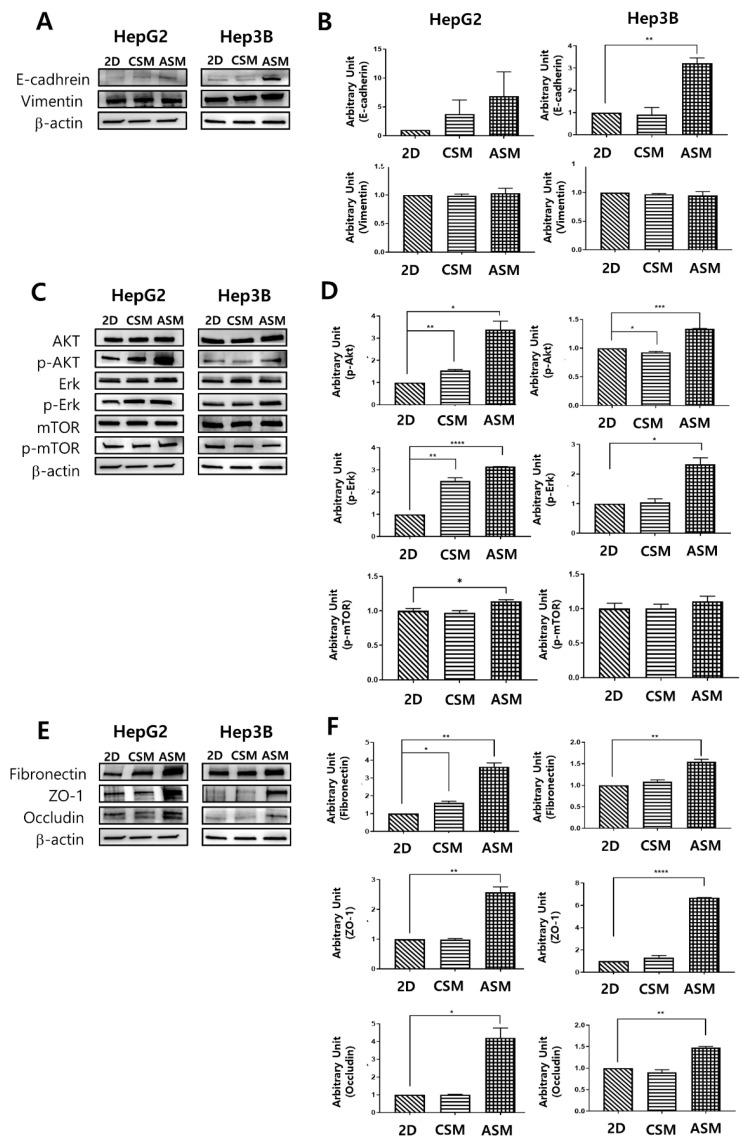
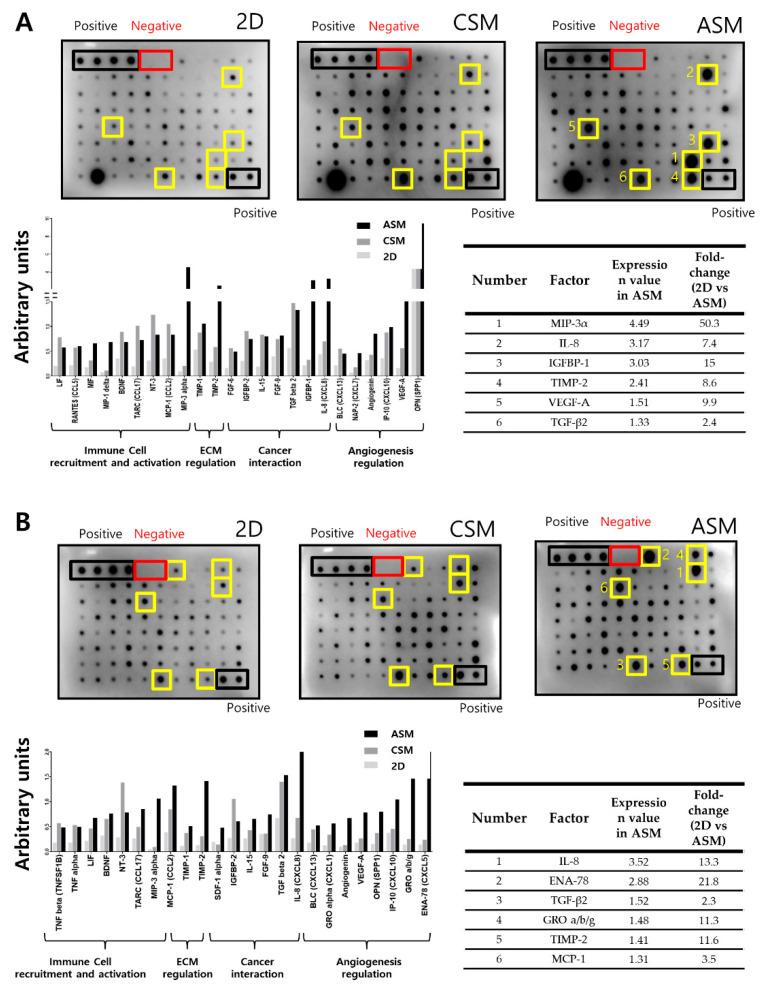
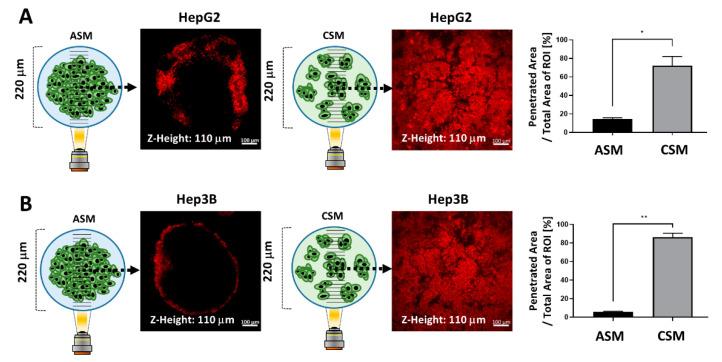
A common method of three-dimensional (3D) cell cultures is embedding single cells in Matrigel. Separated cells in Matrigel migrate or grow to form spheroids but lack cell-to-cell interaction, which causes difficulty or delay in forming mature spheroids. To address this issue, we proposed a 3D aggregated spheroid model (ASM) to create large single spheroids by aggregating cells in Matrigel attached to the surface of 96-pillar plates. Before gelling the Matrigel, we placed the pillar inserts into blank wells where gravity allowed the cells to gather at the curved end. In a drug screening assay, the ASM with Hepatocellular carcinoma (HCC) cell lines showed higher drug resistance compared to both a conventional spheroid model (CSM) and a two-dimensional (2D) cell culture model. With protein expression, cytokine activation, and penetration analysis, the ASM showed higher expression of cancer markers associated with proliferation (p-AKT, p-Erk), tight junction formation (Fibronectin, ZO-1, Occludin), and epithelial cell identity (E-cadherin) in HCC cells. Furthermore, cytokine factors were increased, which were associated with immune cell recruitment/activation (MIF-3α), extracellular matrix regulation (TIMP-2), cancer interaction (IL-8, TGF-β2), and angiogenesis regulation (VEGF-A). Compared to CSM, the ASM also showed limited drug penetration in doxorubicin, which appears in tissues in vivo. Thus, the proposed ASM better recapitulated the tumor microenvironment and can provide for more instructive data during in vitro drug screening assays of tumor cells and improved prediction of efficacious drugs in HCC patients.
一种常见的三维(3D)细胞培养方法是将单细胞嵌入 Matrigel 中。分离的 Matrigel 中的细胞迁移或生长形成球体,但缺乏细胞间相互作用,这导致成熟球体的形成困难或延迟。为了解决这个问题,我们提出了一种 3D 聚集球体模型(ASM),通过在 96 柱板表面附着的 Matrigel 中聚集细胞来创建大的单个球体。在 Matrigel 凝固之前,我们将柱插入物放置在空白井中,在重力作用下,细胞聚集在弯曲的末端。在药物筛选试验中,与传统球体模型(CSM)和二维(2D)细胞培养模型相比,肝癌(HCC)细胞系的 ASM 显示出更高的耐药性。通过蛋白表达、细胞因子激活和渗透分析,ASM 显示 HCC 细胞中与增殖相关的癌症标志物(p-AKT、p-Erk)、紧密连接形成(纤维连接蛋白、ZO-1、Occludin)和上皮细胞特性(E-钙粘蛋白)的表达更高。此外,细胞因子因子增加,与免疫细胞募集/激活(MIF-3α)、细胞外基质调节(TIMP-2)、癌症相互作用(IL-8、TGF-β2)和血管生成调节(VEGF-A)有关。与 CSM 相比,在阿霉素中,ASM 也显示出有限的药物渗透,这在体内组织中可见。因此,所提出的 ASM 更好地再现了肿瘤微环境,并为肿瘤细胞的体外药物筛选试验提供了更有指导意义的数据,并提高了对 HCC 患者有效药物的预测。



 Zotero 插件