
用于预测与酸还原剂合用时药物盐形式优势的机制性生理药代动力学(PBPK)建模
Mechanistic PBPK Modelling to Predict the Advantage of the Salt Form of a Drug When Dosed with Acid Reducing Agents.
作者信息
Chirumamilla Siri Kalyan, Banala Venkatesh Teja, Jamei Masoud, Turner David B
机构信息
Certara UK Limited, Simcyp Division, Level 2-Acero, Sheffield S1 2BJ, UK.
出版信息
Pharmaceutics. 2021 Jul 29;13(8):1169. doi: 10.3390/pharmaceutics13081169.
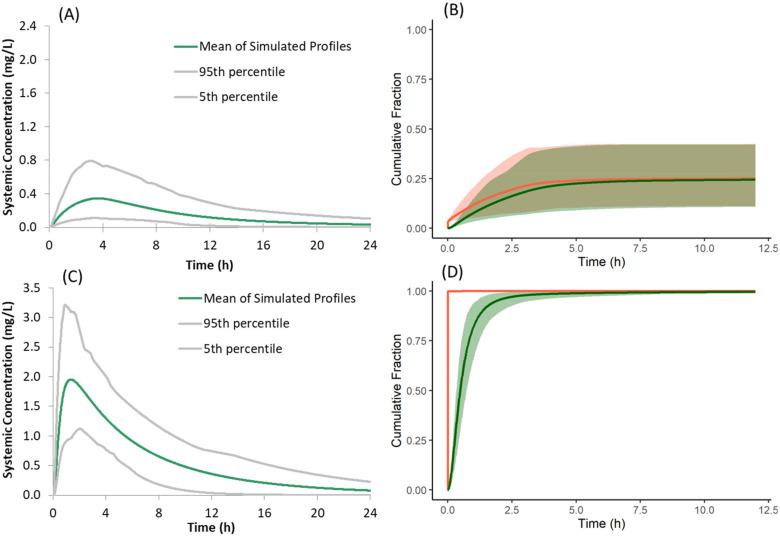
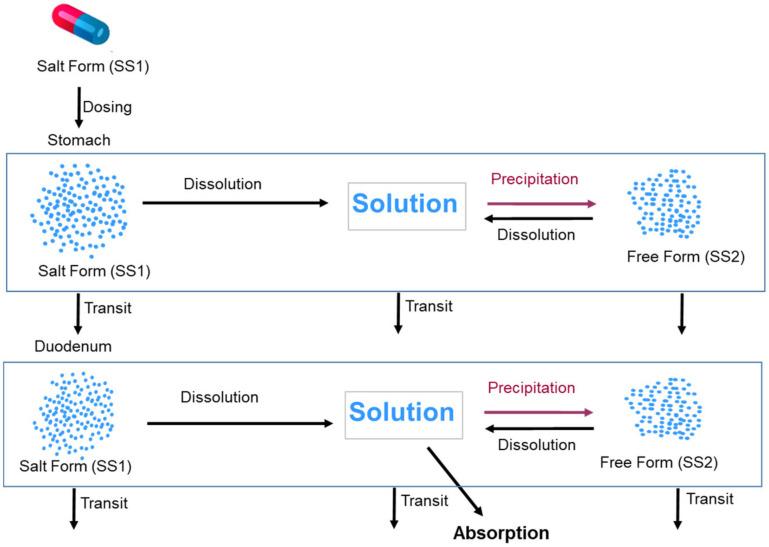
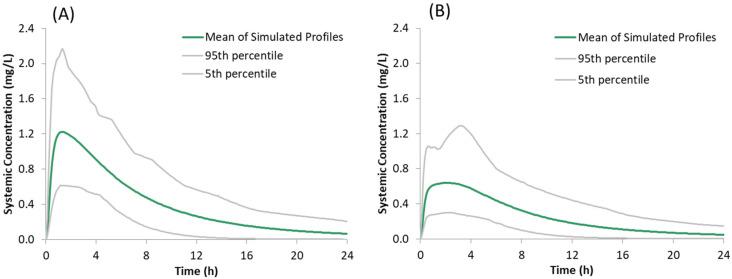
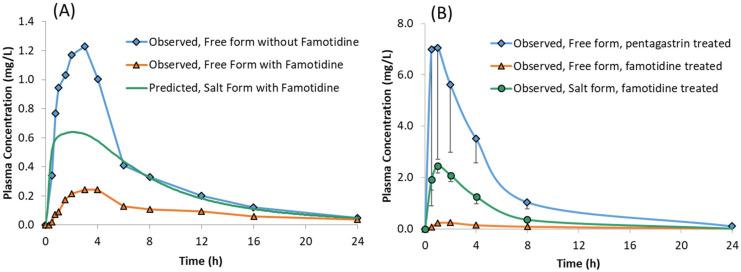
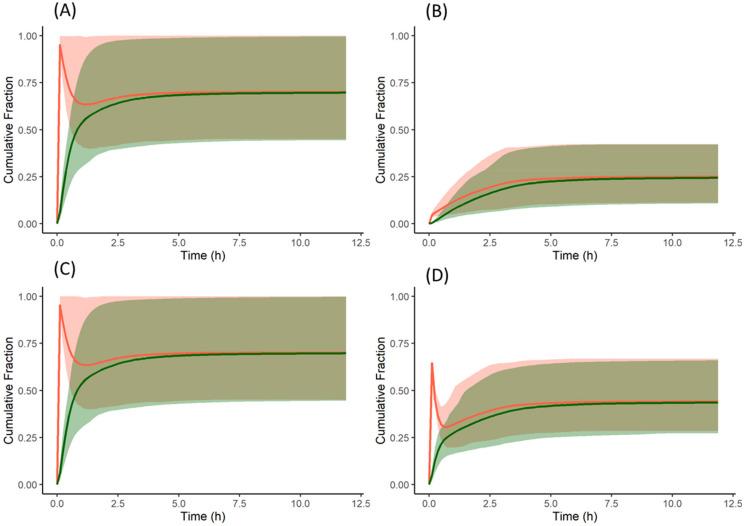
Acid reducing agents (ARAs) reduce the dissolution rate of weakly basic drugs in the stomach potentially leading to lower bioavailability. Formulating the API as a rapidly dissolving salt is one strategy employed to reduce the impact of ARAs on dissolution of such drugs. In the present work, a model drug was selected with an immediate release formulation of the free base dosed in both the absence and presence of the ARA famotidine. In the latter case, bioavailability is restricted and several salt formulations were investigated. To simulate these drug products a mechanistic physiologically based pharmacokinetic (PBPK) model was built using the Simcyp Simulator, which illustrates the advantage of formulating an API as a salt compared to the free base form. The simulations use a mechanistic salt model utilising knowledge of the solubility product which was applied to predict the salt advantage. The developed PBPK model exemplifies that it can be critical to account for the surface pH and solubility when modelling the dissolution of low pKa bases and their salts in the gastric environment. In particular, the mechanistic salt model can be used to aid in screening and salt form selection where the aim is to mitigate effects of ARAs.
抑酸剂(ARAs)会降低弱碱性药物在胃中的溶解速率,这可能会导致生物利用度降低。将活性药物成分(API)制成速溶盐是一种用来减少ARAs对这类药物溶解影响的策略。在本研究中,选择了一种模型药物,其游离碱的速释制剂在不存在和存在ARAs法莫替丁的情况下给药。在后一种情况下,生物利用度受到限制,并对几种盐制剂进行了研究。为了模拟这些药品,使用Simcyp模拟器构建了一个基于生理药代动力学(PBPK)的机制模型,该模型说明了将API制成盐相对于游离碱形式的优势。模拟使用了一个基于溶度积知识的机制盐模型,该模型用于预测盐的优势。所开发的PBPK模型表明,在模拟低pKa碱及其盐在胃环境中的溶解时,考虑表面pH值和溶解度可能至关重要。特别是,机制盐模型可用于辅助筛选和盐型选择,目的是减轻ARAs的影响。





 Zotero 插件