
新型 HIV-1 治愈潜伏逆转剂:非人类灵长类动物模型的研究进展。
New Latency Reversing Agents for HIV-1 Cure: Insights from Nonhuman Primate Models.
机构信息
Department of Pediatrics, Emory University School of Medicine, Atlanta, GA 30322, USA.
Yerkes National Primate Research Center, Emory University, Atlanta, GA 30329, USA.
出版信息
Viruses. 2021 Aug 6;13(8):1560. doi: 10.3390/v13081560.
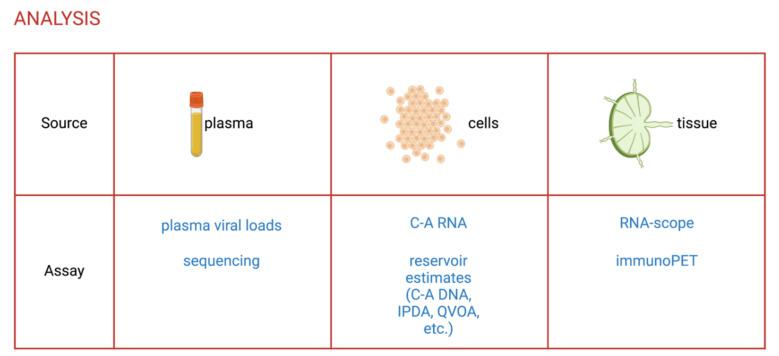
Antiretroviral therapy (ART) controls human immunodeficiency virus 1 (HIV-1) replication and prevents disease progression but does not eradicate HIV-1. The persistence of a reservoir of latently infected cells represents the main barrier to a cure. "Shock and kill" is a promising strategy involving latency reversing agents (LRAs) to reactivate HIV-1 from latently infected cells, thus exposing the infected cells to killing by the immune system or clearance agents. Here, we review advances to the "shock and kill" strategy made through the nonhuman primate (NHP) model, highlighting recently identified latency reversing agents and approaches such as mimetics of the second mitochondrial activator of caspase (SMACm), experimental CD8+ T cell depletion, immune checkpoint blockade (ICI), and toll-like receptor (TLR) agonists. We also discuss the advantages and limits of the NHP model for HIV cure research and methods developed to evaluate the efficacy of in vivo treatment with LRAs in NHPs.
抗逆转录病毒疗法(ART)可控制人类免疫缺陷病毒 1 型(HIV-1)的复制,防止疾病进展,但不能彻底清除 HIV-1。潜伏感染细胞的储库持续存在是治愈的主要障碍。“休克和杀伤”是一种很有前途的策略,包括潜伏逆转剂(LRA),以从潜伏感染的细胞中重新激活 HIV-1,从而使受感染的细胞暴露于免疫系统或清除剂的杀伤之下。在这里,我们通过非人类灵长类动物(NHP)模型回顾了“休克和杀伤”策略的进展,重点介绍了最近发现的潜伏逆转剂和方法,如胱天蛋白酶第二线粒体激活物(SMACm)模拟物、实验性 CD8+T 细胞耗竭、免疫检查点阻断(ICI)和 Toll 样受体(TLR)激动剂。我们还讨论了 NHP 模型在 HIV 治愈研究中的优势和局限性,以及为评估 LRA 在 NHP 体内治疗效果而开发的方法。

 Zotero 插件