
帕博利珠单抗治疗转移性非小细胞肺癌患者的循环游离 DNA 和循环肿瘤细胞的临床潜力。
Clinical potential of circulating free DNA and circulating tumour cells in patients with metastatic non-small-cell lung cancer treated with pembrolizumab.
机构信息
Liquid Biopsy Analysis Unit, Translational Medical Oncology (Oncomet), Health Research Institute of Santiago (IDIS), Santiago de Compostela, Spain.
Universidade de Santiago de Compostela (USC), Santiago de Compostela, Spain.
出版信息
Mol Oncol. 2021 Nov;15(11):2923-2940. doi: 10.1002/1878-0261.13094. Epub 2021 Sep 23.
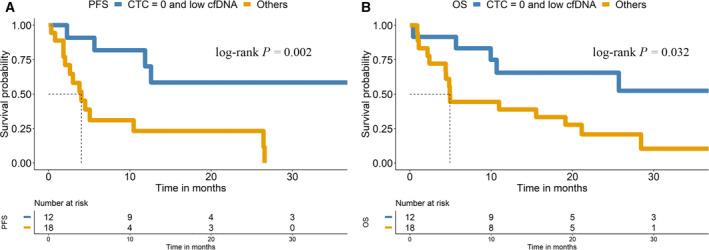
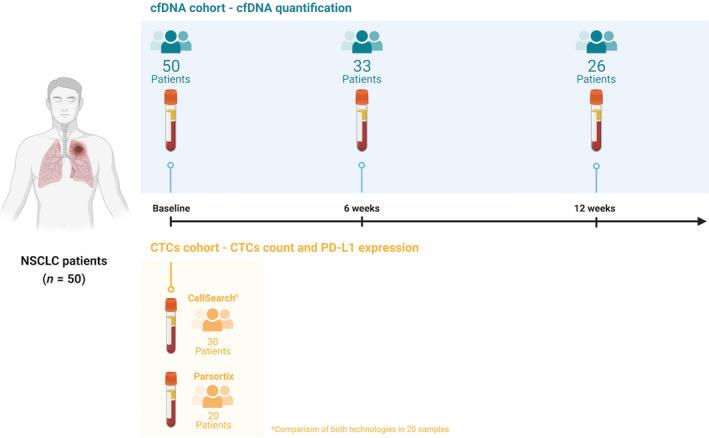
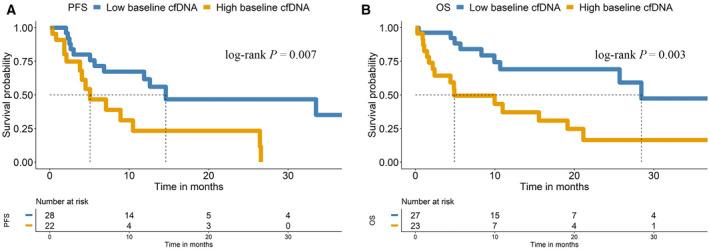
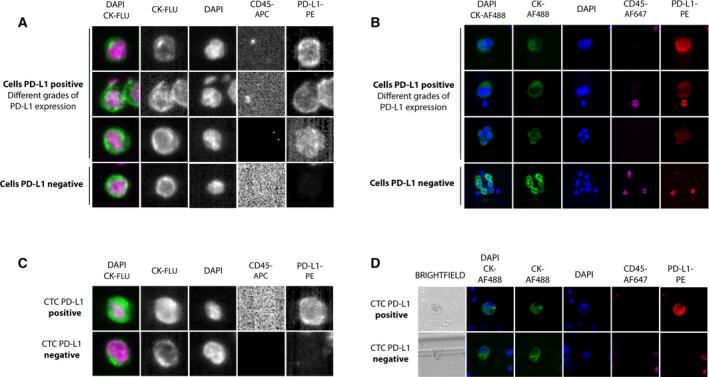
Immune checkpoint inhibitors, such as pembrolizumab, are revolutionizing therapeutic strategies for different cancer types, including non-small-cell lung cancer (NSCLC). However, only a subset of patients benefits from this therapy, and new biomarkers are needed to select better candidates. In this study, we explored the value of liquid biopsy analyses, including circulating free DNA (cfDNA) and circulating tumour cells (CTCs), as a prognostic or predictive tool to guide pembrolizumab therapy. For this purpose, a total of 109 blood samples were collected from 50 patients with advanced NSCLC prior to treatment onset and at 6 and 12 weeks after the initiation of pembrolizumab. Plasma cfDNA was measured using hTERT quantitative PCR assay. The CTC levels at baseline were also analysed using two enrichment technologies (CellSearch and Parsortix systems) to evaluate the efficacy of both approaches at detecting the presence of programmed cell death ligand 1 on CTCs. Notably, patients with high baseline hTERT cfDNA levels had significantly shorter progression-free survival (PFS) and overall survival (OS) than those with low baseline levels. Moreover, patients with unfavourable changes in the hTERT cfDNA levels from baseline to 12 weeks showed a higher risk of disease progression. Additionally, patients in whom CTCs were detected using the CellSearch system had significantly shorter PFS and OS than patients who had no CTCs. Finally, multivariate regression analyses confirmed the value of the combination of CTCs and cfDNA levels as an early independent predictor of disease progression, identifying a subgroup of patients who were negative for CTCs, who presented low levels of cfDNA and who particularly benefited from the treatment.
免疫检查点抑制剂,如 pembrolizumab,正在彻底改变包括非小细胞肺癌(NSCLC)在内的不同癌症类型的治疗策略。然而,只有一部分患者从这种治疗中获益,因此需要新的生物标志物来选择更好的候选者。在这项研究中,我们探讨了液体活检分析(包括循环游离 DNA [cfDNA] 和循环肿瘤细胞 [CTC])作为指导 pembrolizumab 治疗的预后或预测工具的价值。为此,共采集了 50 例晚期 NSCLC 患者的 109 份血样,这些患者在治疗前和 pembrolizumab 治疗开始后 6 周和 12 周时采集了这些血样。采用 hTERT 定量 PCR 检测法测量血浆 cfDNA。基线时还分析了 CTC 水平,采用两种富集技术(CellSearch 和 Parsortix 系统)来评估两种方法检测 CTC 上程序性细胞死亡配体 1 的效果。值得注意的是,基线 hTERT cfDNA 水平较高的患者的无进展生存期(PFS)和总生存期(OS)显著短于基线水平较低的患者。此外,基线至 12 周 hTERT cfDNA 水平发生不利变化的患者疾病进展的风险更高。此外,使用 CellSearch 系统检测到 CTC 的患者的 PFS 和 OS 明显短于没有 CTC 的患者。最后,多变量回归分析证实了 CTC 与 cfDNA 水平联合作为疾病进展的早期独立预测指标的价值,确定了一组 CTC 阴性、cfDNA 水平低且特别受益于治疗的患者。



 Zotero 插件