
在 中鉴定出的线粒体蛋白质的优先和验证资源。
A Prioritized and Validated Resource of Mitochondrial Proteins in Identifies Unique Biology.
机构信息
Center for Molecular and Biomolecular Informatics, Radboud Institute for Molecular Life Sciencesgrid.461760.2, Radboudumc, Nijmegen, the Netherlands.
Radboud Center for Mitochondrial Medicine, Radboudumc, Nijmegen, the Netherlands.
出版信息
mSphere. 2021 Oct 27;6(5):e0061421. doi: 10.1128/mSphere.00614-21. Epub 2021 Sep 8.
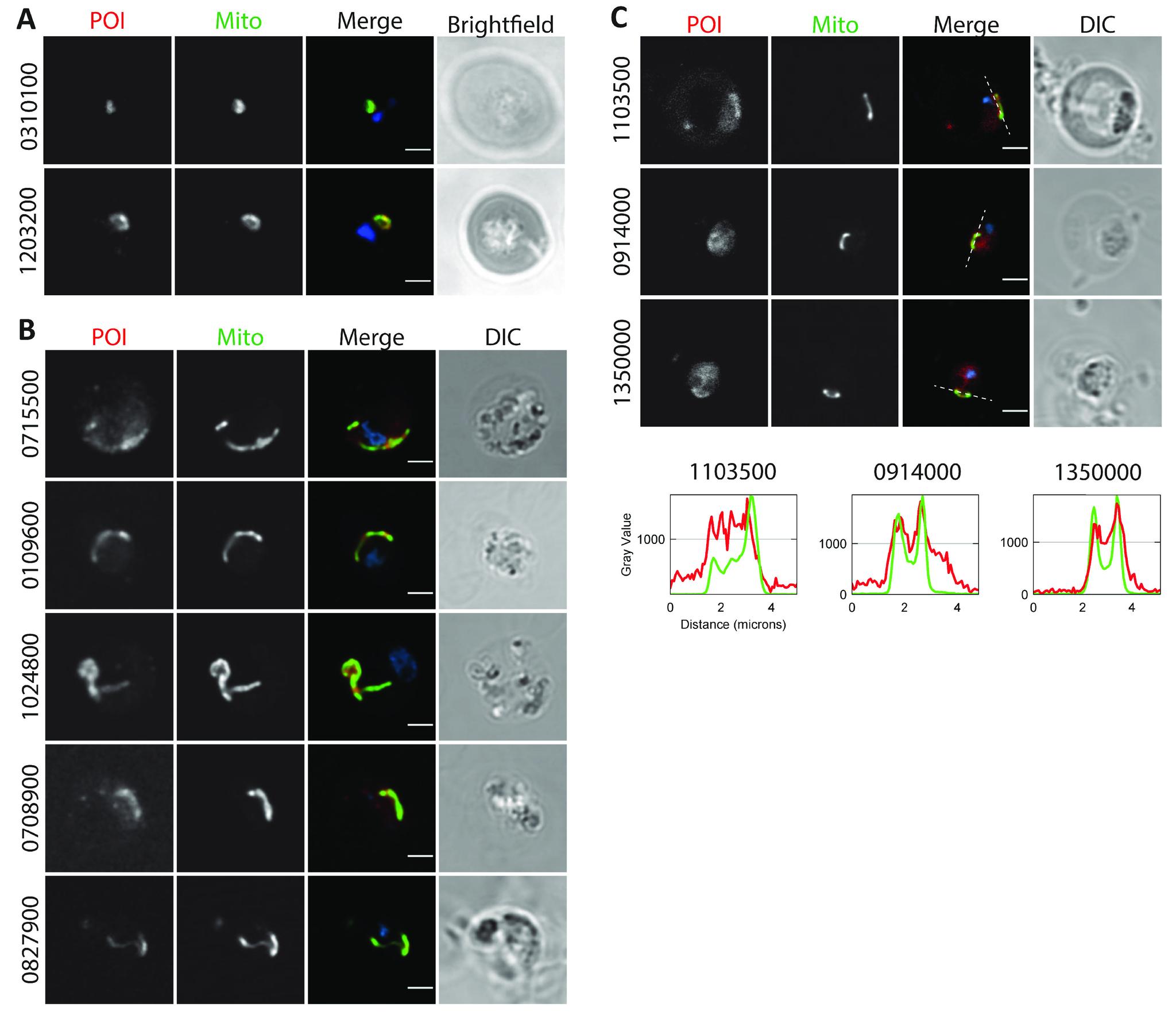
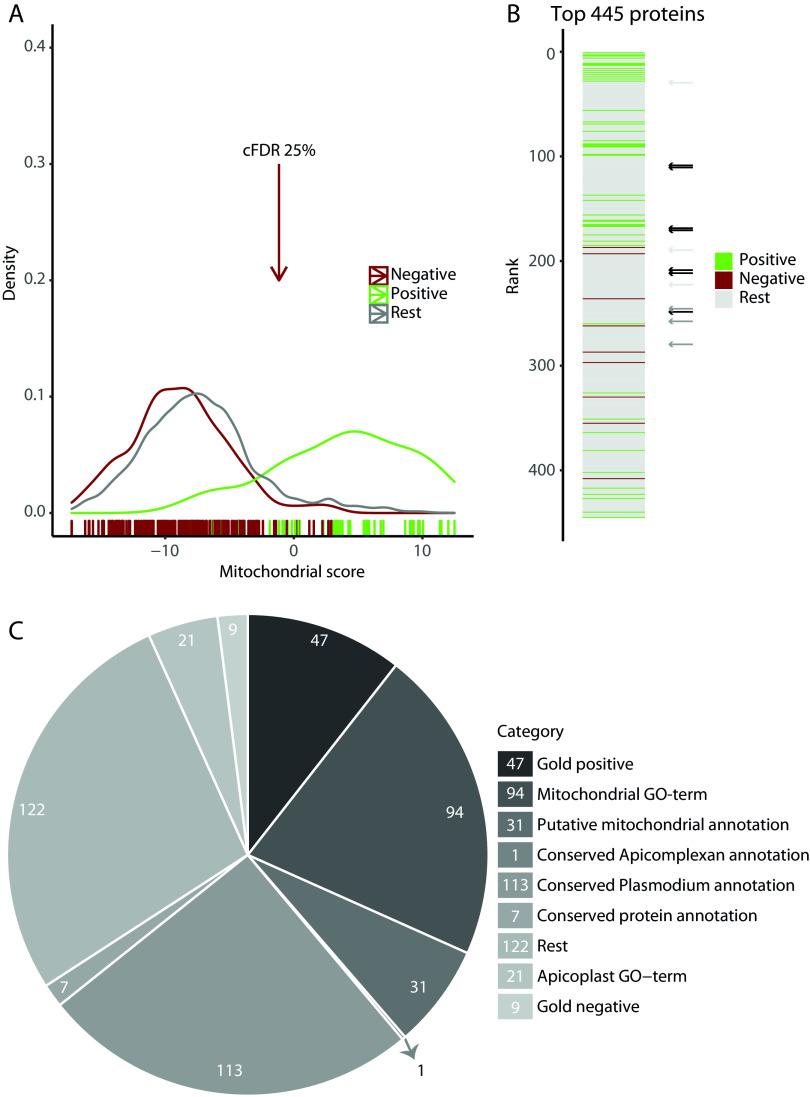
species have a single mitochondrion that is essential for their survival and has been successfully targeted by antimalarial drugs. Most mitochondrial proteins are imported into this organelle, and our picture of the mitochondrial proteome remains incomplete. Many data sources contain information about mitochondrial localization, including proteome and gene expression profiles, orthology to mitochondrial proteins from other species, coevolutionary relationships, and amino acid sequences, each with different coverage and reliability. To obtain a comprehensive, prioritized list of Plasmodium falciparum mitochondrial proteins, we rigorously analyzed and integrated eight data sets using Bayesian statistics into a predictive score per protein for mitochondrial localization. At a corrected false discovery rate of 25%, we identified 445 proteins with a sensitivity of 87% and a specificity of 97%. They include proteins that have not been identified as mitochondrial in other eukaryotes but have characterized homologs in bacteria that are involved in metabolism or translation. Mitochondrial localization of seven Plasmodium berghei orthologs was confirmed by epitope labeling and colocalization with a mitochondrial marker protein. One of these belongs to a newly identified apicomplexan mitochondrial protein family that in P. falciparum has four members. With the experimentally validated mitochondrial proteins and the complete ranked P. falciparum proteome, which we have named PlasmoMitoCarta, we present a resource to study unique proteins of mitochondria. The unique biology and medical relevance of the mitochondrion of the malaria parasite Plasmodium falciparum have made it the subject of many studies. However, we actually do not have a comprehensive assessment of which proteins reside in this organelle. Many omics data are available that are predictive of mitochondrial localization, such as proteomics data and expression data. Individual data sets are, however, rarely complete and can provide conflicting evidence. We integrated a wide variety of available omics data in a manner that exploits the relative strengths of the data sets. Our analysis gave a predictive score for the mitochondrial localization to each nuclear encoded P. falciparum protein and identified 445 likely mitochondrial proteins. We experimentally validated the mitochondrial localization of seven of the new mitochondrial proteins, confirming the quality of the complete list. These include proteins that have not been observed mitochondria before, adding unique mitochondrial functions to P. falciparum.
疟原虫的线粒体是其生存所必需的,并且已经被抗疟药物成功靶向。大多数线粒体蛋白都被导入这个细胞器,我们对线粒体蛋白质组的认识仍然不完整。许多数据源包含有关线粒体定位的信息,包括蛋白质组和基因表达谱、与其他物种的线粒体蛋白的同源性、共进化关系和氨基酸序列,每个都有不同的覆盖范围和可靠性。为了获得全面的、优先的恶性疟原虫线粒体蛋白质列表,我们使用贝叶斯统计方法严格分析和整合了八个数据集,为每个蛋白质的线粒体定位生成了预测分数。在纠正后的假发现率为 25%时,我们鉴定出 445 种蛋白质,其敏感性为 87%,特异性为 97%。它们包括尚未被鉴定为其他真核生物线粒体的蛋白质,但在细菌中具有特征性的同源物,这些同源物参与代谢或翻译。七种伯氏疟原虫同源物的线粒体定位通过表位标记和与线粒体标记蛋白的共定位得到证实。其中一种属于新鉴定的顶复门线粒体蛋白家族,在恶性疟原虫中有四个成员。通过实验验证的线粒体蛋白质和完整的恶性疟原虫蛋白质组,我们将其命名为 PlasmoMitoCarta,提供了一个研究独特的线粒体蛋白质的资源。疟原虫恶性疟原虫的线粒体具有独特的生物学和医学相关性,因此成为许多研究的主题。然而,我们实际上并没有对哪些蛋白质驻留在这个细胞器中有一个全面的评估。有许多可预测线粒体定位的组学数据,如蛋白质组学数据和表达数据。然而,单个数据集很少是完整的,并且可以提供相互矛盾的证据。我们以利用数据集相对优势的方式整合了各种可用的组学数据。我们的分析为每个核编码的恶性疟原虫蛋白生成了线粒体定位的预测分数,并鉴定出 445 种可能的线粒体蛋白质。我们实验验证了新的线粒体蛋白质中的七种的线粒体定位,证实了完整列表的质量。其中包括以前没有观察到线粒体的蛋白质,为恶性疟原虫添加了独特的线粒体功能。

 Zotero 插件