
抗菌面罩:抵御新型冠状病毒和多重耐药细菌的新一代面部防护装备。
Antimicrobial Face Shield: Next Generation of Facial Protective Equipment against SARS-CoV-2 and Multidrug-Resistant Bacteria.
作者信息
Tuñón-Molina Alberto, Martí Miguel, Muramoto Yukiko, Noda Takeshi, Takayama Kazuo, Serrano-Aroca Ángel
机构信息
Biomaterials and Bioengineering Lab., Centro de Investigación Traslacional San Alberto Magno, Universidad Católica de Valencia San Vicente Mártir, c/Guillem de Castro 94, 46001 Valencia, Spain.
Laboratory of Ultrastructural Virology, Institute for Frontier Life and Medical Sciences, Kyoto University, Kyoto 606-8507, Japan.
出版信息
Int J Mol Sci. 2021 Sep 1;22(17):9518. doi: 10.3390/ijms22179518.
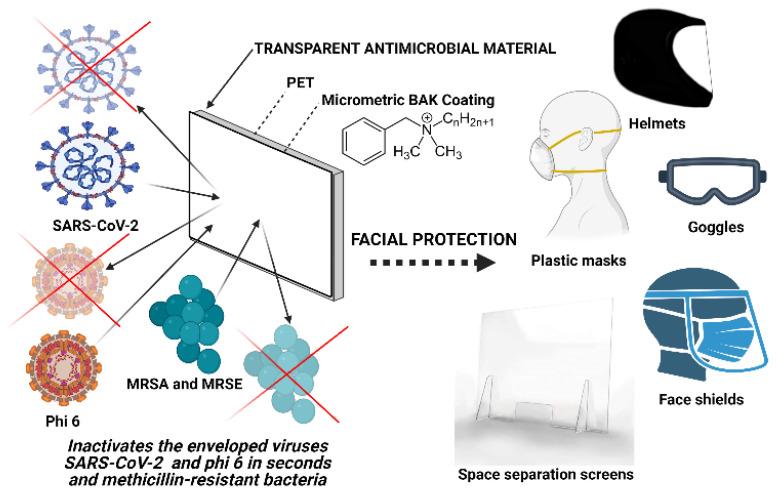
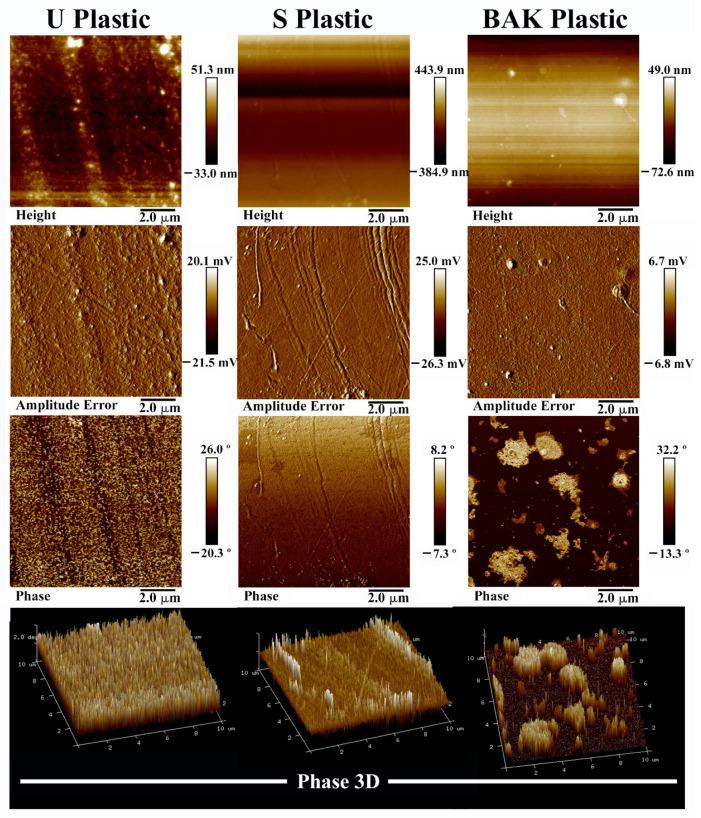
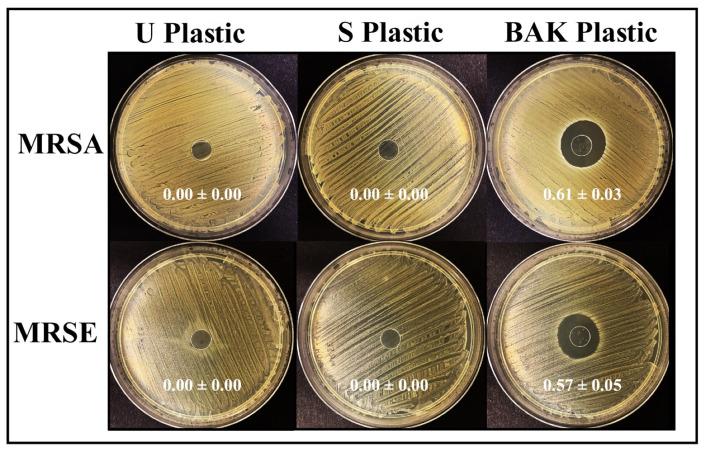
Transparent materials used for facial protection equipment provide protection against microbial infections caused by viruses and bacteria, including multidrug-resistant strains. However, transparent materials used for this type of application are made of materials that do not possess antimicrobial activity. They just avoid direct contact between the person and the biological agent. Therefore, healthy people can become infected through contact of the contaminated material surfaces and this equipment constitute an increasing source of infectious biological waste. Furthermore, infected people can transmit microbial infections easily because the protective equipment do not inactivate the microbial load generated while breathing, sneezing or coughing. In this regard, the goal of this work consisted of fabricating a transparent face shield with intrinsic antimicrobial activity that could provide extra-protection against infectious agents and reduce the generation of infectious waste. Thus, a single-use transparent antimicrobial face shield composed of polyethylene terephthalate and an antimicrobial coating of benzalkonium chloride has been developed for the next generation of facial protective equipment. The antimicrobial coating was analyzed by atomic force microscopy and field emission scanning electron microscopy with elemental analysis. This is the first facial transparent protective material capable of inactivating enveloped viruses such as severe acute respiratory syndrome coronavirus 2 (SARS-CoV-2) in less than one minute of contact, and the methicillin-resistant and . Bacterial infections contribute to severe pneumonia associated with the SARS-CoV-2 infection, and their resistance to antibiotics is increasing. Our extra protective broad-spectrum antimicrobial composite material could also be applied for the fabrication of other facial protective tools such as such as goggles, helmets, plastic masks and space separation screens used for counters or vehicles. This low-cost technology would be very useful to combat the current pandemic and protect health care workers from multidrug-resistant infections in developed and underdeveloped countries.
用于面部防护设备的透明材料可预防由病毒和细菌引起的微生物感染,包括多重耐药菌株。然而,用于此类应用的透明材料由不具备抗菌活性的材料制成。它们只是避免人与生物制剂直接接触。因此,健康人可能通过接触受污染的材料表面而被感染,并且这种设备构成了传染性生物废物的一个日益增加的来源。此外,感染者能够轻易传播微生物感染,因为防护设备无法使呼吸、打喷嚏或咳嗽时产生的微生物负荷失活。在这方面,这项工作的目标是制造一种具有内在抗菌活性的透明面罩,它可以提供针对传染因子的额外保护并减少传染性废物的产生。因此,已经为下一代面部防护设备开发了一种由聚对苯二甲酸乙二酯和苯扎氯铵抗菌涂层组成的一次性透明抗菌面罩。通过原子力显微镜和带有元素分析的场发射扫描电子显微镜对抗菌涂层进行了分析。这是第一种能够在接触不到一分钟的时间内灭活诸如严重急性呼吸综合征冠状病毒2(SARS-CoV-2)等包膜病毒的面部透明防护材料,并且耐甲氧西林金黄色葡萄球菌和……细菌感染会导致与SARS-CoV-2感染相关的严重肺炎,而且它们对抗生素的耐药性正在增加。我们这种具有额外保护作用的广谱抗菌复合材料还可用于制造其他面部防护工具,如护目镜、头盔、塑料口罩以及用于柜台或车辆的空间分隔屏。这种低成本技术对于抗击当前的大流行以及保护发达国家和不发达国家的医护人员免受多重耐药感染将非常有用。


 Zotero 插件