
植物非生物胁迫下一氧化氮(NO)信号转导和活性氧(ROS)稳态的分子机制。
Molecular Mechanisms of Nitric Oxide (NO) Signaling and Reactive Oxygen Species (ROS) Homeostasis during Abiotic Stresses in Plants.
机构信息
Department of Botany, Aligarh Muslim University, Aligarh 202 002, India.
Department of Biology, Wilfrid Laurier University, Waterloo, ON N2L 3C5, Canada.
出版信息
Int J Mol Sci. 2021 Sep 6;22(17):9656. doi: 10.3390/ijms22179656.
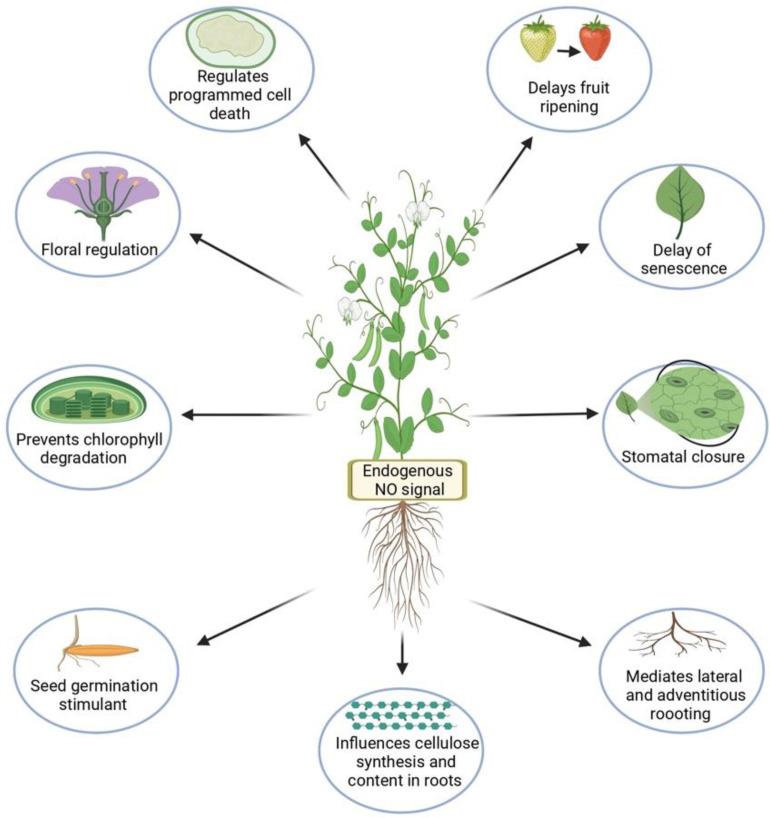
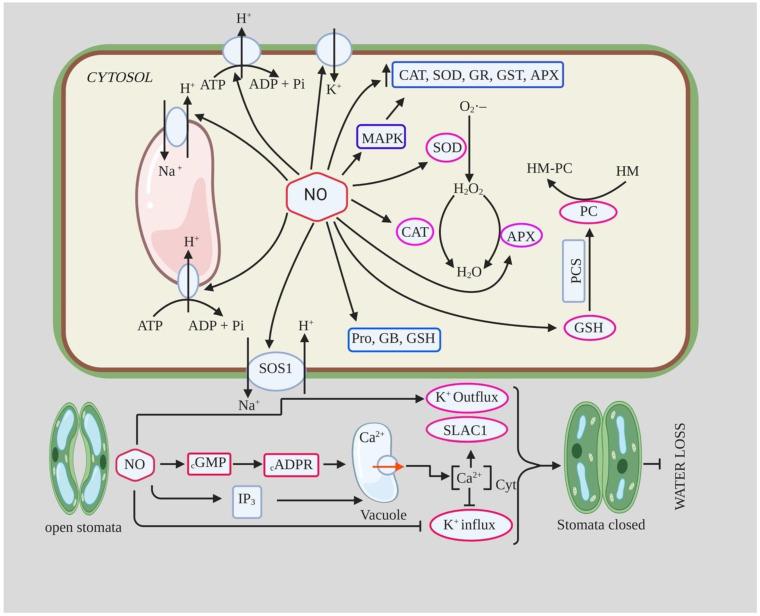
Abiotic stressors, such as drought, heavy metals, and high salinity, are causing huge crop losses worldwide. These abiotic stressors are expected to become more extreme, less predictable, and more widespread in the near future. With the rapidly growing human population and changing global climate conditions, it is critical to prevent global crop losses to meet the increasing demand for food and other crop products. The reactive gaseous signaling molecule nitric oxide (NO) is involved in numerous plant developmental processes as well as plant responses to various abiotic stresses through its interactions with various molecules. Together, these interactions lead to the homeostasis of reactive oxygen species (ROS), proline and glutathione biosynthesis, post-translational modifications such as S-nitrosylation, and modulation of gene and protein expression. Exogenous application of various NO donors positively mitigates the negative effects of various abiotic stressors. In view of the multidimensional role of this signaling molecule, research over the past decade has investigated its potential in alleviating the deleterious effects of various abiotic stressors, particularly in ROS homeostasis. In this review, we highlight the recent molecular and physiological advances that provide insights into the functional role of NO in mediating various abiotic stress responses in plants.
非生物胁迫因素,如干旱、重金属和高盐度,正在导致全球范围内的大量作物减产。预计在不久的将来,这些非生物胁迫因素将变得更加极端、更不可预测、更普遍。随着全球人口的快速增长和不断变化的全球气候条件,防止全球作物减产以满足对粮食和其他作物产品日益增长的需求至关重要。活性气态信号分子一氧化氮 (NO) 通过与各种分子的相互作用,参与许多植物发育过程以及植物对各种非生物胁迫的响应。这些相互作用共同导致活性氧 (ROS)、脯氨酸和谷胱甘肽生物合成、翻译后修饰(如 S-亚硝基化)以及基因和蛋白质表达的调节的内稳态。各种 NO 供体的外源应用可以积极减轻各种非生物胁迫因素的负面影响。鉴于这种信号分子的多维作用,过去十年的研究调查了其在缓解各种非生物胁迫对植物的有害影响方面的潜力,特别是在 ROS 内稳态方面。在这篇综述中,我们强调了最近的分子和生理进展,这些进展提供了对 NO 在介导植物各种非生物胁迫响应中的功能作用的深入了解。
 Zotero 插件