
SARS-CoV-2 刺突蛋白胞质尾序列有助于细胞表面的表达和合胞体的形成。
Sequences in the cytoplasmic tail of SARS-CoV-2 Spike facilitate expression at the cell surface and syncytia formation.
机构信息
MRC Laboratory of Molecular Biology, Francis Crick Avenue, Cambridge CB2 0QH, UK.
出版信息
Nat Commun. 2021 Sep 9;12(1):5333. doi: 10.1038/s41467-021-25589-1.
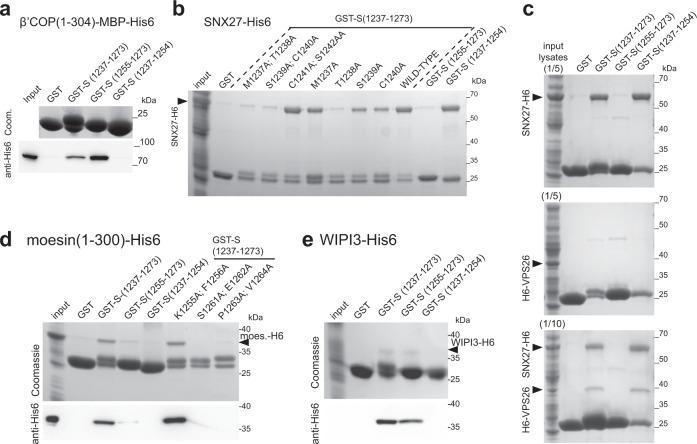
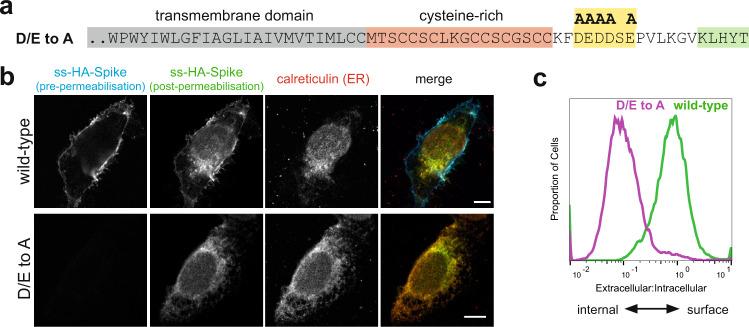
The Spike (S) protein of SARS-CoV-2 binds ACE2 to direct fusion with host cells. S comprises a large external domain, a transmembrane domain, and a short cytoplasmic tail. Understanding the intracellular trafficking of S is relevant to SARS-CoV-2 infection, and to vaccines expressing full-length S from mRNA or adenovirus vectors. Here we report a proteomic screen for cellular factors that interact with the cytoplasmic tail of S. We confirm interactions with the COPI and COPII vesicle coats, ERM family actin regulators, and the WIPI3 autophagy component. The COPII binding site promotes exit from the endoplasmic reticulum, and although binding to COPI should retain S in the early Golgi where viral budding occurs, there is a suboptimal histidine residue in the recognition motif. As a result, S leaks to the surface where it accumulates and can direct the formation of multinucleate syncytia. Thus, the trafficking signals in the tail of S indicate that syncytia play a role in the SARS-CoV-2 lifecycle.
刺突(S)蛋白是 SARS-CoV-2 与 ACE2 结合的关键,介导病毒与宿主细胞融合。S 蛋白由一个大的外部结构域、一个跨膜结构域和一个短的细胞质尾巴组成。了解 S 蛋白的细胞内运输途径与 SARS-CoV-2 感染以及表达全长 S 蛋白的 mRNA 或腺病毒载体疫苗密切相关。本研究报道了一个针对与 S 蛋白细胞质尾巴相互作用的细胞因子的蛋白质组学筛选。我们证实了与 COPI 和 COPII 囊泡外套、ERM 家族肌动蛋白调节剂和 WIPI3 自噬成分的相互作用。COPII 结合位点促进 S 蛋白从内质网中释放,尽管与 COPI 的结合会使 S 蛋白保留在早期高尔基体中,在那里发生病毒出芽,但在识别基序中存在一个次优的组氨酸残基。结果,S 蛋白渗漏到表面,在那里积累并可以指导多核合胞体的形成。因此,S 蛋白尾部的运输信号表明合胞体在 SARS-CoV-2 的生命周期中发挥作用。



 Zotero 插件