
氧化铜纳米颗粒的生物合成、表征及其对大肠杆菌的抗菌潜力评估
Biogenic Synthesis, Characterization and Antibacterial Potential Evaluation of Copper Oxide Nanoparticles Against Escherichia coli.
作者信息
Ali Mohsin, Ijaz Muhammad, Ikram Muhammad, Ul-Hamid Anwar, Avais Muhammad, Anjum Aftab Ahmad
机构信息
Department of Veterinary Medicine, University of Veterinary and Animal Sciences, Lahore, Punjab, 54000, Pakistan.
Solar Cell Applications Research Lab, Department of Physics, Government College University Lahore, Lahore, Punjab, 54000, Pakistan.
出版信息
Nanoscale Res Lett. 2021 Sep 20;16(1):148. doi: 10.1186/s11671-021-03605-z.
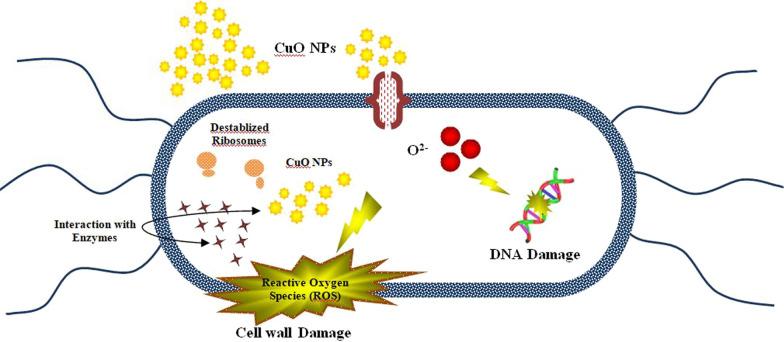
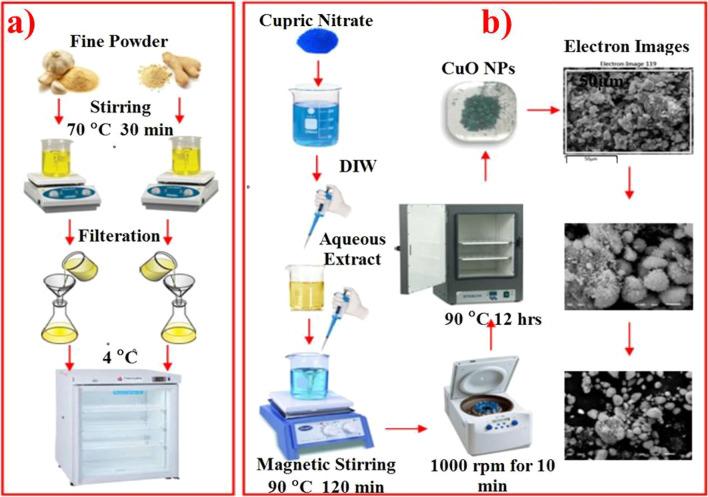
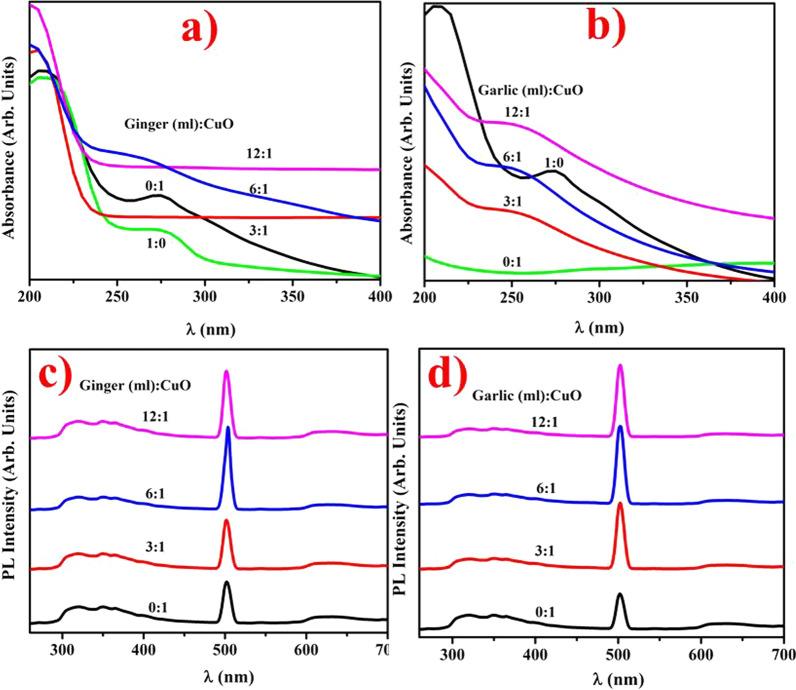
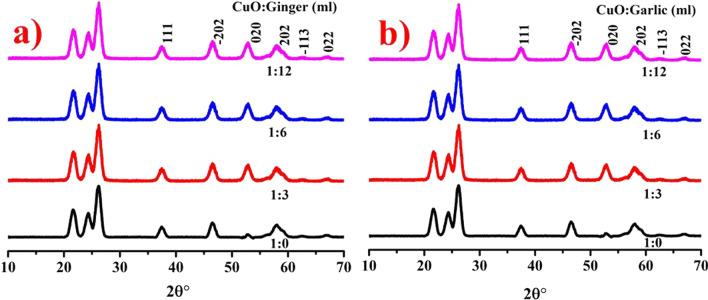
The development of resistance against antibiotics used to treat bacterial infections along with the prevalence of medication residues presents significant public health problems globally. Antibiotic-resistant germs result in infections that are difficult or impossible to treat. Decreasing antibiotic effectiveness calls for rapid development of alternative antimicrobials. In this respect, nanoparticles (NPs) of copper oxide (CuO) manifest a latent and flexible inorganic nanostructure with noteworthy antimicrobial impact. Green synthesis of CuO NPs was performed in the current study, which was then doped with varying amounts of ginger (Zingiber officinale, ZO) and garlic (Allium sativum, AS) extracts. In low and high doses, the synthesized compound was used to measure the antimicrobial effectiveness against pathogenic Escherichia coli. The present research successfully demonstrated a renewable, eco-friendly synthesis technique with natural materials that is equally applicable to other green metal oxide NPs.
用于治疗细菌感染的抗生素耐药性的发展以及药物残留的普遍存在在全球范围内带来了重大的公共卫生问题。抗生素耐药菌会导致难以治疗或无法治疗的感染。抗生素有效性的降低要求快速开发替代抗菌剂。在这方面,氧化铜(CuO)纳米颗粒(NPs)表现出一种潜在且灵活的无机纳米结构,具有显著的抗菌作用。本研究进行了CuO NPs的绿色合成,然后用不同量的生姜(姜,ZO)和大蒜(大蒜,AS)提取物进行掺杂。以低剂量和高剂量使用合成化合物来测量对致病性大肠杆菌的抗菌效果。本研究成功证明了一种使用天然材料的可再生、环保的合成技术,该技术同样适用于其他绿色金属氧化物纳米颗粒。


 Zotero 插件