
小胶质细胞和星形胶质细胞对神经病原性原生动物寄生虫的反应。
Microglia and astrocyte responses to neuropathogenic protozoan parasites.
作者信息
Nasuhidehnavi Azadeh, Yap George S
机构信息
Center for Immunity and Inflammation, New Jersey Medical School, Rutgers, The State University of New Jersey, Newark, NJ, USA.
出版信息
Fac Rev. 2021 Sep 3;10:69. doi: 10.12703/r/10-69. eCollection 2021.
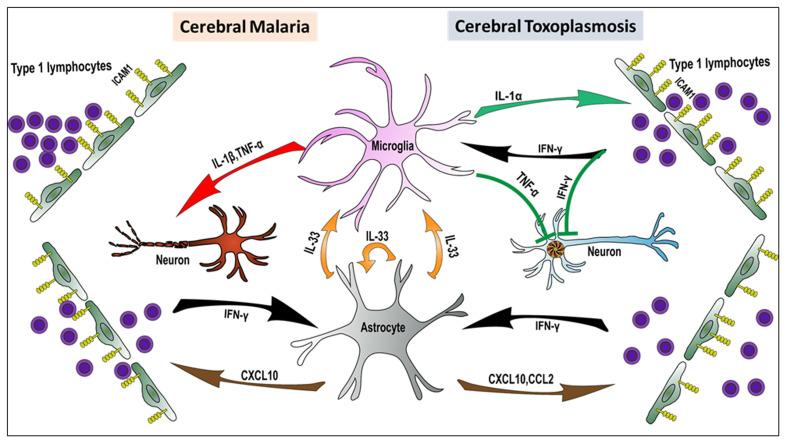
Cerebral toxoplasmosis and cerebral malaria are two important neurological diseases caused by protozoan parasites. In this review, we discuss recent findings regarding the innate immune responses of microglia and astrocytes to and infection. In both infections, these tissue-resident glial cells perform a sentinel function mediated by alarmin crosstalk that licenses adaptive type 1 immunity in the central nervous system. Divergent protective or pathogenic effects of type 1 activation of these astrocytes and microglia are revealed depending on the inherent lytic potential of the protozoan parasite.
脑弓形虫病和脑型疟疾是由原生动物寄生虫引起的两种重要的神经疾病。在本综述中,我们讨论了关于小胶质细胞和星形胶质细胞对[此处原文缺失相关感染信息]感染的固有免疫反应的最新研究结果。在这两种感染中,这些组织驻留的神经胶质细胞发挥着由警报素串扰介导的哨兵功能,从而在中枢神经系统中启动适应性1型免疫。根据原生动物寄生虫固有的裂解潜力,揭示了这些星形胶质细胞和小胶质细胞1型激活的不同保护或致病作用。
 Zotero 插件