
位点选择性赖氨酸连接方法及其在抗体药物偶联物中的应用。
Site-selective lysine conjugation methods and applications towards antibody-drug conjugates.
机构信息
Department of Chemistry, University College London, 20 Gordon Street, London, WC1H 0AJ, UK.
出版信息
Chem Commun (Camb). 2021 Oct 14;57(82):10689-10702. doi: 10.1039/d1cc03976h.
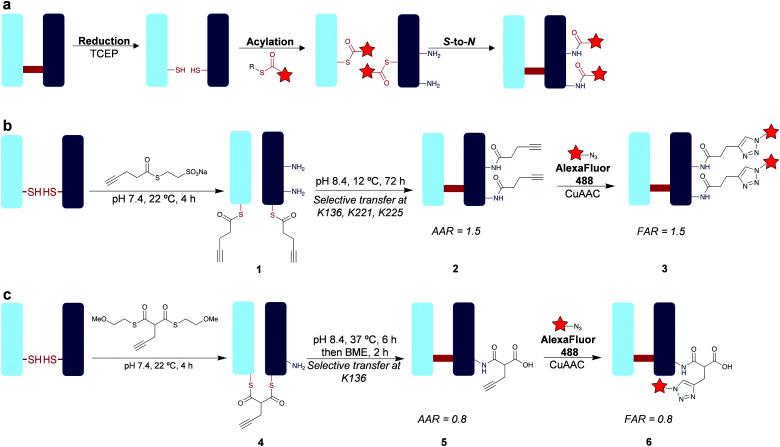
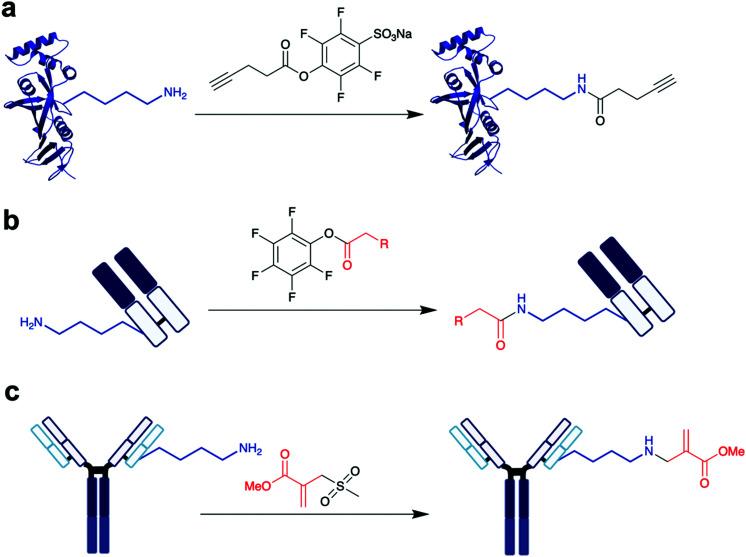
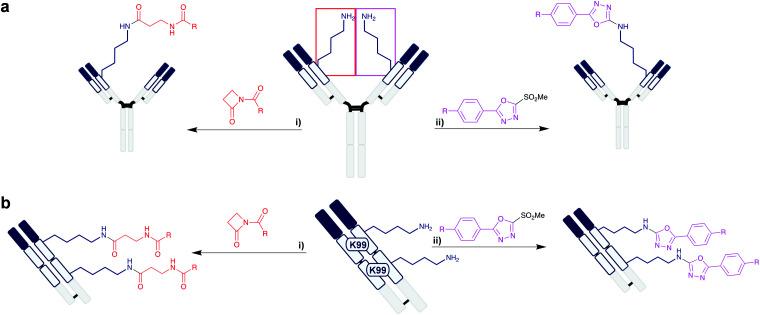
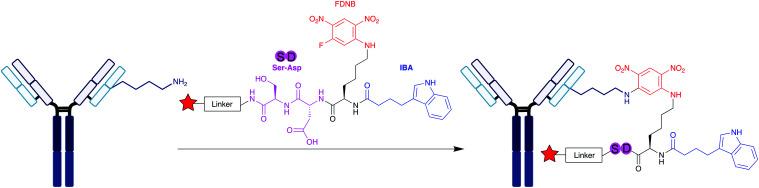
Site-selective protein modification is of significant interest in chemical biology research, with lysine residues representing a particularly challenging target. Whilst lysines are popular for bioconjugation, due to their nucleophilicity, solvent accessibility and the stability of the resultant conjugates, their high abundance means site-selectivity is very difficult to achieve. Antibody-drug conjugates (ADCs) present a powerful therapeutic application of protein modification, and have often relied extensively upon lysine bioconjugation for their synthesis. Here we discuss advances in methodologies for achieving site-selective lysine modification, particularly within the context of antibody conjugate construction, including the cysteine-to-lysine transfer (CLT) protocol which we have recently reported.
在化学生物学研究中,对选择性蛋白质修饰的研究具有重要意义,其中赖氨酸残基是一个特别具有挑战性的目标。尽管赖氨酸由于其亲核性、溶剂可及性和所得缀合物的稳定性而常用于生物偶联,但由于其丰度高,因此很难实现选择性。抗体药物偶联物(ADC)是蛋白质修饰的一种强大的治疗应用,其合成通常广泛依赖于赖氨酸的生物偶联。在这里,我们讨论了实现选择性赖氨酸修饰的方法学进展,特别是在抗体偶联物构建的背景下,包括我们最近报道的半胱氨酸到赖氨酸转移(CLT)方案。





 Zotero 插件