
结直肠癌中的粪便微生物群和肠道微生物衍生的细胞外囊泡
Fecal Microbiota and Gut Microbe-Derived Extracellular Vesicles in Colorectal Cancer.
作者信息
Park Jihye, Kim Nam-Eun, Yoon Hyuk, Shin Cheol Min, Kim Nayoung, Lee Dong Ho, Park Jae Yong, Choi Chang Hwan, Kim Jae Gyu, Kim Yoon-Keun, Shin Tae-Seop, Yang Jinho, Park Young Soo
机构信息
Department of Internal Medicine, Yonsei University College of Medicine, Seoul, South Korea.
Department of Public Health Sciences, Graduate School of Public Health, Seoul National University, Seoul, South Korea.
出版信息
Front Oncol. 2021 Sep 14;11:650026. doi: 10.3389/fonc.2021.650026. eCollection 2021.
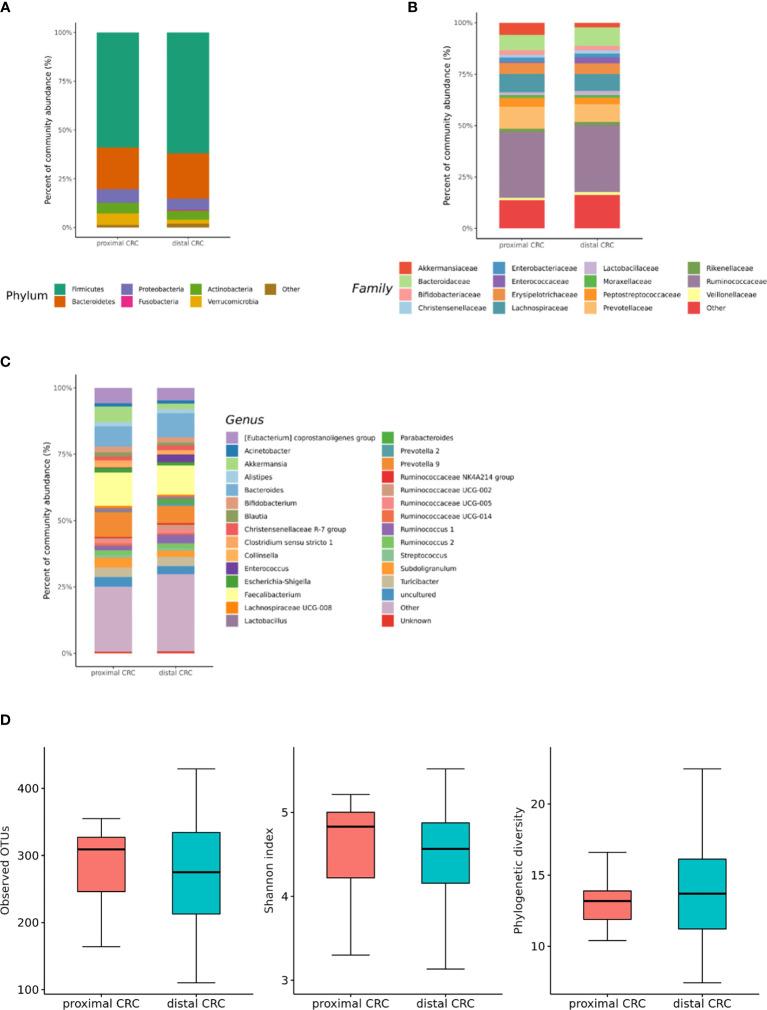
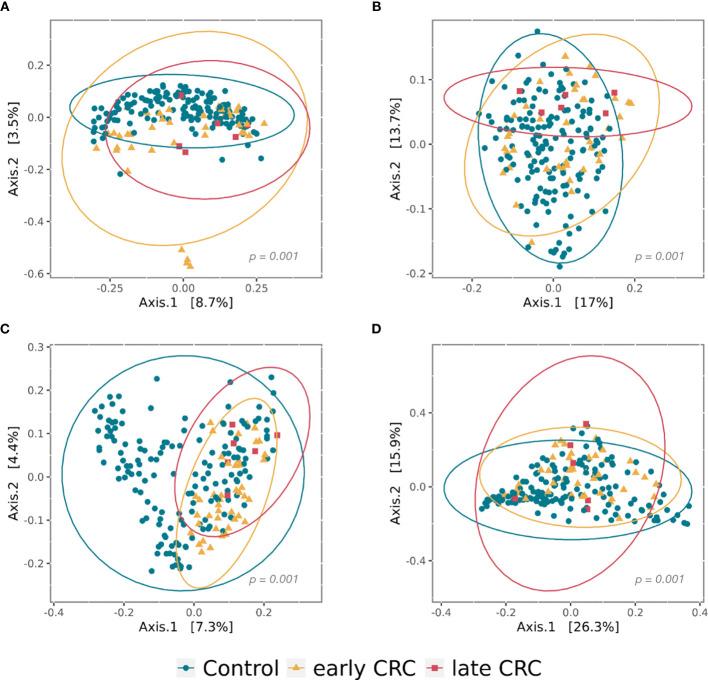
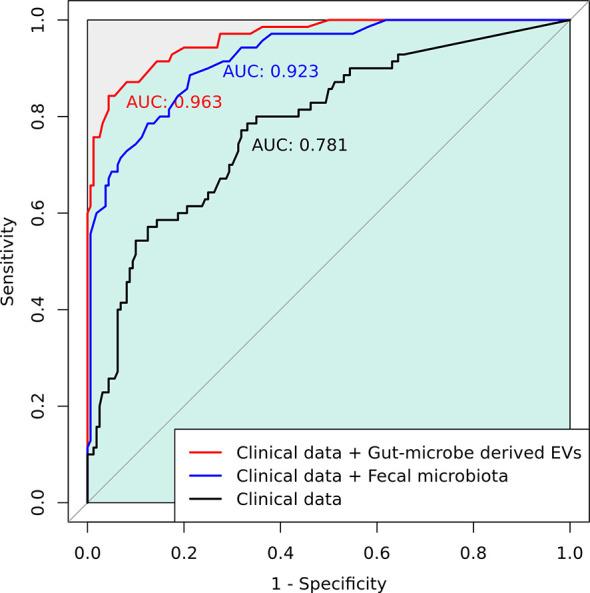
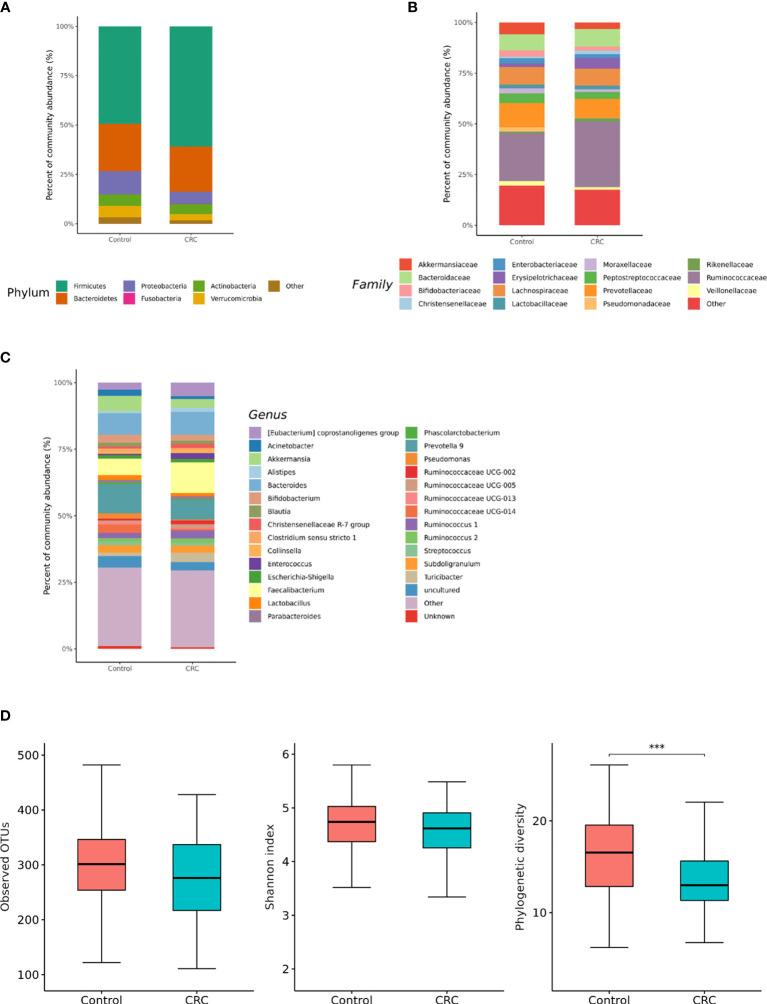
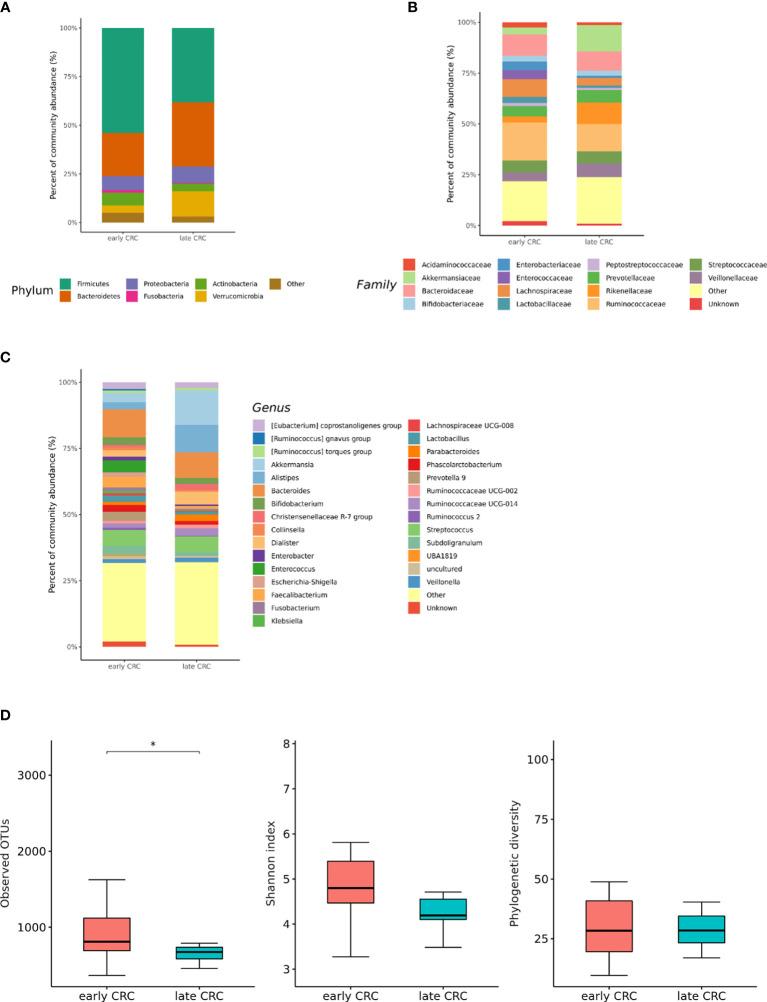
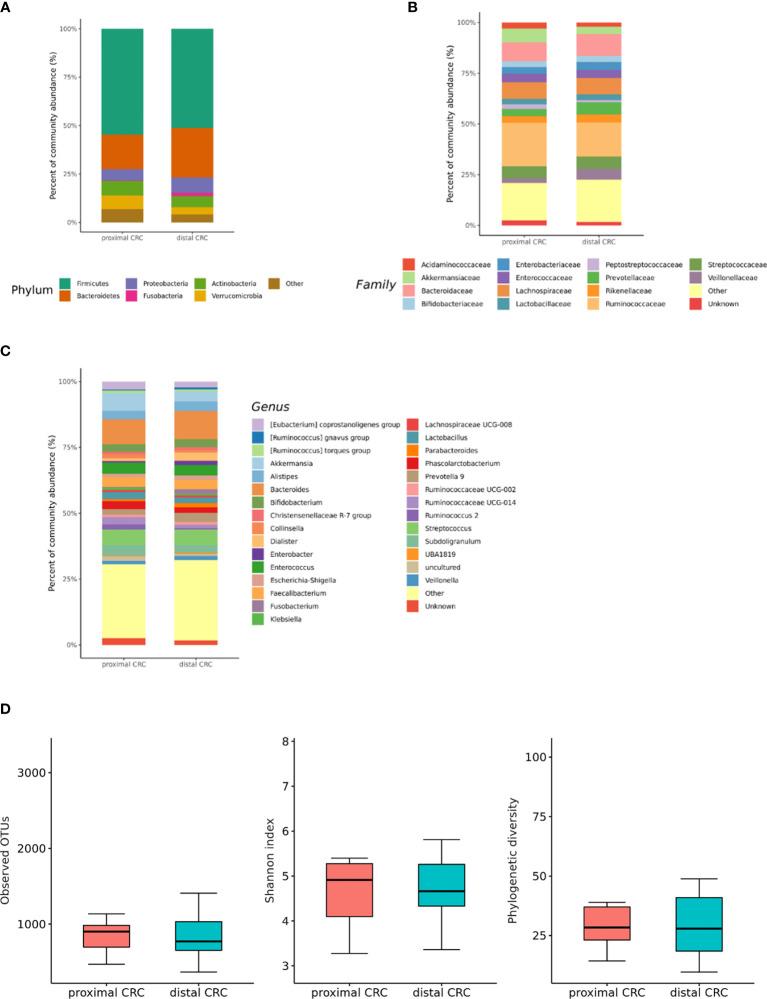
The human microbiota comprises trillions of microbes, and the relationship between cancer and microbiota is very complex. The impact of fecal microbiota alterations on colorectal cancer (CRC) pathogenesis is emerging. This study analyzed changes in the microbial composition in CRC subjects with both fecal microbiota and gut microbe-derived extracellular vesicles (EVs). From August 2017 to August 2018, 70 CRC patients and 158 control subjects were enrolled in the study. Metagenomic profiling of fecal microbiota and gut microbe-derived EVs in stool was performed using 16S ribosomal DNA sequencing. Relative abundance, evenness, and diversity in both the gut microbiota and gut microbe-derived EVs were analyzed. Additionally, microbial composition changes according to the stage and location of CRC were analyzed. Microbial composition was significantly changed in CRC subjects compared to control subjects, with evenness and diversity significantly lower in the fecal microbiota of CRC subjects. Gut microbe-derived EVs of stool demonstrated significant differences in the microbial composition, evenness, and diversity in CRC subjects compared to the control subjects. Additionally, microbial composition, evenness, and diversity significantly changed in late CRC subjects compared to early CRC subjects with both fecal microbiota and gut microbe-derived EVs. derived EVs could be novel biomarkers for diagnosing CRC and predicting CRC stages. 2-derived EVs significantly decreased in distal CRC subjects than in proximal CRC subjects. Gut microbe-derived EVs in CRC had a distinct microbial composition compared to the controls. Profiling of microbe-derived EVs may offer a novel biomarker for detecting and predicting CRC prognosis.
人类微生物群包含数万亿微生物,癌症与微生物群之间的关系非常复杂。粪便微生物群改变对结直肠癌(CRC)发病机制的影响正在显现。本研究分析了患有粪便微生物群和肠道微生物衍生细胞外囊泡(EVs)的CRC患者的微生物组成变化。2017年8月至2018年8月,70例CRC患者和158例对照受试者纳入本研究。使用16S核糖体DNA测序对粪便微生物群和粪便中肠道微生物衍生的EVs进行宏基因组分析。分析了肠道微生物群和肠道微生物衍生的EVs中的相对丰度、均匀度和多样性。此外,还分析了根据CRC分期和位置的微生物组成变化。与对照受试者相比,CRC受试者的微生物组成有显著变化,CRC受试者粪便微生物群的均匀度和多样性显著降低。与对照受试者相比,CRC受试者粪便中肠道微生物衍生的EVs在微生物组成、均匀度和多样性方面表现出显著差异。此外,与患有粪便微生物群和肠道微生物衍生的EVs的早期CRC受试者相比,晚期CRC受试者的微生物组成、均匀度和多样性有显著变化。衍生的EVs可能是诊断CRC和预测CRC分期的新型生物标志物。与近端CRC受试者相比,远端CRC受试者中2衍生的EVs显著减少。与对照组相比,CRC中肠道微生物衍生的EVs具有独特的微生物组成。对微生物衍生的EVs进行分析可能为检测和预测CRC预后提供一种新型生物标志物。


 Zotero 插件