
肠道微生物群及其代谢产物在功能性便秘发病机制中的作用
Roles of Gut Microbiota and Metabolites in Pathogenesis of Functional Constipation.
作者信息
Wang Jun-Ke, Yao Shu-Kun
机构信息
Department of Gastroenterology, Peking Union Medical College and Chinese Academy of Medical Sciences, China-Japan Friendship Hospital, Beijing 100029, China.
Department of Gastroenterology, China-Japan Friendship Hospital, Beijing 100029, China.
出版信息
Evid Based Complement Alternat Med. 2021 Sep 21;2021:5560310. doi: 10.1155/2021/5560310. eCollection 2021.
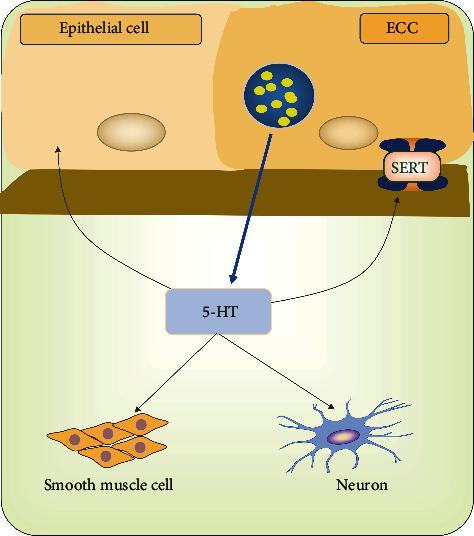
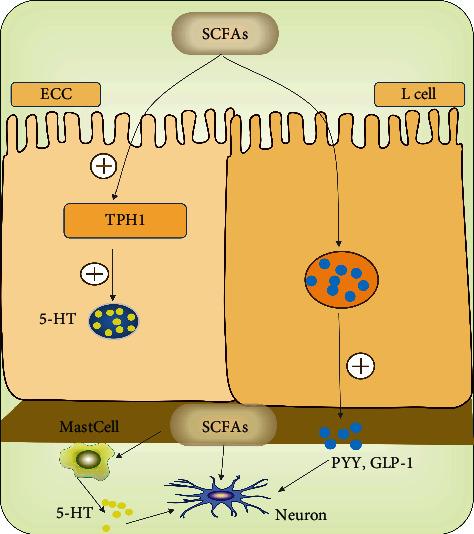
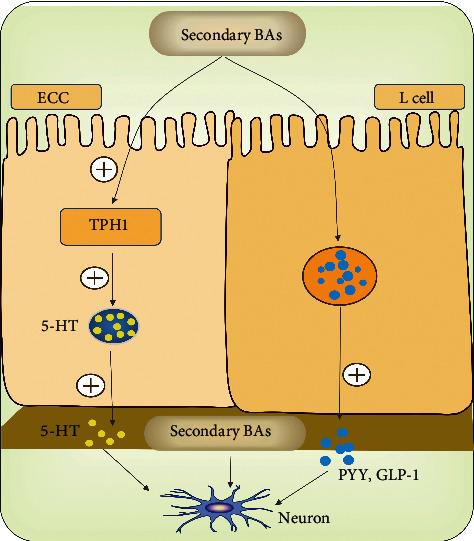
Functional constipation (FC), a condition characterized by heterogeneous symptoms (infrequent bowel movements, hard stools, excessive straining, or a sense of incomplete evacuation), is prevalent over the world. It is a multifactorial disorder and can be categorized into four subgroups according to different pathological mechanisms: normal transit constipation (NTC), slow transit constipation (STC), defecatory disorders (DD), and mixed type. Recently, growing evidence from human and animals has pointed that there was a strong association between gut microbiota and FC based on the brain-gut-microbiome axis. Studies have reported that the main characteristics of gut microbiota in FC patients were the relative decrease of beneficial bacteria such as and , the relative increase of potential pathogens, and the reduced species richness. Gut microbiota can modulate gut functions through the metabolites of bacterial fermentation, among which short-chain fatty acids (SCFAs), secondary bile salts (BAs), and methane occupied more important positions and could trigger the release of gut hormones from enteroendocrine cells (EECs), such as 5-hydroxytryptamine (5-HT), peptide YY (PYY), and glucagon-like peptide-1 (GLP-1). Subsequently, these gut hormones can influence gut sensation, secretion, and motility, primarily through activating specific receptors distributed on smooth muscle cells, enteric neurons, and epithelial cells. However, research findings were inconsistent and even conflicting, which may be partially due to various confounding factors. Future studies should take the associated confounders into consideration and adopt multiomics research strategies to obtain more complete conclusions and to provide reliable theoretical support for exploring new therapeutic targets.
功能性便秘(FC)是一种以多种症状(排便次数少、大便干结、过度用力或排便不尽感)为特征的疾病,在全球范围内普遍存在。它是一种多因素疾病,根据不同的病理机制可分为四个亚组:正常传输型便秘(NTC)、慢传输型便秘(STC)、排便障碍型(DD)和混合型。最近,来自人类和动物的越来越多的证据表明,基于脑-肠-微生物群轴,肠道微生物群与FC之间存在密切关联。研究报告称,FC患者肠道微生物群的主要特征是有益菌如[具体有益菌1]和[具体有益菌2]相对减少,潜在病原体相对增加,以及物种丰富度降低。肠道微生物群可通过细菌发酵的代谢产物调节肠道功能,其中短链脂肪酸(SCFAs)、次级胆汁酸(BAs)和甲烷占据更重要的地位,并可触发肠内分泌细胞(EECs)释放肠道激素,如5-羟色胺(5-HT)、肽YY(PYY)和胰高血糖素样肽-1(GLP-1)。随后,这些肠道激素可主要通过激活分布在平滑肌细胞、肠神经元和上皮细胞上的特定受体来影响肠道感觉、分泌和运动。然而,研究结果并不一致甚至相互矛盾,这可能部分归因于各种混杂因素。未来的研究应考虑相关混杂因素,并采用多组学研究策略,以获得更完整的结论,并为探索新的治疗靶点提供可靠的理论支持。

 Zotero 插件