
负压伤口疗法治疗糖尿病足溃疡后的蛋白质组学变化。
Proteomics changes after negative pressure wound therapy in diabetic foot ulcers.
机构信息
Department of Endocrinology, The First Affiliated Hospital of Anhui Medical University, Hefei, Anhui 230032, P.R. China.
Department of Burns, The First Affiliated Hospital of Anhui Medical University, Hefei, Anhui 230032, P.R. China.
出版信息
Mol Med Rep. 2021 Dec;24(6). doi: 10.3892/mmr.2021.12474. Epub 2021 Oct 5.
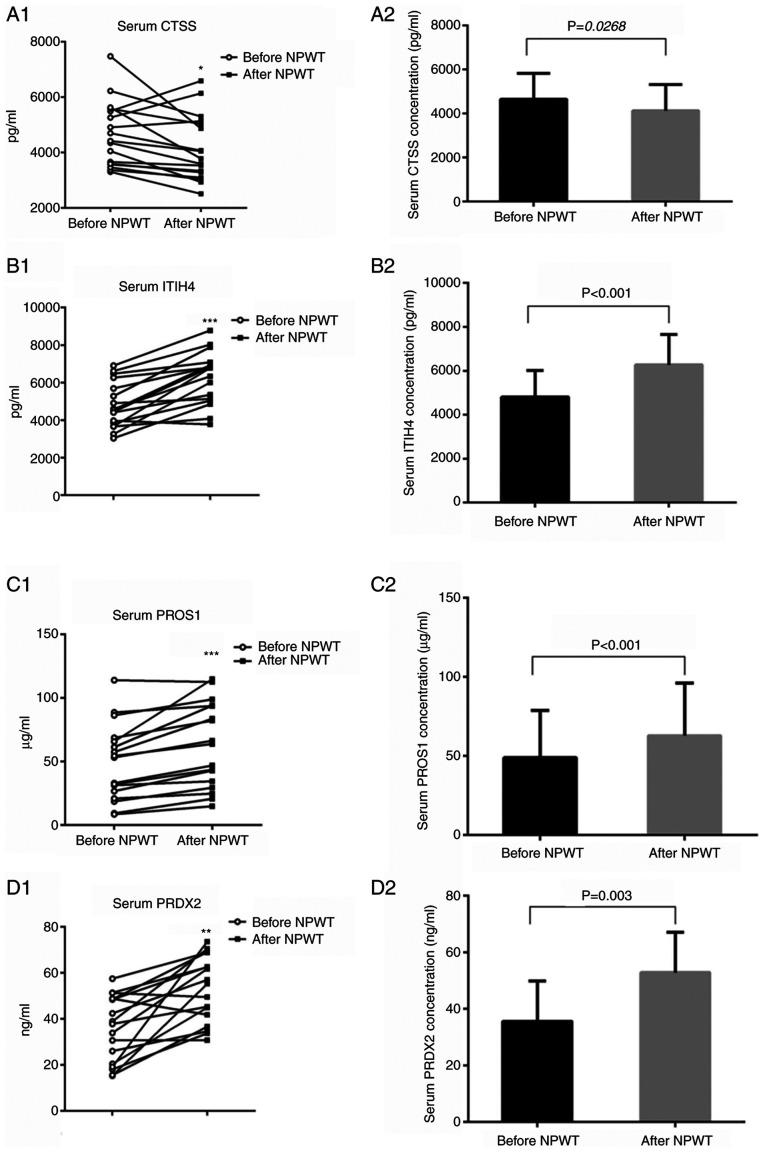
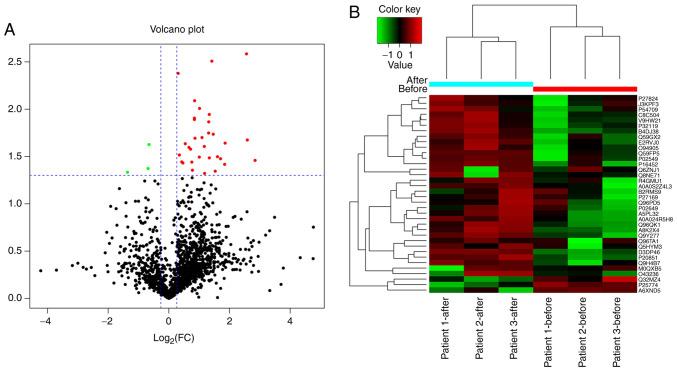
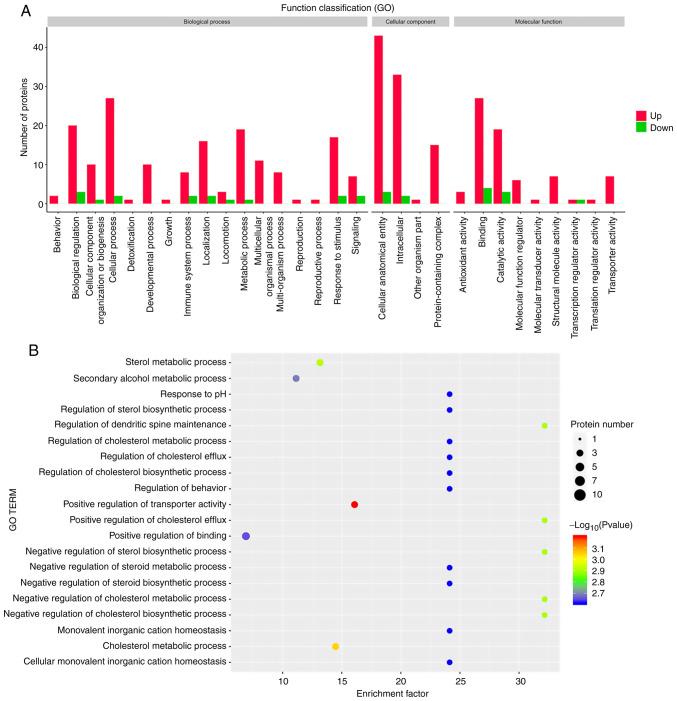
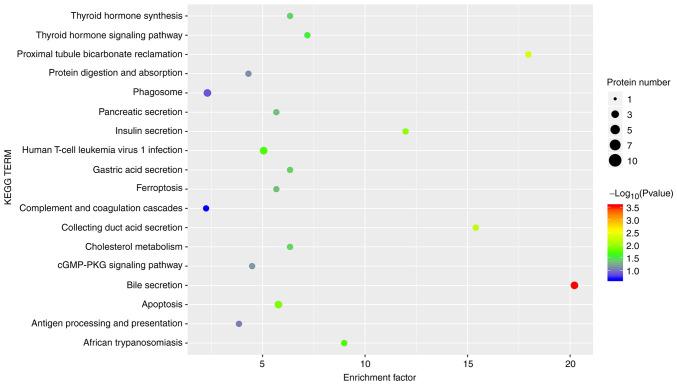
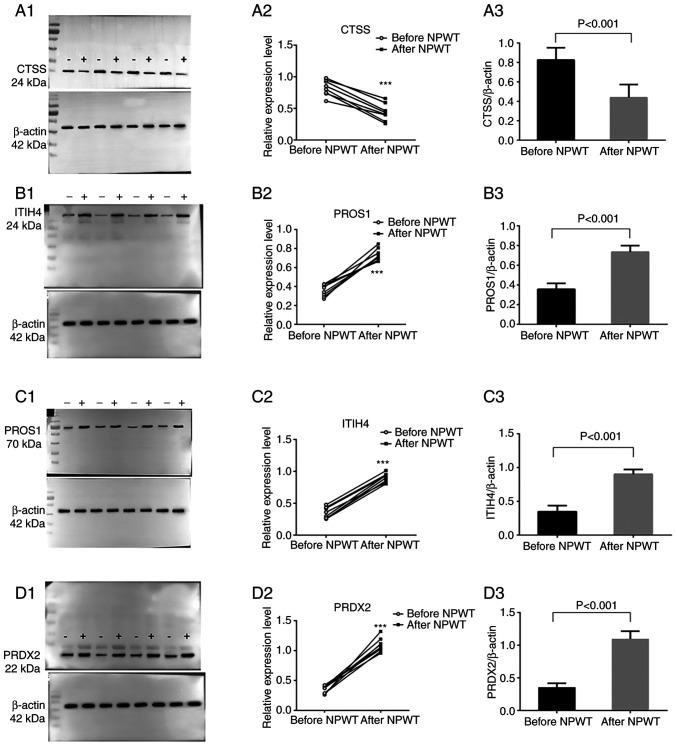
Label‑free quantitative mass spectrometry was used to analyze the differences in the granulation tissue protein expression profiles of patients with diabetic foot ulcers (DFUs) before and after negative‑pressure wound therapy (NPWT) to understand how NPWT promotes the healing of diabetic foot wounds. A total of three patients with DFUs hospitalized for Wagner grade 3 were enrolled. The patients received NPWT for one week. The granulation tissue samples of the patients prior to and following NPWT for one week were collected. The protein expression profiles were analyzed with label‑free quantitative mass spectrometry and the differentially expressed proteins (DEPs) in the DFU patients prior to and following NPWT for one week were identified. Gene Ontology and Kyoto Encyclopedia of Genes and Genomes analyses were conducted to annotate the DEPs and DEP‑associated signaling pathways. Western blotting and ELISA were performed to validate the results. By comparing the differences in the protein profiles of granulation tissue samples prior to and following NPWT for one week, 36 proteins with significant differences were identified (P<0.05); 33 of these proteins were upregulated and three proteins were downregulated. NPWT altered proteins mainly associated with antioxidation and detoxification, the cytoskeleton, regulation of the inflammatory response, complement and coagulation cascades and lipid metabolism. The functional validation of the DEPs demonstrated that the levels of cathepsin S in peripheral blood and granulation tissue were significantly lower than those prior to NPWT (P<0.05), while the levels of protein S isoform 1, inter α‑trypsin inhibitor heavy chain H4 and peroxiredoxin‑2 in peripheral blood and granulation tissue were significantly higher than those prior to NPWT (P<0.05). The present study identified multiple novel proteins altered by NPWT and laid a foundation for further studies investigating the mechanism of action of NPWT.
无标记定量质谱分析用于分析糖尿病足溃疡(DFU)患者负压伤口治疗(NPWT)前后肉芽组织蛋白表达谱的差异,以了解 NPWT 如何促进糖尿病足伤口愈合。共纳入 3 例住院 Wagner 分级 3 级的 DFU 患者。患者接受 NPWT 治疗 1 周。收集患者 NPWT 治疗前和治疗后 1 周的肉芽组织样本。采用无标记定量质谱分析蛋白表达谱,鉴定 NPWT 治疗前和治疗后 1 周 DFU 患者的差异表达蛋白(DEPs)。进行基因本体论和京都基因与基因组百科全书分析以注释 DEPs 和 DEP 相关信号通路。采用 Western blot 和 ELISA 验证结果。通过比较 NPWT 治疗前和治疗后 1 周肉芽组织样本的蛋白谱差异,鉴定出 36 个具有显著差异的蛋白(P<0.05);其中 33 个蛋白上调,3 个蛋白下调。NPWT 改变的蛋白主要与抗氧化和解毒、细胞骨架、炎症反应调节、补体和凝血级联以及脂代谢有关。DEPs 的功能验证表明,外周血和肉芽组织中组织蛋白酶 S 的水平明显低于 NPWT 治疗前(P<0.05),而外周血和肉芽组织中蛋白 S 同工型 1、α1-抗胰蛋白酶重链 H4 和过氧化物酶 2 的水平明显高于 NPWT 治疗前(P<0.05)。本研究鉴定出多种受 NPWT 改变的新蛋白,为进一步研究 NPWT 的作用机制奠定了基础。
 Zotero 插件